
Life, 1916-12-07 · page 22 of 94
Life — December 7, 1916 — page 22: what you’re looking at
What you’re looking at
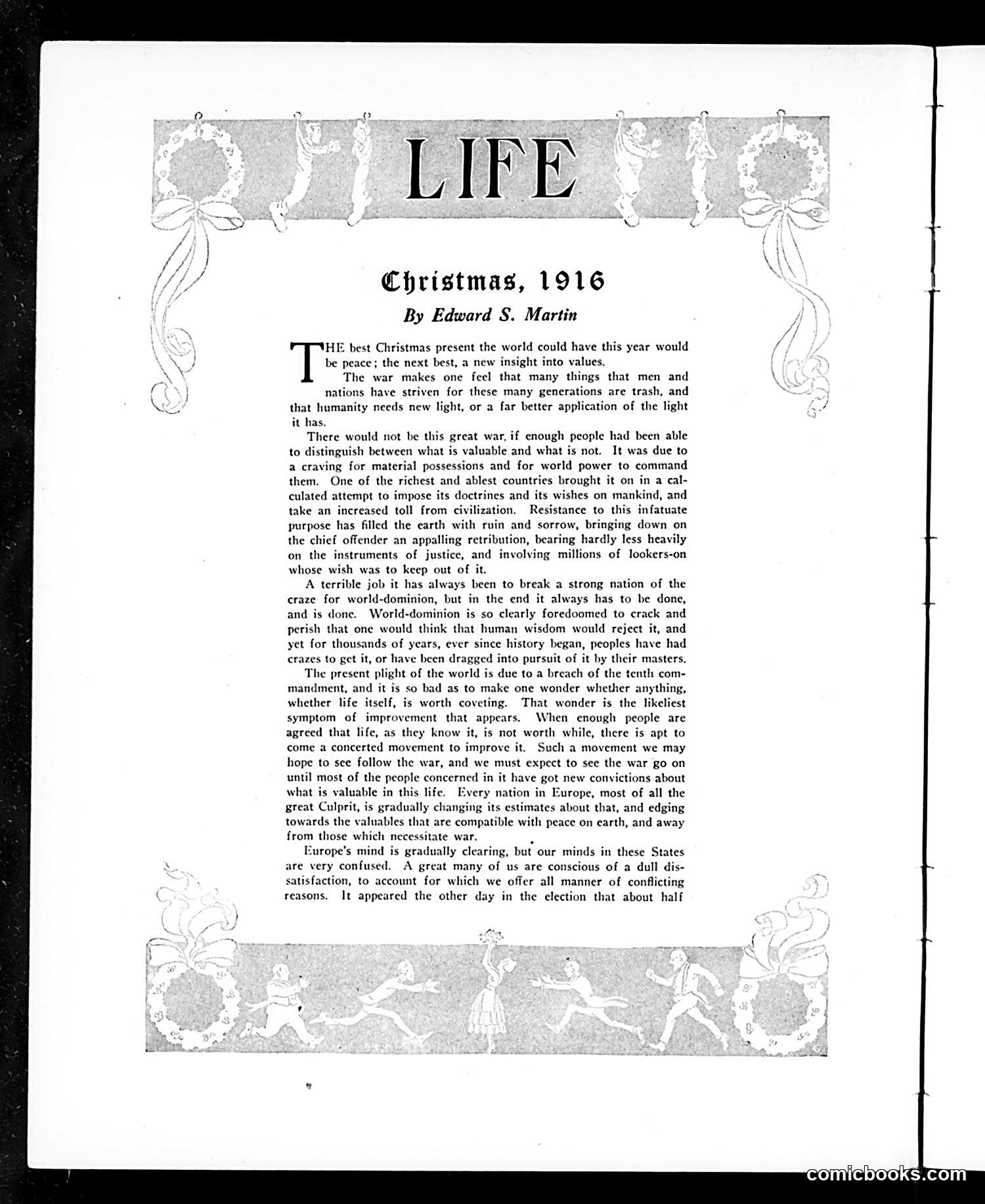
This is not a cartoon page but an editorial essay by Edward S. Martin in *Life* magazine's Christmas 1916 issue. The piece is a serious moral critique of World War I, written while America remained officially neutral (it would enter the war in 1917). Martin argues that the war resulted from nations pursuing material wealth and world domination—violations of the tenth commandment ("Thou shalt not covet"). He appears to reference Germany as "the richest and ablest countries" that initiated the conflict through "calculated attempt to impose its doctrines...on mankind." The essay suggests that widespread suffering may paradoxically produce moral improvement: when people recognize life isn't "worth while" under current values, reform movements emerge. Martin notes Europeans are "gradually changing" their priorities toward peace-compatible values, but Americans remain "very confused." The piece reflects pre-1917 American ambivalence about the European war—moral concern without yet taking sides militarily.
📄 Transcribed text from this page (OCR, searchable)
Machine-transcribed from the original scan — historical spelling and the odd misread are preserved.
Christmas, 1916 By Edward S. Martin HE best Christmas present the world could have this year would be peace; the next best, a new insight into values. The war makes one feel that many things that men and nations have striven for these many generations are trash, and that humanity needs new light, or a far better application of the light it has. There would not be this great war, if enough people had been able to distinguish between what is valuable and what is not. It was due to a craving for material possessions and for world power to command them. One of the richest and ablest countries brought it on in a cal- culated attempt to impose its doctrines and its wishes on mankind, and take an increased toll from civilization. Resistance to this infatuate purpose has filled the earth with ruin and sorrow, bringing down on the chief offender an appalling retribution, bearing hardly less heavily on the instruments of justice, and involving millions of lookers-on whose wish was to keep out of it. A terrible job it has always been to break a strong nation of the craze for world-dominion, but in the end it always has to be done, and is done. World-dominion is so clearly foredoomed to crack and perish that one would think that human wisdom would reject it, and yet for thousands of years, ever since history began, peoples have had crazes to get it, or have been dragged into pursuit of it by their masters. The present plight of the world is due to a breach of the tenth com- mandment, and it is so bad as to make one wonder whether anything, whether life itself, is worth coveting. That wonder is the likeliest symptom of improvement that appears. When enough people are agreed that life, as they know it, is not worth while, there is apt to come a concerted movement to improve it. Such a movement we may hope to see follow the war, and we must expect to see the war go on until most of the people concerned in it have got new convictions about is valuable in this life. Every nation in Europe, most of all the great Culprit, is gradually changing its estimates about that, and edging towards the valuables that are compatible with peace on earth, and away from those which necessitate war. . Europe's mind is gradually clearing, but our minds in these States are very confused. A great many of us are conscious of a dull dis- satisfaction, to account for which we offer all manner of conflicting reasons. It appeared the other day in the election that about half