
Life, 1916-11-09 · page 26 of 40
Life — November 9, 1916 — page 26: what you’re looking at
What you’re looking at
This satirical piece mocks modern American life by fictionally inserting 1920s references into the Pilgrims' 1620 voyage. The humor stems from anachronisms: sailors crying "Land hoe!" while drunk on medicinal spirits; "motion picture men" pacifying Native Americans with film; an Indian chief arriving in a "jittney" (a small taxi); women forming clubs discussing Shakespeare's "lewd poems." Author Christopher Morley uses this device to critique contemporary American society—depicting the Pilgrims as hard-drinking, irreverent, and undisciplined, mirroring Jazz Age excess. The commentary suggests modern Americans haven't progressed morally from their ancestors, undermining the Pilgrims' mythic status as disciplined, godly founders. It's gentle social satire questioning American exceptionalism and cultural decline.
📄 Transcribed text from this page (OCR, searchable)
Machine-transcribed from the original scan — historical spelling and the odd misread are preserved.
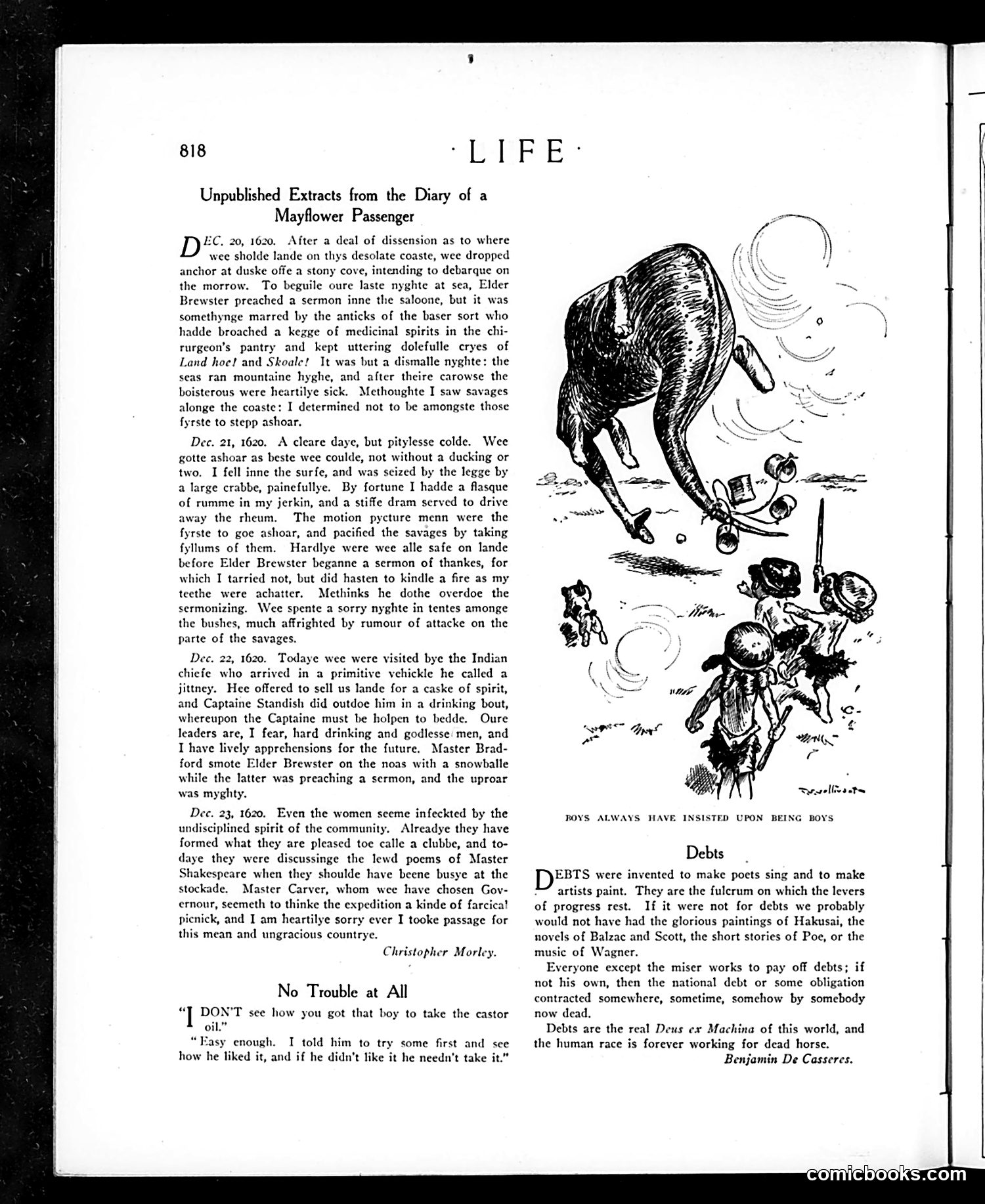
818 Unpublished Extracts from the Diary of a Mayflower Passenger D' *, 20, 1620. After a deal of dissension as to where wee sholde lande on thys desolate coaste, wee dropped anchor at duske offe a stony cove, intending to debarque on the morrow. To beguile oure laste nyghte at sea, Elder Brewster preached a sermon inne the saloone, but it was somethynge marred by the anticks of the baser sort who hadde broached a kegge of medicinal spirits in the chi- rurgeon’s pantry and kept uttering dolefulle cryes of Land hoe? and Skoale! It was but a dismalle nyghte: the seas ran mountaine hyghe, and after theire carowse the boisterous were heartilye sick. Methoughte I saw savages alonge the coaste: I determined not to be amongste those fyrste to stepp ashoar, Dee. 21, 1620. A cleare daye, but pitylesse colde. Wee gotte ashoar as beste wee coulde, not without a ducking or two. I fell inne the surfe, and was seized by the legge by a large crabbe, painefullye. By fortune I hadde a flasque of rumme in my jerkin, and a stiffe dram served to drive away the rheum. The motion pycture menn were the fyrste to goe ashoar, and pacified the savages by taking fyllums of them. Hardlye were wee alle safe on lande before Elder Brewster beganne a sermon of thankes, for which I tarried not, but did hasten to kindle a fire as my teethe were achatter. Methinks he dothe overdoe the sermonizing. Wee spente a sorry nyghte in tentes amonge the bushes, much affrighted by rumour of attacke on the parte of the savages. Dec. 22, 1620. Todaye wee were visited bye the Indian chiefe who arrived in a primitive vehickle he called a jittney. Hee offered to sell us lande for a caske of spirit, and Captaine Standish did outdoe him in a drinking bout, whereupon the Captaine must be holpen to bedde. Oure leaders are, I fear, hard drinking and godlesse: men, and T have lively apprehensions for the future. Master Brad- ford smote Elder Brewster on the noas with a snowballe while the latter was preaching a sermon, and the uproar was myghty. Dec. 23, 1620. Even the women seeme infeckted by the undisciplined spirit of the community. Alreadye they have formed what they are pleased toe calle a clubbe, and to- daye they were discussinge the lewd poems of Master Shakespeare when they shoulde have beene busye at the stockade. Master Carver, whom wee have chosen Gov- ernour, seemeth to thinke the expedition a kinde of farcica! picnick, and I am heartilye sorry ever I tooke passage for this mean and ungracious countrye. Christopher Morley. No Trouble at All | DON'T see how you got that boy to take the castor oil. y enough. I told him to try some first and see how he liked it, and if he didn’t like it he needn't take it.” “EE - Rywelleaetes BOYS ALWAYS HAVE INSISTED UPON BEING BOYS Debts BTS were invented to make poets sing and to make artists paint. They are the fulcrum on which the levers of progress rest. If it were not for debts we probably would not have had the glorious paintings of Hakusai, the novels of Balzac and Scott, the short stories of Poe, or the music of Wagner. Everyone except the miser works to pay off debts; if not his own, then the national debt or some obligation contracted somewhere, sometime, somehow by somebody now dead. Debts are the real Deus ex Machina of this world, and the human race is forever working for dead horse. Benjamin De Casseres.