
Life, 1916-10-26 · page 11 of 46
Life — October 26, 1916 — page 11: what you’re looking at
What you’re looking at
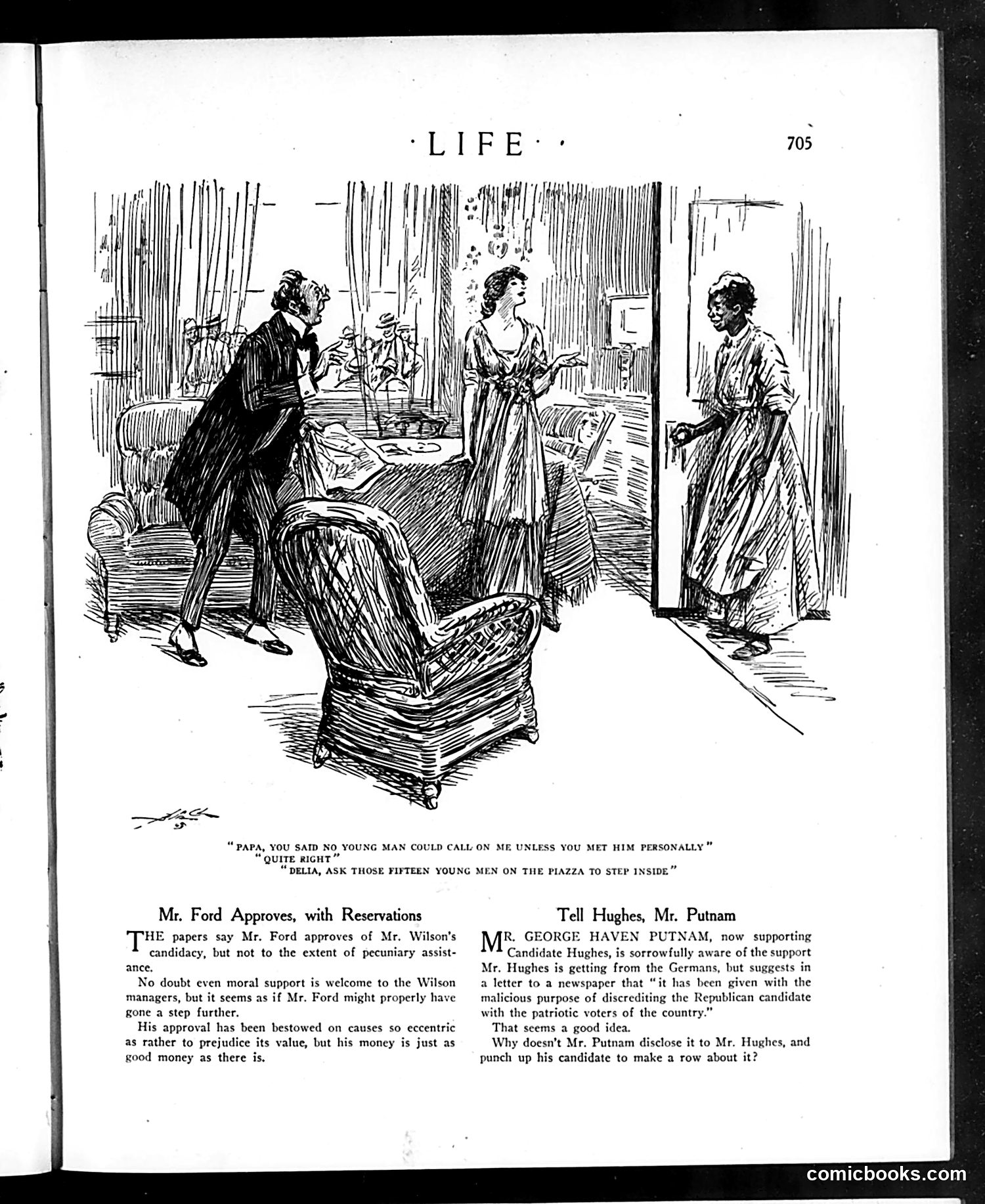
This page from *Life* magazine contains political commentary on the 1912 U.S. presidential election. The cartoon depicts a domestic scene where a woman appears to be giving instructions about accepting visitors. The caption references a father's rule that no young man could call without meeting him personally, and mentions "fifteen young men on the piazza." The accompanying articles discuss: 1. **"Mr. Ford Approves, with Reservations"** — critiquing Henry Ford's endorsement of Wilson's candidacy as insufficiently committed (moral support without financial backing). 2. **"Tell Hughes, Mr. Putnam"** — addressing George Haven Putnam's concerns about a letter allegedly discrediting Republican candidate Charles Evans Hughes, suggesting Putnam should confront Hughes directly about the controversy rather than complain to newspapers. The satire targets political maneuvering and insufficient commitment during this pivotal election year.
📄 Transcribed text from this page (OCR, searchable)
Machine-transcribed from the original scan — historical spelling and the odd misread are preserved.
ee - cd “PAPA, YOU SATD NO YOUNG MAN COULD CALL ON ME UNLESS YOU MET HIM PERSONALLY " QUITE RIGHT” DELIA, ASK THOSE FIFTEEN YOUNG MEN ON THE PIAZZA TO STEP INSIDE” Mr. Ford Approves, with Reservations 'HE papers say Mr. Ford approves of Mr. Wilson's candidacy, but not to the extent of pecuniary assist- ance, No doubt even moral support is welcome to the Wilson managers, but it seems as if Mr. Ford might properly have gone a step further. His approval has been bestowed on causes so eccentric as rather to prejudice its value, but his money is just as good money as there is, Tell Hughes, Mr. Putnam R. GEORGE HAVEN PUTNAM, now supporting Candidate Hughes, is sorrowfully aware of the support Mr. Hughes is getting from the Germans, but suggests in a letter to a newspaper that “it has been given with the malicious purpose of discrediting the Republican candidate with the patriotic voters of the country.” That seems a good idea. Why doesn’t Mr. Putnam disclose it to Mr. Hughes, and punch up his candidate to make a row about it? comicbooks.com