
Life, 1916-07-27 · page 8 of 32
Life — July 27, 1916 — page 8: what you’re looking at
What you’re looking at
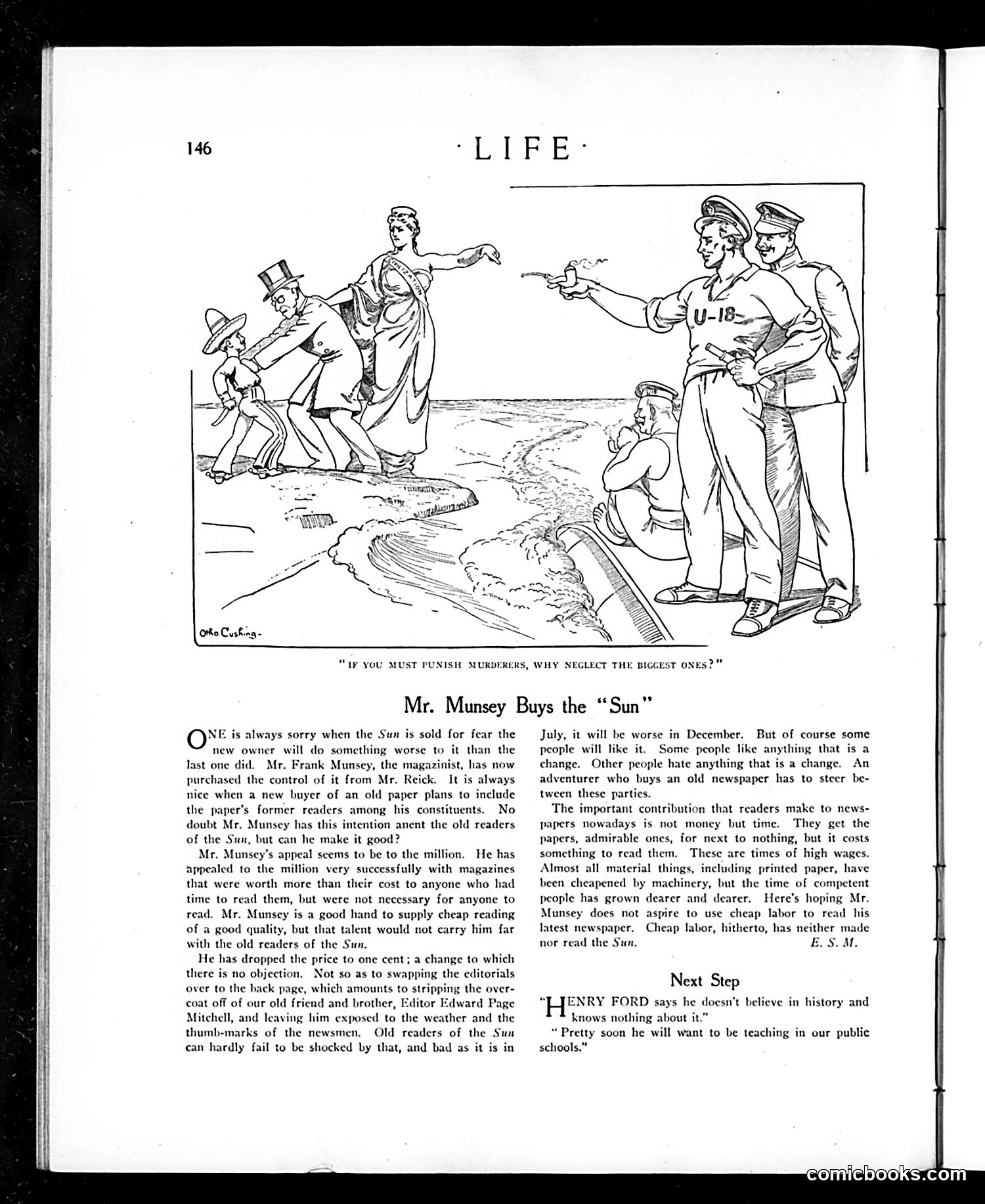
This cartoon satirizes Frank Munsey's 1916 purchase of the *New York Sun* newspaper. The illustration shows Munsey (top left, in formal dress) presenting the acquisition to military/naval officers (labeled "U-18," referencing German submarines). The caption "IF YOU MUST PUNISH MURDERERS, WHY NEGLECT THE BIGGEST ONES?" suggests the cartoon equates Munsey's control of the press with serious harm—comparing newspaper monopolization to wartime violence. The accompanying text criticizes Munsey for reducing the *Sun's* price to one cent and stripping its quality to chase cheap circulation over substantive journalism. The satire argues that consolidating newspaper ownership under profit-driven management damages public discourse more seriously than acknowledged crimes.
📄 Transcribed text from this page (OCR, searchable)
Machine-transcribed from the original scan — historical spelling and the odd misread are preserved.
Oe Cushing Mr. Munsey Buys the “Sun” July, it will be worse in December. 2 is always sorry when the Sun is sold for fear the new owner will do something worse to it than the last one did. Mr, Frank Munsey, the magazinist, has now purchased the control of it from Mr. Reick. It is always nice when a new buyer of an old paper plans to include the paper's former readers among his constituents. No doubt Mr. Munsey has this intention anent the old readers of the Sun, but can he make it good? Mr. Munsey’s appeal seems to be to the million. He has appealed to the million very successfully with magazines that were worth more than their cost to anyone who had time to read them, but were not necessary for anyone to read. Mr. Munsey is a good hand to supply cheap reading of a good quality, but that talent would not carry him far with the old readers of the Sun. He has dropped the price to one cent; a change to which there is no objection, Not so as to swapping the editorials over to the back page, which amounts to stripping the over- coat off of our old friend and brother, Editor Edward Page Mitchell, and leaving him exposed to the weather and the thumb-marks of the newsmen. Old readers of the Sun can hardly fail to be shocked by that, and bad as it is in But of course some people will like it. Some people like anything that is a change. Other people hate anything that is a change. An adventurer who buys an old newspaper has to steer be- tween these parties. The important contribution that readers make to news- papers nowadays is not money but time. They get the papers, admirable ones, for next to nothing, but it costs something to read them. These are times of high wages. Almost all material things, including printed paper, have heen cheapened by machinery, but the time of competent people has grown dearer and dearer. Here’s hoping Mr. Munsey does not aspire to use cheap labor to read his latest newspaper. Cheap labor, hitherto, has neither made nor read the Sun. a. S.M. Next Step H NRY FORD says he doesn’t believe in history and knows nothing about it.” “Pretty soon he will want to be teaching in our public schools.”