
Life, 1916-04-13 · page 12 of 46
Life — April 13, 1916 — page 12: what you’re looking at
What you’re looking at
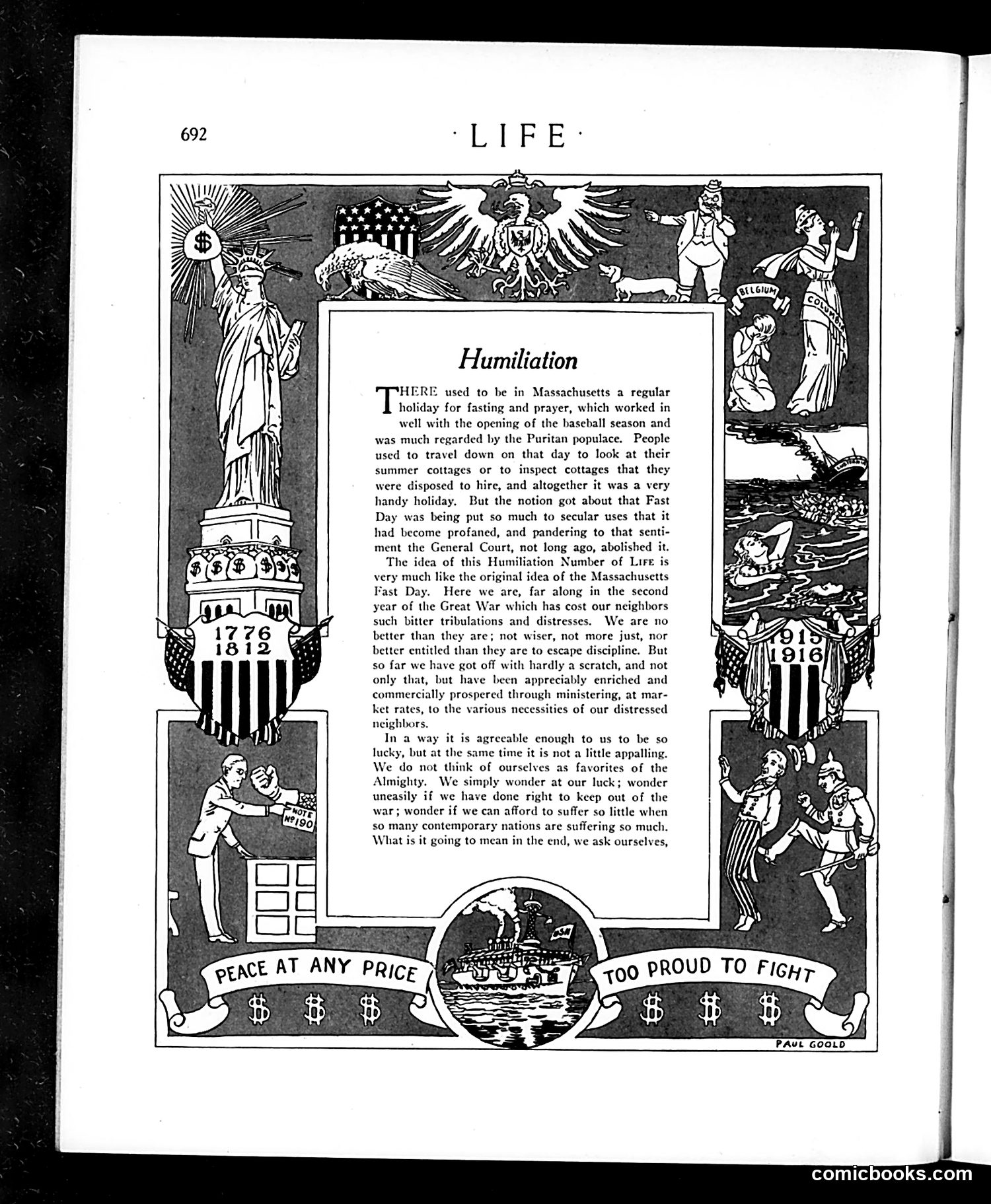
This satirical piece critiques American prosperity and complacency during World War I. The border imagery includes the Statue of Liberty (marked "1776-1812"), an eagle, and a warship (marked "1916"), alongside banners reading "PEACE AT ANY PRICE" and "TOO PROUD TO FIGHT"—likely referencing President Wilson's pre-war pacifist rhetoric. The text argues that America has profited from others' suffering in the war while avoiding combat, enriching itself through trade with distressed nations. The cartoonist suggests this is morally problematic—we've "hardly a scratch" while others suffer terribly. The piece questions whether America's luck and financial gain come at the cost of moral responsibility, framing American neutrality and profit as a form of national humiliation rather than fortune.
📄 Transcribed text from this page (OCR, searchable)
Machine-transcribed from the original scan — historical spelling and the odd misread are preserved.
Humiliation HERE used to be in Massachusetts a regular holiday for fasting and prayer, which worked in well with the opening of the baseball season and was much regarded by the Puritan populace. People used to travel down on that day to look at their summer cottages or to inspect cottages that they were disposed to hire, and altogether it was a very handy holiday. But the notion got about that Fast Day was being put so much to secular uses that it had become profaned, and pandering to that senti- ment the General Court, not long ago, abolished it. The idea of this Humiliation Number of Lire is very much like the original idea of the Massachusetts Fast Day. Here we are, far along in the second year of the Great War which has cost our neighbors such bitter tribulations and distresses. We are no better than they are; not wiser, not more just, nor better entitled than they are to escape discipline. But so far we have got off with hardly a scratch, and not only that, but have been appreciably enriched and commercially prospered through ministering, at mar- ket rates, to the various necessities of our distressed neighbors. In a way it is agreeable enough to us to be so lucky, but at the same time it is not a little appalling. We do not thi f ourselves as favorites of the Almighty. We simply wonder at our luck; wonder uneasily if we have done right to keep out of the war; wonder if we can afford to suffer so little when so many contemporary nations are suffering so much. What is it going to mean in the end, we ask ourselves, PAut GooLd comicbooks.com