
Life, 1916-03-30 · page 8 of 45
Life — March 30, 1916 — page 8: what you’re looking at
What you’re looking at
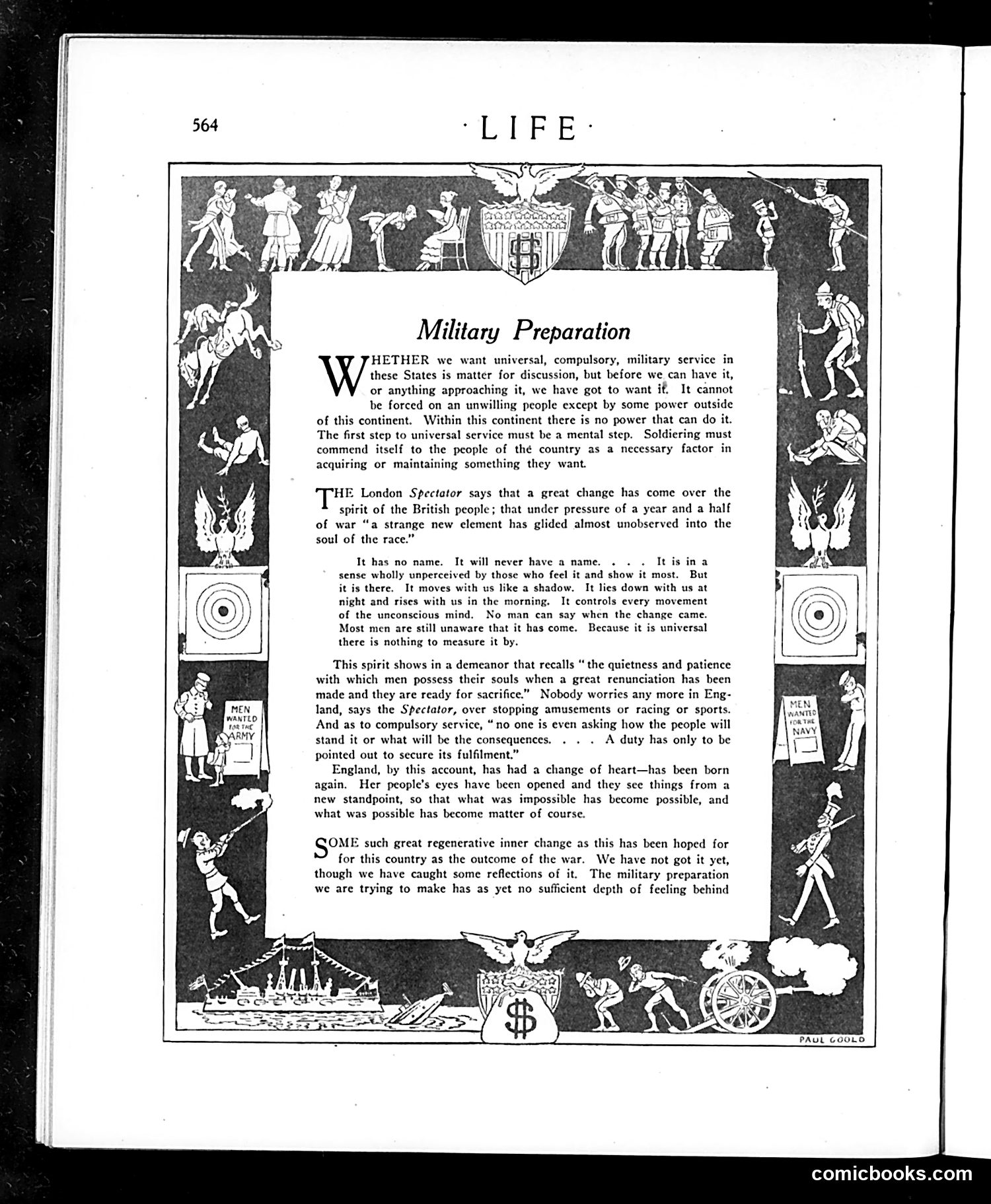
This page argues for compulsory military service in America, framed as necessary national preparation. The text cites the *London Spectator* on how war transformed British society—instilling duty and sacrifice while reducing interest in "amusements or racing or sports." The decorative border by Paul Gould contains military and patriotic imagery: soldiers, sailors, ships, and weapons alongside classical figures and athletic scenes. The argument suggests that *forced* military service would produce spiritual renewal—a "change of heart"—claiming England achieved this through wartime necessity. However, the author admits America hasn't yet experienced comparable transformation despite military preparations. This represents early 20th-century pro-militarism rhetoric, advocating conscription as morally beneficial, not merely practical.
📄 Transcribed text from this page (OCR, searchable)
Machine-transcribed from the original scan — historical spelling and the odd misread are preserved.
Military Preparation HETHER we want universal, compulsory, military service in \ x / these States is matter for discussion, but before we can have it, or anything approaching it, we have got to want if, It cannot be forced on an unwilling people except by some power outside of this continent. Within this continent there is no power that can do it. The first step to universal service must be a mental step. Soldiering must commend itself to the people of thé country as a necessary factor in acquiring or maintaining something they want. 'HE London Spectator says that a great change has come over the spirit of the British people; that under pressure of a year and a half of war “a strange new element has glided almost unobserved into the soul of the race.” It has no name. It will never have a name. . . . It is ina sense wholly unperceived by those who feel it and show it most. But it is there. It moves with us like a shadow. It lies down with us at night and rises with us in the morning. It controls every movement of the unconscious mind, No man can say when the change came. Most men are still unaware that it has come. Because it is universal there is nothing to measure it by. This spirit shows in a demeanor that recalls “ the quietness and patience with which men possess their souls when a great renunciation has been made and they are ready for sacrifice.” Nobody worries any more in Eng- land, says the Spectator, over stopping amusements or racing or sports. And as to compulsory service, “no one is even asking how the people will stand it or what will be the consequences. . . . A duty has only to be pointed out to secure its fulfilment.” England, by this account, has had a change of heart—has been born again. Her people's eyes have been opened and they see things from a new standpoint, so that what was impossible has become possible, and what was possible has become matter of course. OME such great regenerative inner change as this has been hoped for for this country as the outcome of the war. We have not got it yet, though we have caught some reftections of it. The military preparation we are trying to make has as yet no sufficient depth of feeling behind PAUL GOOLO comicbooks.com