
Life, 1915-12-02 · page 28 of 100
Life — December 2, 1915 — page 28: what you’re looking at
What you’re looking at
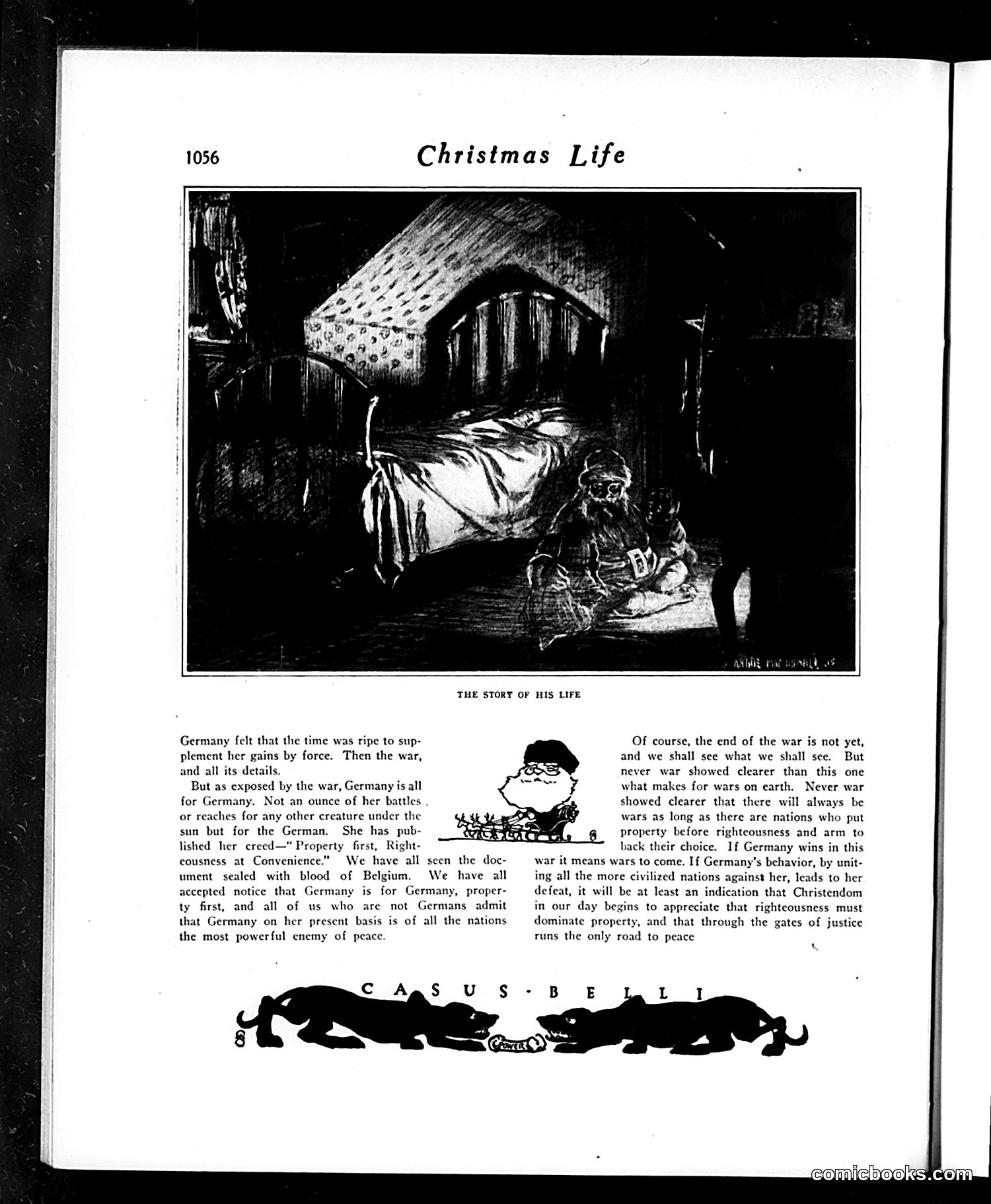
This WWI-era satirical piece critiques German militarism and philosophy. The illustration titled "The Story of His Life" depicts an infant (representing Germany or German ideology) in a manger—a stark inversion of the Christian nativity scene, suggesting Germany's worldview is fundamentally anti-Christian. The accompanying text attacks Germany's stated national creed: "Property first, Righteousness at Convenience." The author argues Germany prioritizes material gain and military power over moral principles, citing Belgium's suffering as evidence. The piece frames the war as a moral struggle between nations that put "property before righteousness" (Germany) versus those guided by justice and Christian values. The decorative element "CASUS BELLI" (Latin: cause for war) with fallen figures emphasizes the human cost of such amoral nationalism. For modern readers, this represents American intellectual opposition to German aggression during World War I, viewing the conflict through a moral-religious lens.
📄 Transcribed text from this page (OCR, searchable)
Machine-transcribed from the original scan — historical spelling and the odd misread are preserved.
Christmas Life ANHUE Fal THE STORY OF HIS LIFE Germany felt that the time was ripe to sup- plement her gains by force. Then the war, and all its details. But as exposed by the war, Germany is all for Germany. Not an ounce of her battles or reaches for any other creature under the sun but for the German. She has pub- lished her creed—" Property first, Right- cousness at Convenience.” We have all scen the doc- ument sealed with blood of Belgium. We have all accepted notice that Germany is for Germany, proper- ty first, and all of us who are not Germans admit that Germany on her present basis is of all the nations the most powerful enemy of peace. C AgS u Of course, the end of the war is not yet, and we shall see what we shall sce. But never war showed clearer than this one what makes for wars on earth. Never war showed clearer that there will always be wars as long as there are nations who put property before righteousness and arm to back their choice. If Germany wins in this war it means wars to come. If Germany’s behavior, by unit- ing all the more civilized nations against her, leads to her defeat, it will be at least an indication that Christendom in our day begins to appreciate that righteousness must dominate property, and that through the gates of justice runs the only road to peace