
Life, 1915-12-02 · page 26 of 100
Life — December 2, 1915 — page 26: what you’re looking at
What you’re looking at
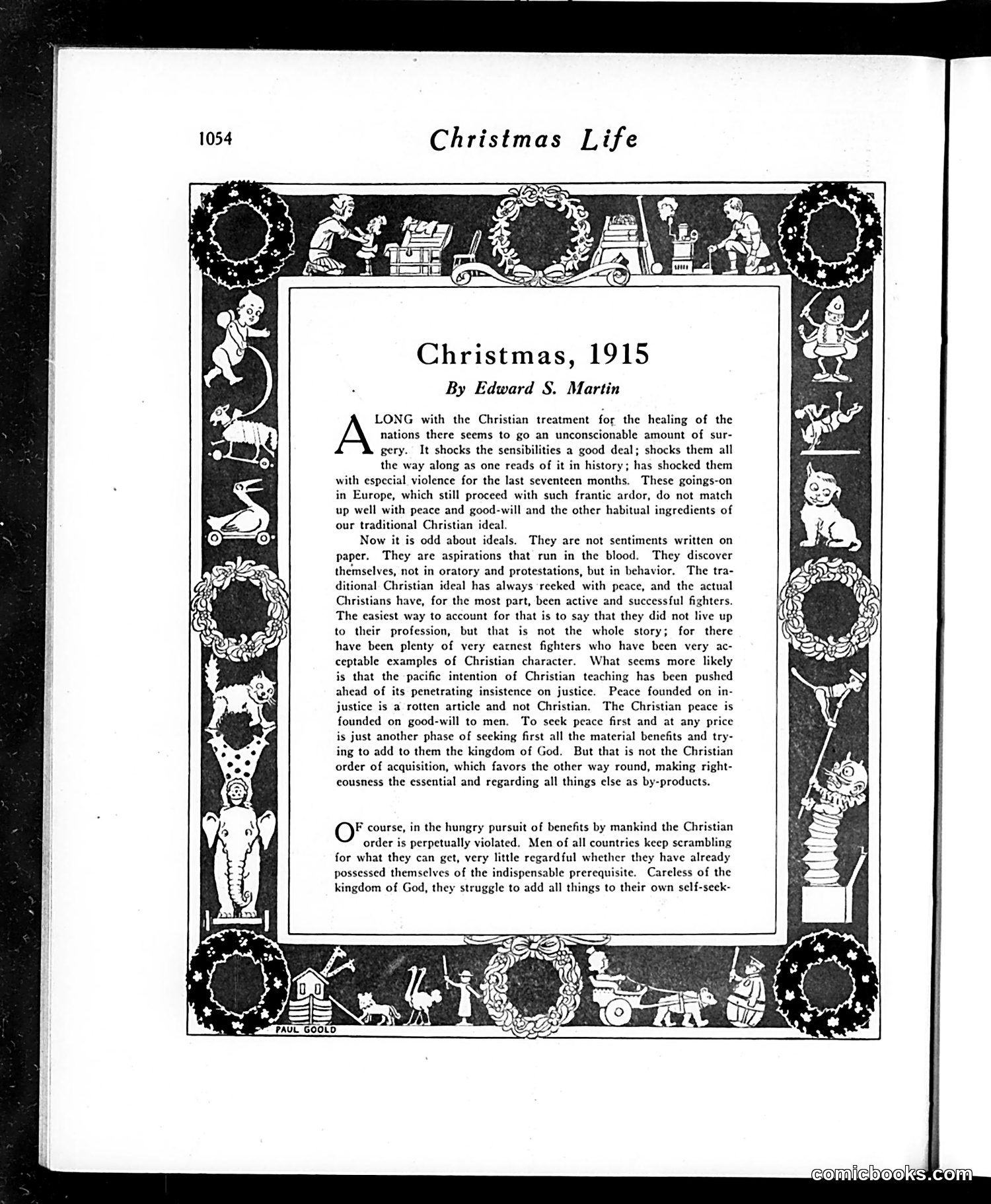
This is an editorial essay by Edward S. Martin, not a cartoon, appearing in *Life* magazine during World War I (dated Christmas 1915). **The Context:** Europe was then in the third year of the devastating Great War. Martin critiques the hypocrisy of Christian nations waging brutal warfare while claiming Christian ideals of peace and good-will. **The Argument:** Martin argues that Christianity has always emphasized *justice* alongside peace—not pacifism at any cost. He suggests that Christians throughout history were "active and successful fighters," implying that warfare can be morally justified when pursuing righteousness. The real problem, he suggests, is that modern nations pursue material benefits and peace *before* establishing justice—inverting Christian priorities. **The Satire's Point:** Martin sardonically observes that Christians and Christian nations consistently violate their own stated principles by prioritizing self-interest over righteousness. The decorated border features Christmas imagery (wreaths, nativity scenes, children), ironically contrasting festive Christian symbolism with the article's grim subject matter.
📄 Transcribed text from this page (OCR, searchable)
Machine-transcribed from the original scan — historical spelling and the odd misread are preserved.
Christmas Life Christmas, 1915 : By Edward S. Martin LONG with the Christian treatment for the healing of the A nations there seems to go an unconscionable amount of sur- gery. It shocks the sensibilities a good deal; shocks them all the way along as one reads of it in history; has shocked them with especial violence for the last seventeen months. These goings-on in Europe, which still proceed with such frantic ardor, do not match up well with peace and good-will and the other habitual ingredients of our traditional Christian ideal. Now it is odd about ideals. They are not sentiments written on paper. They are aspirations that run in the blood. They discover themselves, not in oratory and protestations, but in behavior. The tra- ditional Christian ideal has always reeked with peace, and the actual Christians have, for the most part, been active and successful fighters. The easiest way to account for that is to say that they did not live up to their profession, but that is not the whole story; for there have been plenty of very earnest fighters who have been very ac- ceptable examples of Christian character. What seems more likely is that the pacific intention of Christian teaching has been pushed ahead of its penetrating insistence on justice. Peace founded on in- justice is a rotten article and not Christian. The Christian peace is founded on good-will to men. To seek peace first and at any price is just another phase of seeking first all the material benefits and try- ing to add to them the kingdom of God. But that is not the Christian order of acquisition, which favors the other way round, making right- eousness the essential and regarding all things else as by-products. F course, in the hungry pursuit of benefits by mankind the Christian order is perpetually violated. Men of all countries keep scrambling for what they can get, very little regardful whether they have already possessed themselves of the indispensable prerequisite. Careless of the kingdom of God, they struggle to add all things to their own self-seek-