
Life, 1915-05-20 · page 43 of 44
Life — May 20, 1915 — page 43: what you’re looking at
What you’re looking at
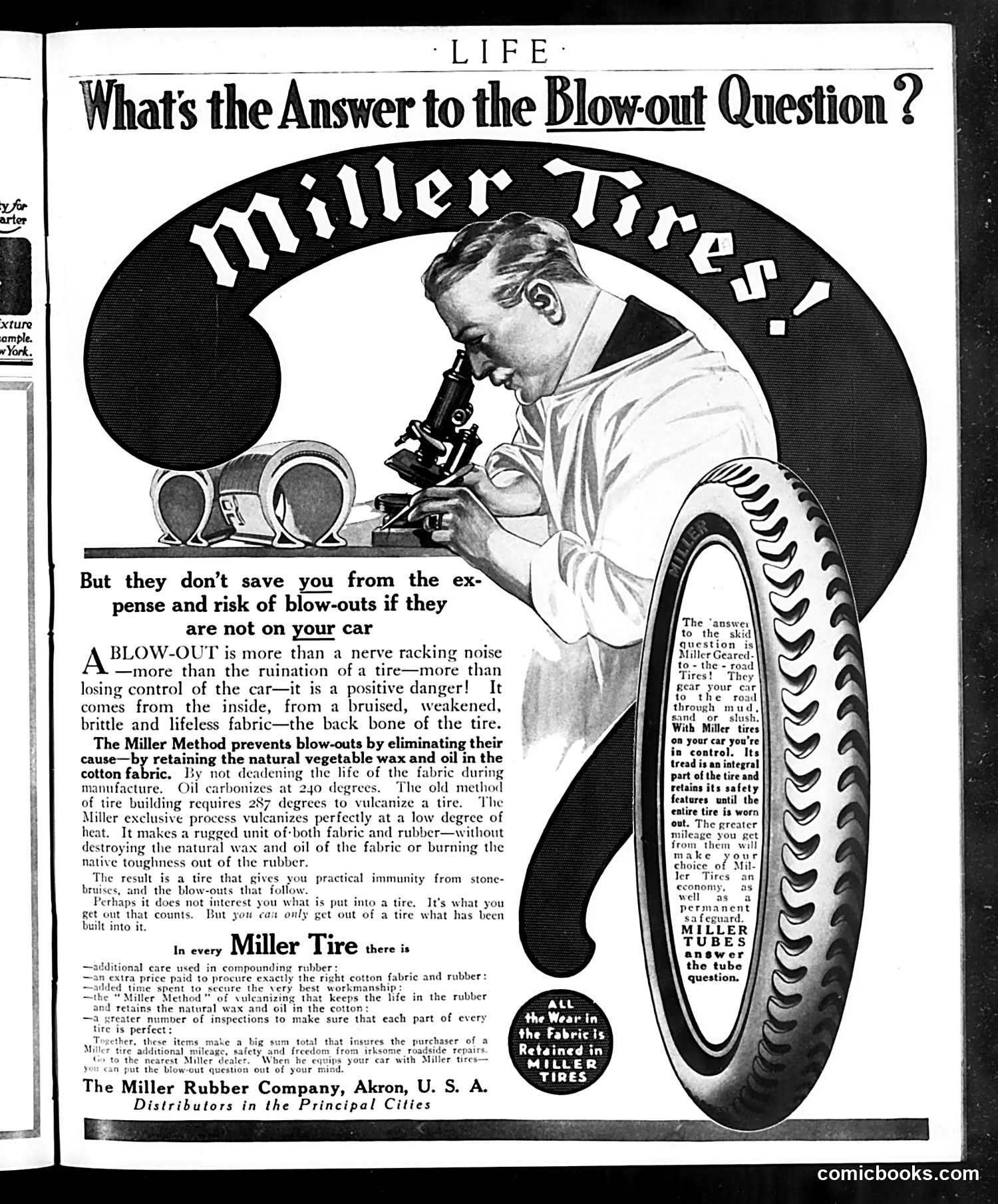
This is **not a political cartoon or satire**, but rather a **product advertisement** for Miller Tires, positioned as educational content in Life magazine. The page addresses tire "blow-outs" (sudden tire failures)—a genuine safety concern in early automotive history. A scientist or engineer examines a tire under a microscope, establishing authority. The ad explains that Miller's manufacturing process preserves natural oils and wax in tire fabric by using lower vulcanization temperatures (low heat) compared to competitors' methods (287 degrees). This supposedly prevents the brittleness that causes blow-outs. The "blow-out question" framing suggests competitors' tires might include blow-out protection features, but Miller argues only their internal manufacturing method truly prevents failures. The multiple inspection checkpoints and careful material selection are presented as reasons to trust the brand. This reflects the early 20th-century auto industry, when tire reliability was a serious marketing issue and a genuine technical concern.
📄 Transcribed text from this page (OCR, searchable)
Machine-transcribed from the original scan — historical spelling and the odd misread are preserved.
LIFE What's the Answer to the Blowout Question? But they don’t save you from the ex- pense and risk of blow-outs if they are not on your car BLOW-OUT is more than a nerve racking noise —more than the ruination of a tire—more than losing control of the car—it is a positive danger! It comes from the inside, from a bruised, weakened, brittle and lifeless fabric—the back bone of the tire. The Miller Method prevents blow-outs by eliminating their cause—b: retaining the natural vegetable wax and oil in the cotton fabric. By not deadening the life of the fabric during manufacture. Oil carbonizes at 240 degre The old method of tire building requires 287 degrees to vuleanize a tire. The Miller exclusive process vulcanizes perfectly at a low degree of heat. It makes a rugged unit of-both fabric and rubber—without destroying the natural wax and oil of the fabric or burning the native toughness out of the rubber. The result is a tire that gives you practical immunity from stone- bruises, and the blow-outs that follow. Perhaps it does not interest you what is put into a tire. get out that counts. built into it. It’s what you But you can only get out of a tire what has been In every Miller Tire there is Witional care used in compounding rubber : n extra price paid to procure exactly the right cotton fabric and rubber : Ided time spent to secure the very best workmanship : Miller Method” of vule: anizing that keeps the Ife in the rubber retains the natural wax and oil in the cotton: ter number of inspections to make sure that each part of every these it re’ additional n st Miller biow-out question out of your The Miller Rubber Company, Akron, U. S. A. Distributors in the Principal Cities can putt The “answer to the skid Yaucstion is Miller Geared- the = road Tires! They gear your car to the through mud, sand or slush. retains its safety features until the entire tire is worn The greater leage you get from them will make choice | Att the Wear in the Fabricis Reteined in MILLER TIRES comicbooks.com