
Life, 1915-04-29 · page 33 of 44
Life — April 29, 1915 — page 33: what you’re looking at
What you’re looking at
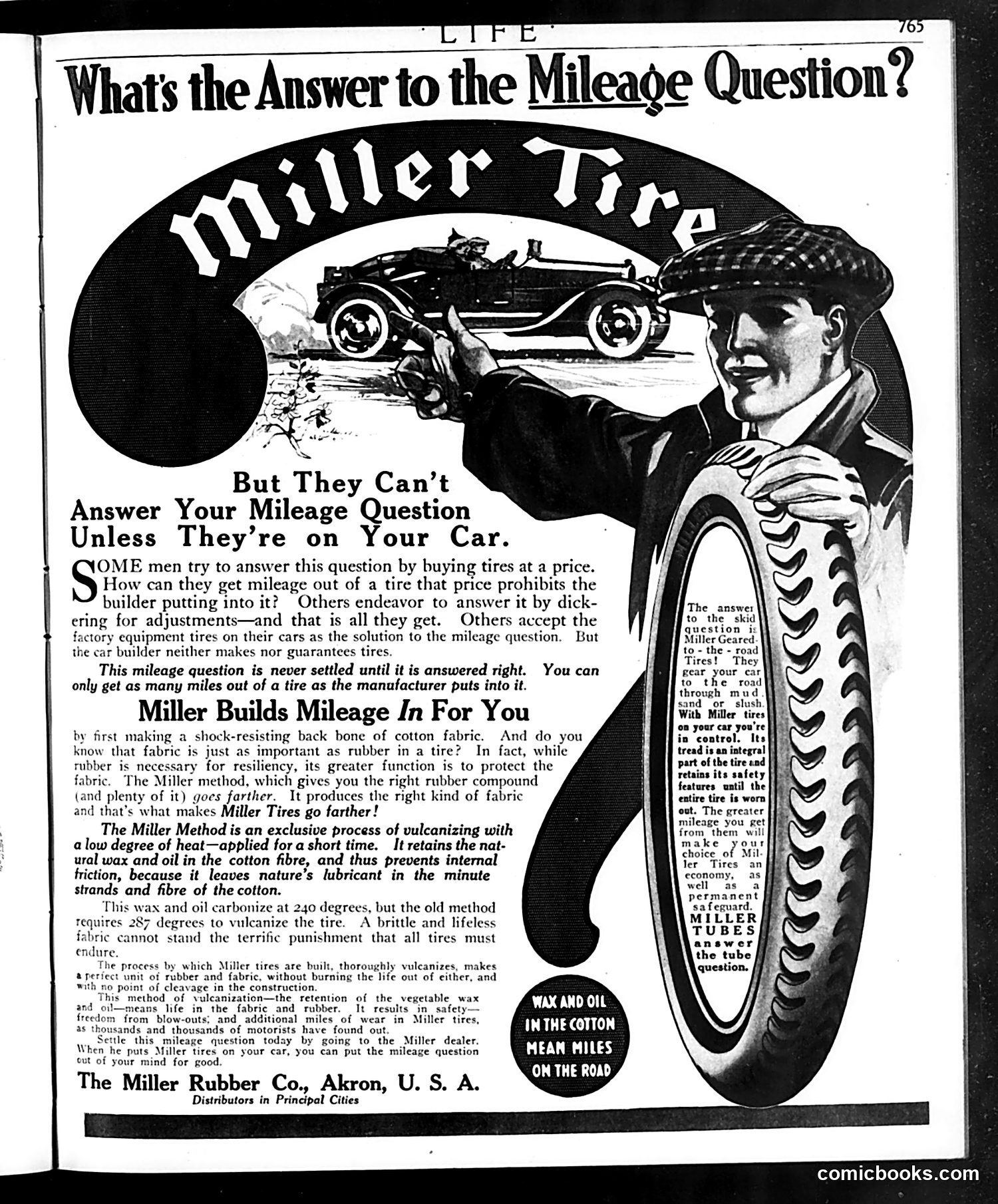
This is a **tire company advertisement**, not political satire. The Miller Rubber Company uses a rhetorical device to sell tires by framing the "mileage question"—how many miles will a tire last?—as an unsolvable problem unless customers buy Miller brand. The illustration shows a cheerful salesman pointing to a Miller tire, emphasizing that cheap tires or dealer haggling cannot answer durability questions. Only the manufacturer's quality engineering determines mileage. The ad's central claim is that Miller's exclusive vulcanization process—using lower heat (240 degrees vs. the industry standard 287 degrees)—preserves natural wax and oil in cotton fibers, reducing internal friction and extending tire life. The "WAX AND OIL IN THE COTTON MEAN MILES ON THE ROAD" slogan drives home the message: superior tire construction equals better value for motorists. This reflects early 20th-century automotive marketing, when tire quality was genuinely variable and a legitimate consumer concern.
📄 Transcribed text from this page (OCR, searchable)
Machine-transcribed from the original scan — historical spelling and the odd misread are preserved.
But They Can’t Answer Your Mileage Question Unless They’re on Your Car. Sie men try to answer this question by buying tires at a price. How can they get mileage out of a tire that price prohibits the builder putting into it? Others endeavor to answer it by dick- ering for adjustments—and that is all they get. Others accept the factory equipment tires on their cars as the solution to the mileage question. But the car builder neither makes nor guarantees tires. This mileage question is never settled until it is answered right. You can only get as many miles out of a tire as the manufacturer puts into it. Miller Builds Mileage Jn For You by first making a shock-resisting back bone of cotton fabric. And do you know that fabric is just as important as rubber in a tire? In fact, while tubber is necessary for resiliency, its greater function is to protect the fabric. The Miller method, which gives you the right rubber compound (and plenty of it) goes farther. It produces the right kind of fabric and that’s what makes Miller Tires go farther! The Miller Method is an exclusive process of vulcanizing with a low degree of heat—applied for a short time. It retains the nat- ural wax and oil in the cotton fibre, and thus prevents internal friction, because it leaves nature’s lubricant in the minute strands and fibre of the cotton. This wax and oil carbonize at 240 degrees, but the old method requires 287 degrees to vulcanize the tire. A brittle and lifeless fabric cannot stand the terrific punishment that all tires must endure, The process by which Miller tires are built, thoroughly vulcanizes, makes ‘perfect unit of rubber and fabric, without burning the life out of either, and © point of cleavage in the construction. his method of vulcanization—the retention of the vegetable wax means life in the fabric and rubber. It results in safety— from blow-outs; and additional miles of wear in Miller tires, ands and thousands of motorists have found out. Settle this mileage question today by going to the Miller dealer. When he puts Miller tires on your car, you can put the mileage question out of your mind for good. The Miller Rubber Co., Akron, U. S. A. Distributors in Principal Cities WAX AND OIL IN THE COTTON MEAN MILES ON THE ROAD The answer to the ski question Miller Gears to - the - road Tires! The: gear to the road through mud . The greater mileage you get from them will make your choice of Mil- ler Tires economy, well as permanent safeguard. comicbooks.com