
Life, 1915-04-29 · page 16 of 44
Life — April 29, 1915 — page 16: what you’re looking at
What you’re looking at
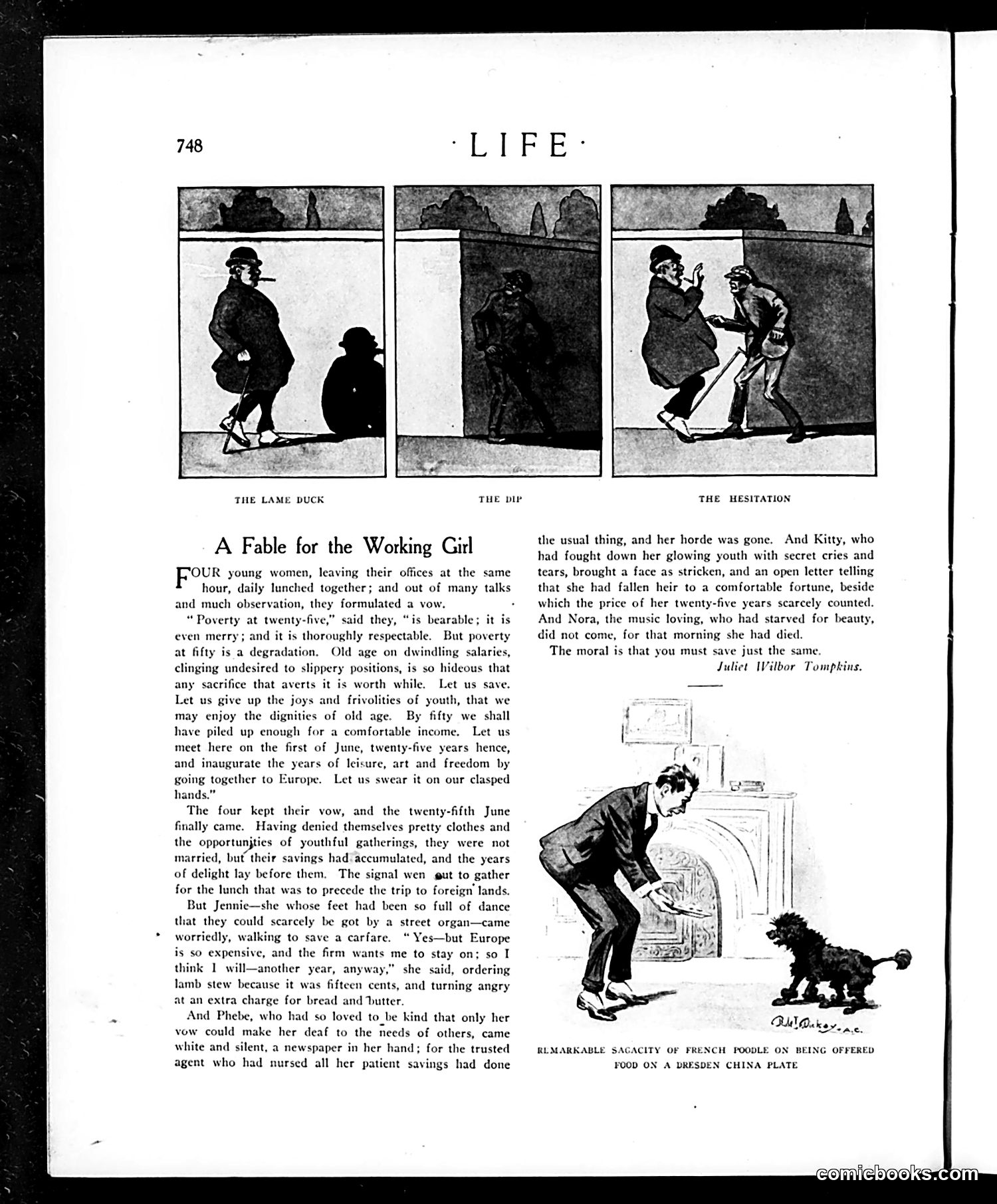
This satirical story depicts four young office workers who vow to sacrifice youth's pleasures—fine clothes, social gatherings, entertainment—to accumulate savings by age 50, enabling a European retirement. The accompanying comic panels ("The Lame Duck," "The Dip," "The Hesitation") illustrate their struggle between temptation and discipline. Twenty-five years later, their plan collapses: Jennie postpones the trip indefinitely; Phebe's trusted agent embezzled her savings; Kitty unexpectedly inherits wealth, making her sacrifice pointless; Nora died before reaching retirement. The satire critiques both the false promise of self-denial and the precarious economic reality for working women of this era. Despite the moral ("you must save just the same"), the story suggests that saving alone cannot guarantee security—theft, death, and circumstance undermine individual effort. The cartoon mockingly highlights the futility of the working girl's financial aspirations against systemic vulnerability.
📄 Transcribed text from this page (OCR, searchable)
Machine-transcribed from the original scan — historical spelling and the odd misread are preserved.
THE LAME DUCK A Fable for the Working Girl ‘OUR young women, leaving their offices at the same hour, daily lunched together; and out of many talks and much observation, they formulated a vow, “Poverty at twenty-five,” said they, “is bearable; it is even merry; and it is thoroughly respectable. But poverty at fifty is a degradation. Old age on dwindling salarie: clinging undesired to slippery positions, is so hideous that any sacrifice that averts it is worth while. Let us give up the joys and frivolities of youth, that we may enjoy the dignities of old age. By fifty we shall have piled up enough for a comfortable income. Let us meet here on the first of June, twenty-five years hence, and inaugurate the years of leisure, art and freedom by going together to Europe. Let us swear it on our clasped hands.” The four kept their vow, and the twenty-fifth June finally came. Having denied themselves pretty clothes and the opportunjtics of youthful gatherings, they were not married, but their savings had‘ accumulated, and the years of delight lay before them. The signal wen gut to gather for the lunch that was to precede the trip to foreign lands. But Jennie—she whose feet had been so full of dance that they could scarcely be got by a street organ—came worriedly, walking to save a carfare. “Yes—but Europe is so expensive, and the firm wants me to stay on; so I think 1 will—another year, anyway,” lamb stew because it was fifteen cent: at an extra charge for bread and ‘utter. And Phebe, who had so loved to_be kind that only her vow could make her deaf to the needs of others, came white and silent, a newspaper in her hand; for the trusted agent who had nursed all her patient savings had done Let us save. she said, ordering and turning angry THE pip THE HESITATION the usual thing, and her horde was gone. And Kitty, who had fought down her glowing youth with secret cries and tears, brought a face as stricken, and an open letter telling that she had fallen heir to a comfortable fortune, beside which the price of her twenty-five years scarcely counted. And Nora, the music loving, who had starved for beauty, did not come, for that morning she had died. The moral is that you must save just the same. Juliet Wilbor Tompkins. eS e ace. RLMARKABLE SAGACITY OF FRENCH POODLE ON BEING OFFERED FOOD ON A DRESDEN CHINA PLATE