
Life, 1915-01-21 · page 8 of 44
Life — January 21, 1915 — page 8: what you’re looking at
What you’re looking at
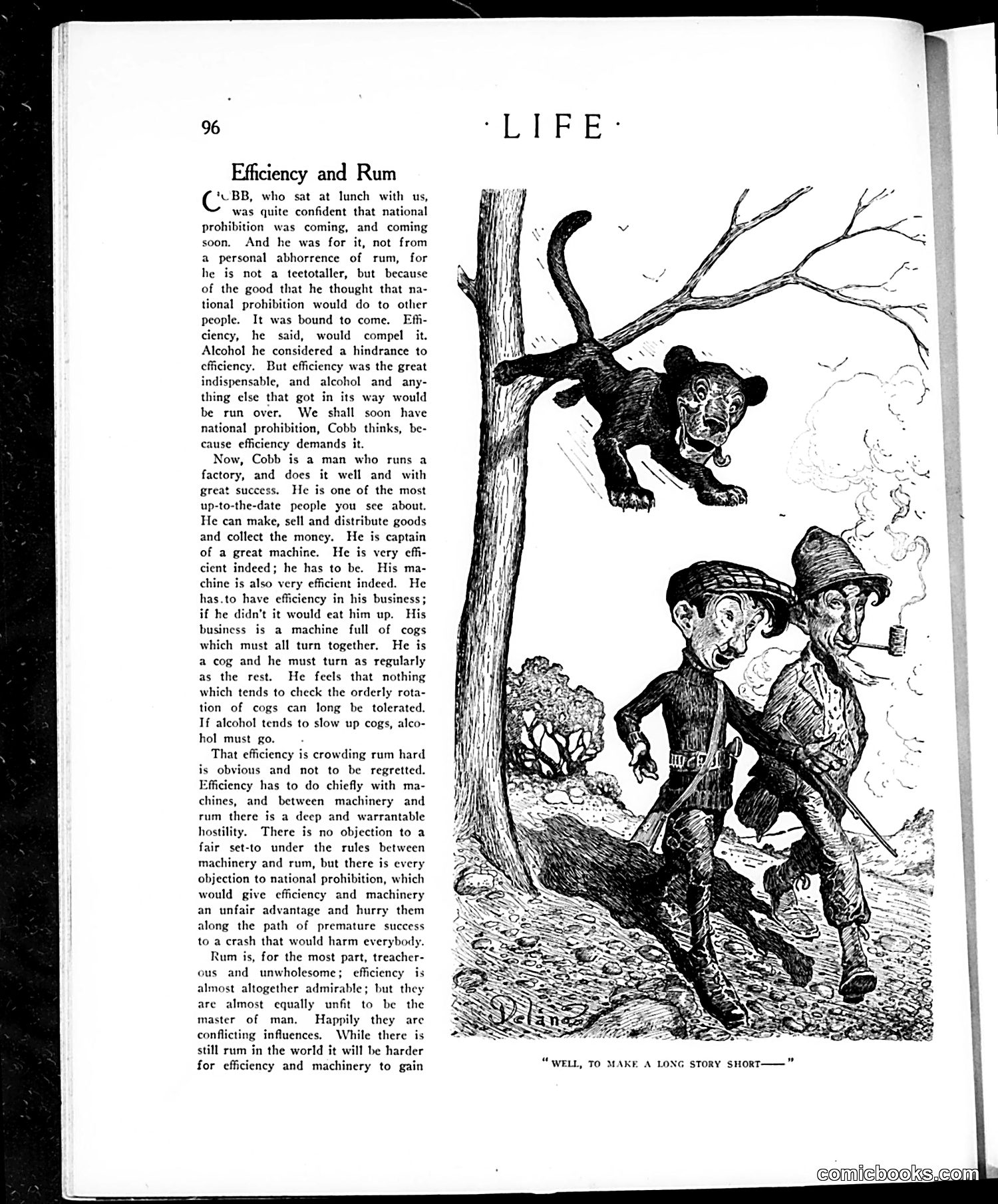
This satirical piece critiques the tension between industrial efficiency and alcohol prohibition. The text describes "Cobb," a factory manager who embodies mechanical efficiency but argues that national prohibition will harm business because alcohol and industrial machinery are incompatible—efficiency demands alcohol be eliminated. The illustration shows two caricatured men at a tree with a small demon/imp figure above. The caption reads "Well, to make a long story short—" suggesting these characters are debating prohibition. The satire mocks prohibition advocates by presenting the absurd argument that efficiency itself demands alcohol's removal, while simultaneously attacking those who prioritize industrial productivity over moral concerns. The piece appears to question whether purely mechanical "efficiency" should govern public policy.
📄 Transcribed text from this page (OCR, searchable)
Machine-transcribed from the original scan — historical spelling and the odd misread are preserved.
96 Efficiency and Rum Cc BB, who sat at lunch with us, was quite confident that national prohibition was coming, and coming soon. And he was for it, not from a personal abhorrence of rum, for he is not a teetotaller, but because of the good that he thought that na- tional prohibition would do to other people. It was bound to come. Effi- ciency, he said, would compel it. Alcohol he considered a hindrance to efficiency. But efficiency was the great indispensable, and alcohol and any- thing else that got in its way would be run over. We shall soon have national prohibition, Cobb thinks, be- cause efficiency demands it. Now, Cobb is a man who runs a factory, and does it well and with great success. He is one of the most up-to-the-date people you see about. He can make, sell and distribute goods and collect the money. He is captain of a great machine. He is very effi- cient indeed; he has to be. His ma- chine is also very efficient indeed. He has.to have efficiency in his business; if he didn’t it would eat him up. His business is a machine full of cogs which must all turn together. He is a cog and he must turn as regularly as the rest. He feels that nothing which tends to check the orderly rota- tion of cogs can long be tolerated. If alcohol tends to slow up cogs, alco- hol must go. That efficiency is crowding rum hard is obvious and not to be regretted. Efficiency has to do chiefly with ma- chines, and between machinery and rum there is a deep and warrantable hostility. There is no objection to a fair set-to under the rules between machinery and rum, but there is every objection to national prohibition, which would give efficiency and machinery an unfair advantage and hurry them along the path of premature success to a crash that would harm everybody. Rum is, for the most part, treacher- ous and unwholesome; efficiency is almost altogether admirable; but they are almost equally unfit to be the master of man. Happily they are conflicting influences. While there is still rum in the world it will be harder for efficiency and machinery to gain “WELL, TO MAKE A LONG STORY SHORT——” comichooks, com