
Life, 1914-12-03 · page 51 of 92
Life — December 3, 1914 — page 51: what you’re looking at
What you’re looking at
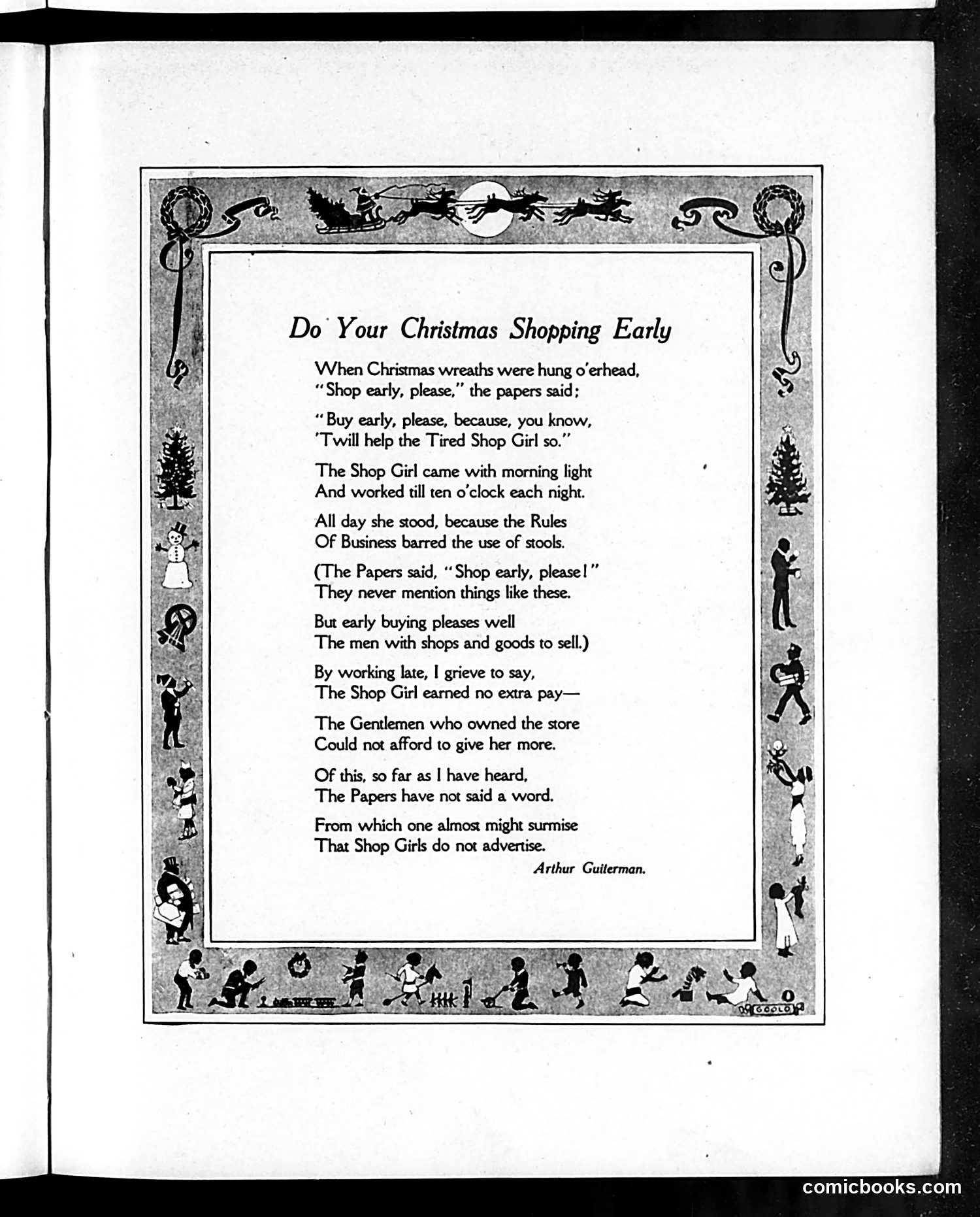
This satirical poem critiques the hypocrisy of Christmas shopping campaigns. The text reveals that newspapers urged early shopping to help "tired shop girls," but omitted crucial context: these workers stood all day without seating (forbidden by business rules), worked until 10 PM with no extra compensation, and received no wage increases despite the hardship. Guiterman's ironic conclusion: the press promotes early shopping to benefit store owners' profits, not workers' welfare. The phrase "Shop Girls do not advertise" suggests their exploitation goes unreported because they lack commercial value or political voice. The decorative border features Christmas imagery and silhouettes of children at play—contrasting innocent holiday cheer with the grim reality of retail labor exploitation during the busy season. This appears to be early-20th-century social commentary on labor conditions and press complicity.
📄 Transcribed text from this page (OCR, searchable)
Machine-transcribed from the original scan — historical spelling and the odd misread are preserved.
Do Your Christmas Shopping Early When Christmas wreaths were hung o’erhead, “Shop early, please,” the papers said; “Buy early, please, because, you know, ‘Twill help the Tired Shop Girl so.” The Shop Girl came with morning light And worked till ten o’clock each night. All day she stood, because the Rules Of Business barred the use of stools. (The Papers said, ‘‘Shop early, please!” They never mention things like these. But early buying pleases well The men with shops and goods to sell.) By working late, I grieve to say, The Shop Girl earned no extra pay— The Gentlemen who owned the store Could not afford to give her more. Of this, so far as | have heard, The Papers have not said a word. From which one almost might surmise That Shop Girls do not advertise. Arthur Guiterman. comicbooks.com