
Life, 1914-11-05 · page 17 of 48
Life — November 5, 1914 — page 17: what you’re looking at
What you’re looking at
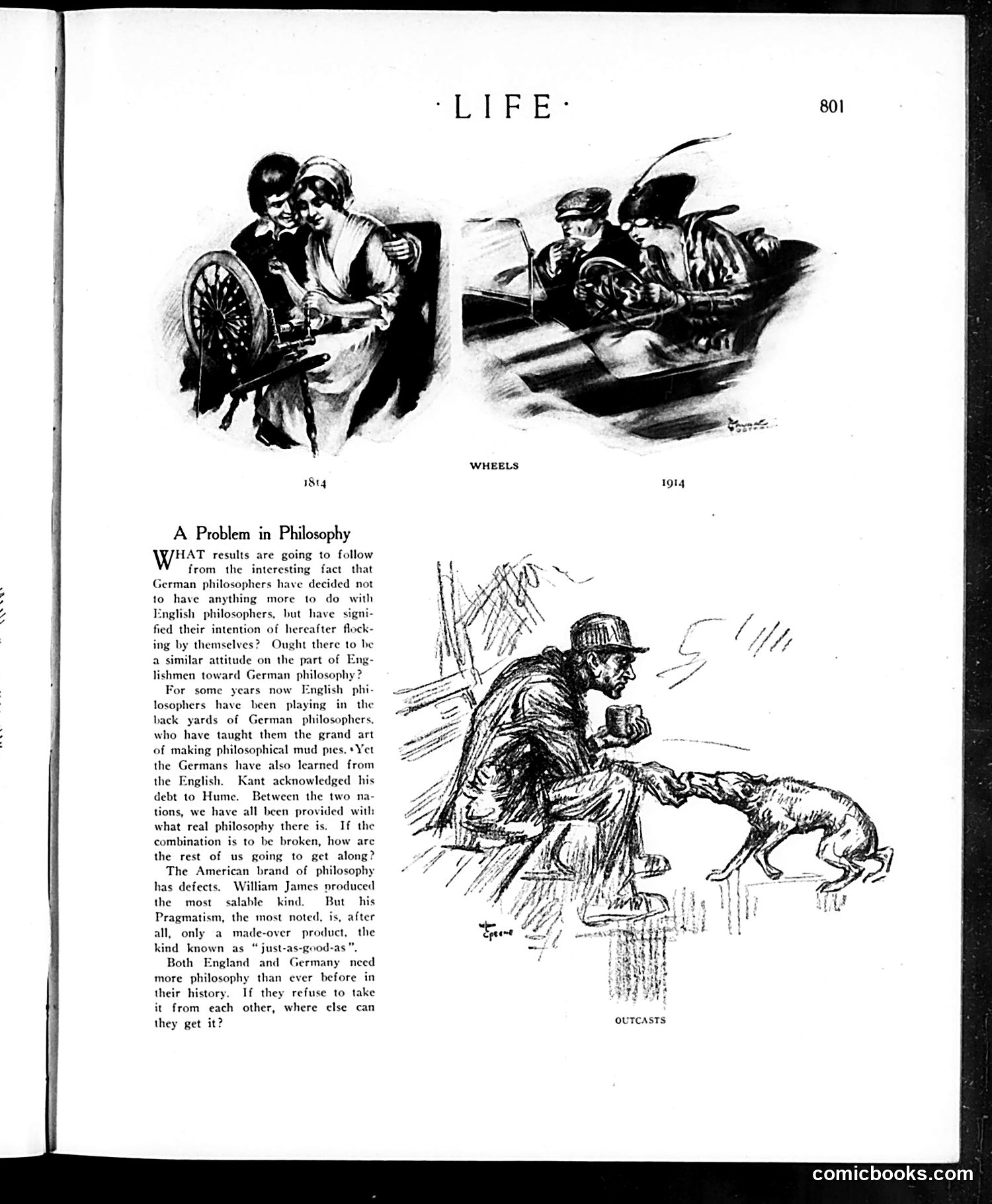
This 1914 *Life* magazine page satirizes the intellectual rift between German and English philosophers during World War I. The article's title, "A Problem in Philosophy," ironically frames a political breakdown as an abstract debate. The text argues that German and English philosophers have decided to cease collaboration—a consequence of the war. The satirical point: both nations have historically enriched each other philosophically (referencing Kant's debt to Hume), so their separation impoverishes intellectual life. The author dismisses American philosophy as derivative ("just-as-good-as"). The illustrations support this theme: "Wheels" (1814 vs. 1914) contrasts horse-drawn transport with motorboats—showing technological progress despite philosophical stagnation. "Outcasts" depicts a homeless man with a dog, representing intellectual figures abandoned by their nations' mutual rejection. The underlying message mocks both countries' wartime nationalism, suggesting that severing philosophical exchange harms everyone, including those (Americans) dependent on European thought.
📄 Transcribed text from this page (OCR, searchable)
Machine-transcribed from the original scan — historical spelling and the odd misread are preserved.
i8t4 A Problem in Philosophy wt results are going to follow from the interesting fact that German philosophers have decided not to have anything more to do with English philosophers, but have signi- fied their intention of hereafter flock- ing by themselves? Ought there to be a similar attitude on the part of Eng- lishmen toward German philosophy? For some years now English phi- losophers have been playing in. the back yards of German philosophers, who have taught them the grand art of making philosophical mud pies. *Yet the Germans have also learned from the English. Kant acknowledged his debt to Hume. Between the two na- tions, we have all been provided with what real philosophy there is. If the combination is to be broken, how are the rest of us going to get along? The American brand of philosophy has defects. William James produced the most salable kind. But his Pragmatism, the most noted, is, after all, only a made-over product, the kind known as “ just-as-good-as ", Both England and Germany need more philosophy than ever before in their history. If they refuse to take it from each other, where else can they get it? WHEELS OUTCASTS comicbooks.com