
Life, 1914-07-02 · page 13 of 44
Life — July 2, 1914 — page 13: what you’re looking at
What you’re looking at
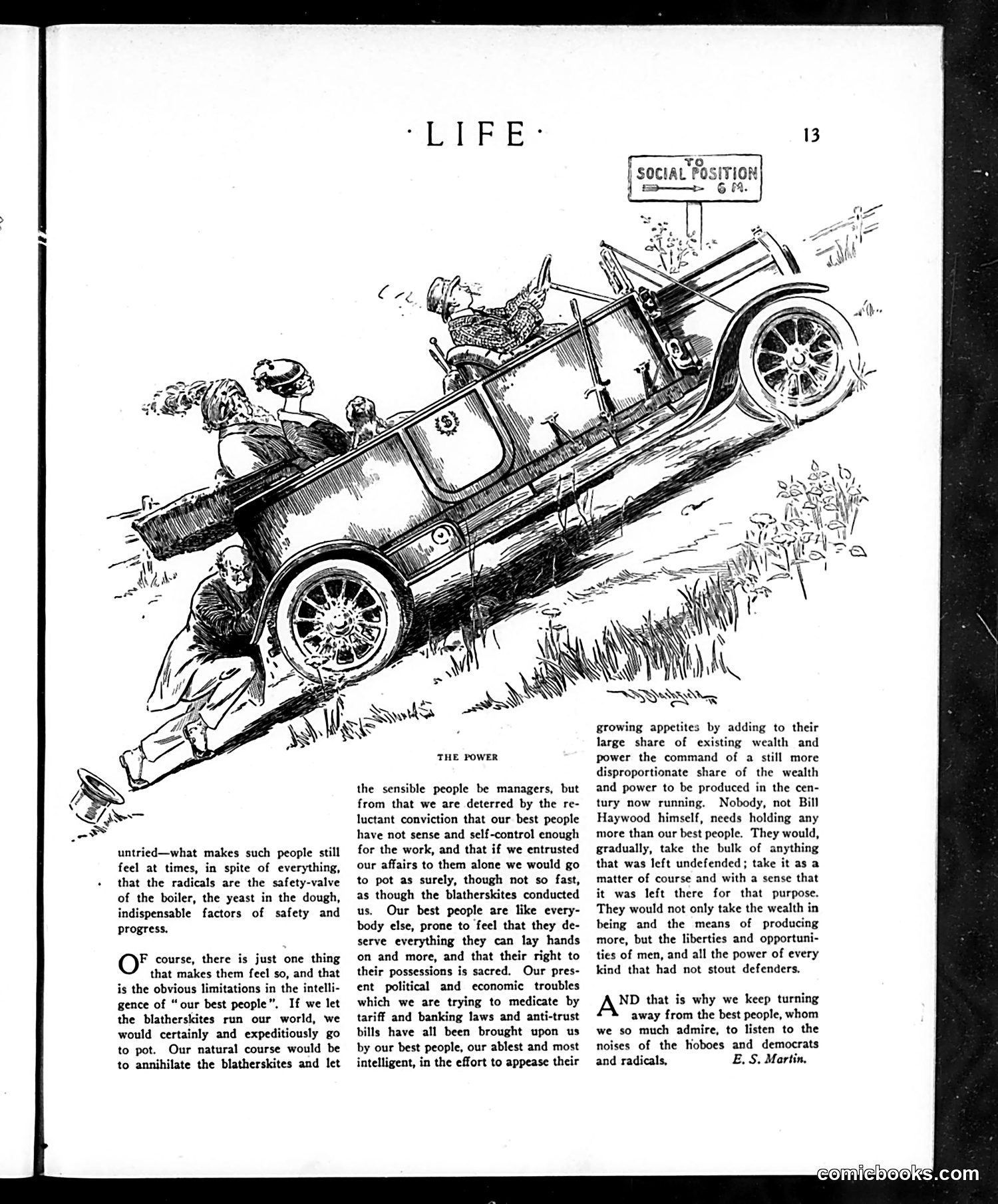
This satirical cartoon depicts an overloaded early automobile careening dangerously uphill, with passengers precariously perched and a figure struggling beneath it. The label "SOCIAL POSITION" suggests the vehicle represents wealth and status. The accompanying text criticizes America's "best people"—the wealthy and intelligent elite—for lacking self-control and judgment. The author argues these leaders have created economic troubles (tariffs, banking laws, anti-trust legislation) through incompetence, yet society continues trusting them. The cartoon's visual metaphor is clear: pursuing "social position" (the vehicle) is unstable, dangerous, and likely to crash. The struggling figure and precarious passengers suggest that chasing wealth and status destabilizes society for everyone. The satire targets the hypocrisy of revering incompetent elites.
📄 Transcribed text from this page (OCR, searchable)
Machine-transcribed from the original scan — historical spelling and the odd misread are preserved.
untried—what makes such people still feel at times, in spite of everything, that the radicals are the safety-valve of the boiler, the yeast in the dough, indispensable factors of safety and Progress. F course, there is just one thing that makes them feel so, and that is the obvious limitations in the intelli- gence of “our best people”. If we let the blatherskites run our world, we would certainly and expeditiously go to pot. Our natural course would be to annihilate the blatherskites and let THE POWER the sensible people be managers, but from that we are deterred by the re- luctant conviction that our best people have not sense and self-control enough for the work, and that if we entrusted our affairs to them alone we would go to pot as surely, though not so fast, as though the blatherskites conducted us, Our best people are like every- body else, prone to feel that they de- serve everything they can lay hands on and more, and that their right to their possessions is sacred. Our pres- ent political and economic troubles which we are trying to medicate by tariff and banking laws and anti-trust bills have all been brought upon us by our best people, our ablest and most intelligent, in the effort to appease their fe. | SOCIAL P SITION SSSA growing appetites by adding to their large share of existing wealth and power the command of a still more disproportionate share of the wealth and power to be produced in the cen- tury now running. Nobody, not Bill Haywood himself, needs holding any more than our best people. They would, gradually, take the bulk of anything that was left undefended; take it as a matter of course and with a sense that it was left there for that purpose. They would not only take the wealth in being and the means of producing more, but the liberties and opportuni- ties of men, and all the power of every kind that had not stout defenders. A’? that is why we keep turning away from the best people, whom we so much admire, to listen to the noises of the hoboes and democrats and radicals, E. S. Martin,