
Life, 1914-04-09 · page 11 of 40
Life — April 9, 1914 — page 11: what you’re looking at
What you’re looking at
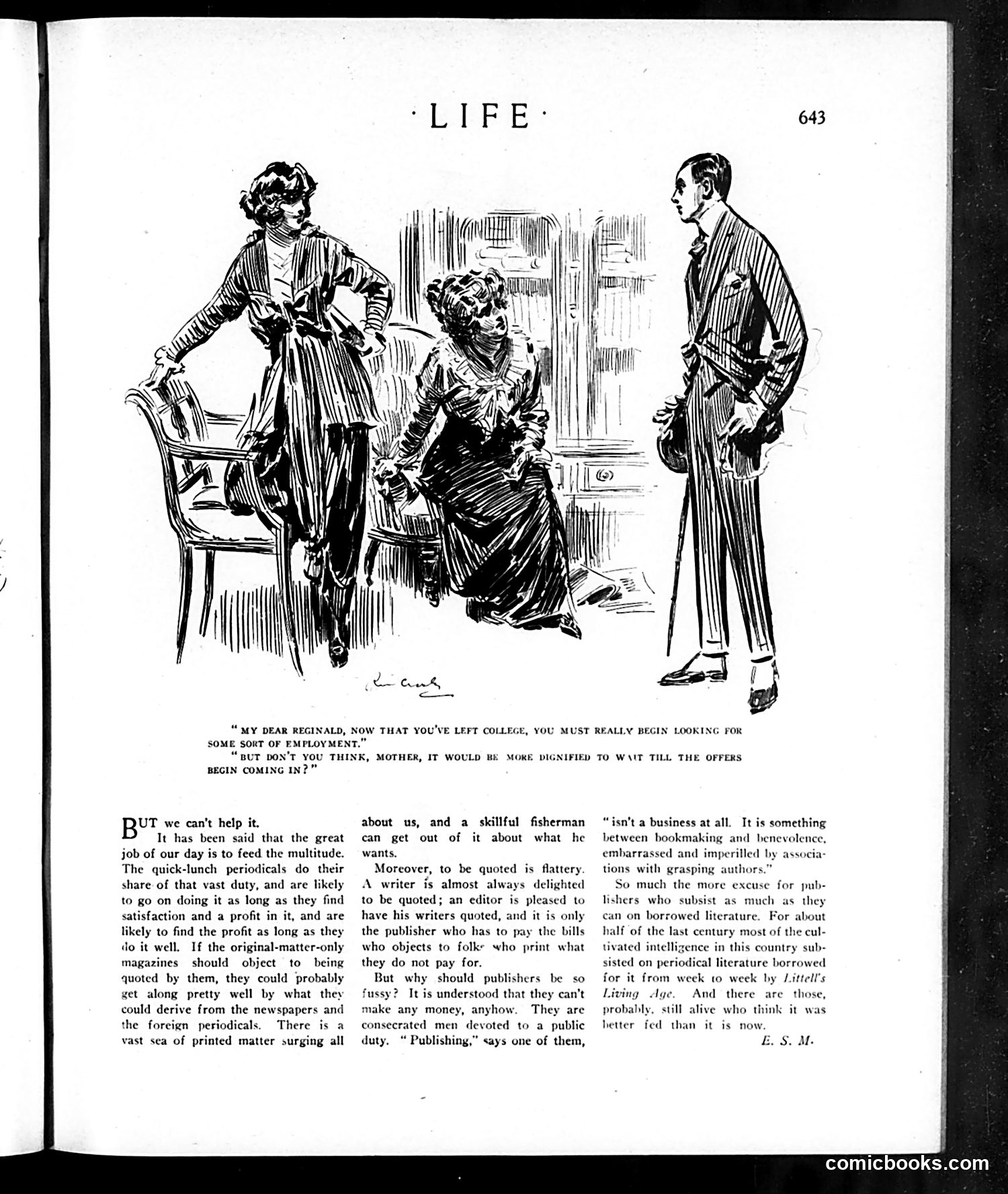
This cartoon satirizes early-20th-century employment anxieties for college graduates. The scene shows three figures—two women and a man—in what appears to be a parlor. One woman stands assertively while another sits; the man listens. The dialogue suggests a mother advising her son that after leaving college, he must seek employment, but "it would be more dignified to wait till the offers begin coming in." The satire targets upper-class assumptions about social standing: the notion that a respectable young man shouldn't actively *seek* work but should wait passively for prestigious job offers to arrive. This reflects period anxieties about status, employment, and the changing economy where such expectations were increasingly unrealistic.
📄 Transcribed text from this page (OCR, searchable)
Machine-transcribed from the original scan — historical spelling and the odd misread are preserved.
“MY DEAR REGINALD, NOW THAT YOU'VE LEFT COLLEGE, YOU MUST REALLY BEGIN LOOKING FOR SOME SORT OF EMPLOY MEN: “BUT DON’T YOU THINK, MOTHER, IT WOULD BE MORE DIGNIFIED TO W\IT TILL THE OFFERS BEGIN COMING IN?” UT we can't help it. It has been said that the great job of our day is to feed the multitude. The quick-lunch periodicals do their share of that vast duty, and are likely to go on doing it as long as they find satisfaction and a profit in it, and are likely to find the profit as long as they do it well. If the original-matter-only magazines should object to being quoted by them, they could probably get along pretty well by what they could derive from the newspapers and the foreign periodicals. There is a vast sea of printed matter surging all about us, and a skillful fisherman can get out of it about what he wants. Moreover, to be quoted is flattery. A writer is almost always delighted to be quoted; an editor is pleased to have his writers quoted, and it is only the publisher who has to pay the bills who objects to folky who print what they do not pay for. But why should publishers be so fussy? It is understood that they can’t make any money, anyhow. They are consecrated men devoted to a public duty. “ Publishing,” says one of them, “isn’t a business at all. It is something Letween bookmaking and benevolence, embarrassed and imperilled a tions with grasping autho So much the more excuse for pub- lishers who subsist as much as they can on borrowed literature. For about half of the last century most of the cul- tivated intelligence in this country sub- sisted on periodical literature borrowed for it from week to week by Littell’s i And ly. still alive who think it was Age. there are those, hetter fed than it is now. E. S. M. comicbooks.com