
Life, 1913-05-08 · page 12 of 48
Life — May 8, 1913 — page 12: what you’re looking at
What you’re looking at
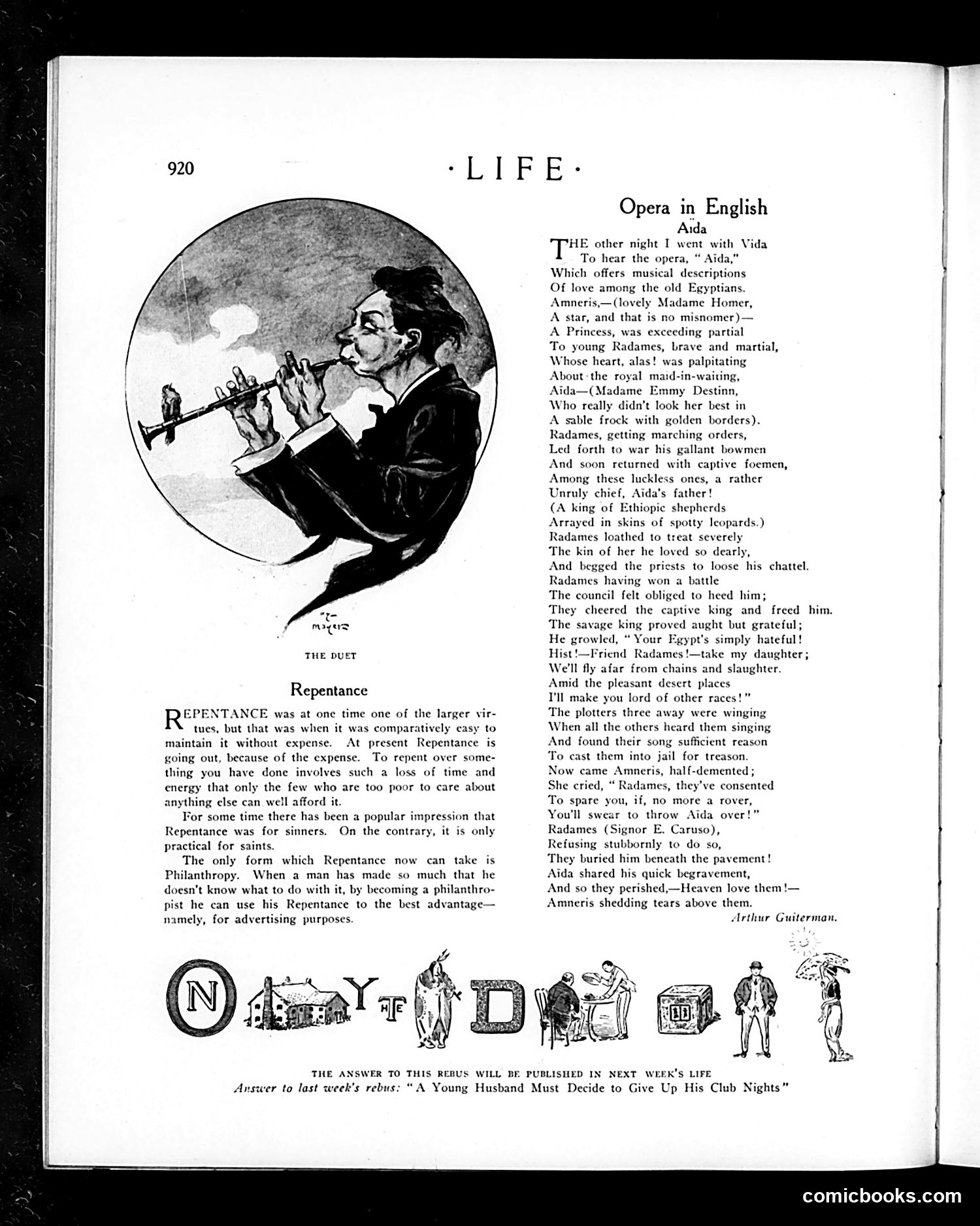
**"The Duet" Cartoon:** The illustration shows a caricatured man playing a flute while conducting an orchestra. The exaggerated facial features and style suggest this is satirizing a specific operatic or musical figure of the era, though the identity is unclear from the image alone. **"Opera in English" Section:** This is a humorous poem by Arthur Guterman about a production of Verdi's *Aida* performed in English. The satire mocks the experience of watching grand opera with English translations, following a melodramatic plot involving an Ethiopian king, Egyptian princess Aida, and romantic/political complications. The humor derives from treating the elaborate operatic narrative as absurdly overwrought entertainment. **"Repentance" Essay:** A brief philosophical piece questioning whether "Repentance" remains a practical virtue, suggesting it now serves primarily as advertising.
📄 Transcribed text from this page (OCR, searchable)
Machine-transcribed from the original scan — historical spelling and the odd misread are preserved.
“te mags THE DUET Repentance R' PENTANCE was at one time one of the larger vir- tues, but that was when it was comparatively casy to maintain it without expense. At present Repentance is going out, because of the expense. To repent over some- thing you have done involves such a loss of time and energy that only the few who are too poor to care about anything else can well afford it. For some time there has been a popular impression that Repentance was for sinners. On the contrary, it is only practical for saints. The only form which Repentance now can take is Philanthropy. When a man has made so much that he doesn’t know what to do with it, by becoming a philanthrc pist he can use his Repentance to the best advantage— namely, for advertising purposes. *LIPE: Answer to last week's rebus: “A Young Husband Must Decide to Give Up His Club Nights” Opera in English Aida Ti other night I went with Vida To hear the opera, “ Aida,” Which offers musical descriptions Of love among the old Egyptians. Amneris,—(lovely Madame Homer, A star, and that is no misnomer)— A Princes xceeding partial To young Radames, brave and martial, Whose heart, alas! was palpitating About the royal maid-in-waiting, Aida—(Madame Emmy Destinn, Who really didn’t look her best in A sable frock with golden borders). Radames, getting marching orders, Led forth to war his gallant bowmen And soon returned with captive foemen, Among these luckless ones, a rather Unruly chief, Aida’s father! (A king of Ethiopic shepherds Arrayed in skins of spotty leopards.) Radames loathed to treat severely The kin of her he loved so dearly, And begged the priests to loose his chattel. Radames having won a battle The council felt obliged to heed him; They cheered the captive king and freed him. The savage king proved aught but grateful; He growled, “ Your Egypt's simply hateful! Hist'!—Friend Rada —take my daughter; We'll fly afar from chains and slaughter. Amid the pleasant desert places T'll make you lord of other race: The plotters three away were winging When all the others heard them singing And found their song sufficient reason To cast them into jail for treason. Now came Amneris, half-demented ; She cried, “ Radames, they’ve consented To spare you, if, no more a rover, You'll swear to throw Aida over!” Radames (Signor E. Caruso), Refusing stubbornly to do so, They buried him beneath the pavement! Aida shared his quick begravement, And so they perished,—Heaven love them !— Amneris shedding tears above them. Arthur Guiterman, ne: comicbooks.com