
Life, 1913-04-10 · page 13 of 48
Life — April 10, 1913 — page 13: what you’re looking at
What you’re looking at
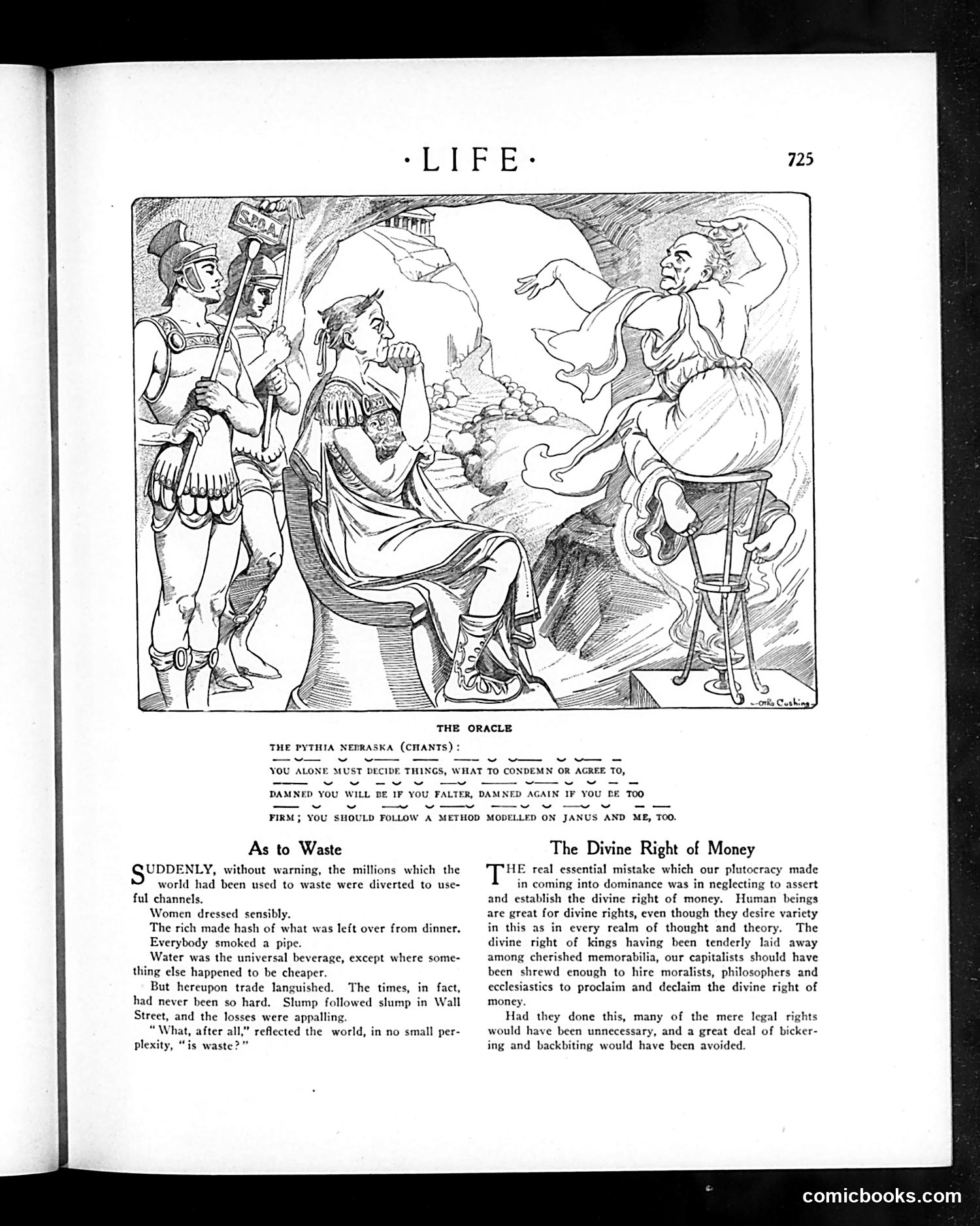
This cartoon satirizes decision-making authority, likely during the Progressive Era. It depicts two Roman military/political figures consulting an oracle (the Pythia from Greek mythology), shown as an eccentric figure on an elevated seat. The oracle's chant warns against both indecision and overconfidence—a commentary on political leadership struggles. The accompanying articles critique waste and "the divine right of money," suggesting concerns about plutocracy and economic inequality. The satire implies that contemporary leaders, like the Roman figures seeking guidance, are confused about proper governance and may be wrongly worshipping wealth as supreme authority rather than pursuing rational policy. The cartoon criticizes both weak and dogmatic leadership while questioning whether capitalists have assumed undeserved moral authority.
📄 Transcribed text from this page (OCR, searchable)
Machine-transcribed from the original scan — historical spelling and the odd misread are preserved.
THE ORACLE THE PYTHIA NEDRASKA (CHANTS): YOU ALONE MUST DECIDE THINGS, WHAT TO CONDEMN OR AGREE TO, DAMNED YOU WILL BE IF YOU FALTER, DAMNED AGAIN IF YOU LE TOO FIRM; YOU SHOULD FOLLOW A METHOD MODELLED ON JANUS AND As to Waste SUDDENLY, without warning, the millions which the world had been used to waste were diverted to use- ful channels. Women dressed sensibly. The rich made hash of what was left over from dinner. Everybody smoked a pipe. Water was the universal beverage, except where some- thing else happened to be cheaper. But hereupon trade languished. The times, in fact, had never been so hard. Slump followed slump in Wall Street, and the losses were appalling. “What, after all,” reflected the world, in no small per- plexity, “is waste?” ME, TOO. The Divine Right of Money HE real essential mistake which our plutocracy made in coming into dominance was in neglecting to assert and establish the divine right of money. Human beings are great for divine rights, even though they desire varicty in this as in every realm of thought and theory. The divine right of kings having been tenderly laid away among cherished memorabilia, our capitalists should have been shrewd enough to hire moralists, philosophers and ecclesiastics to proclaim and declaim the divine right of money. Had they done this, many of the mere legal rights would have been unnecessary, and a great deal of bicker- ing and backbiting would have been avoided. comicbooks.com