
Life, 1913-04-03 · page 11 of 52
Life — April 3, 1913 — page 11: what you’re looking at
What you’re looking at
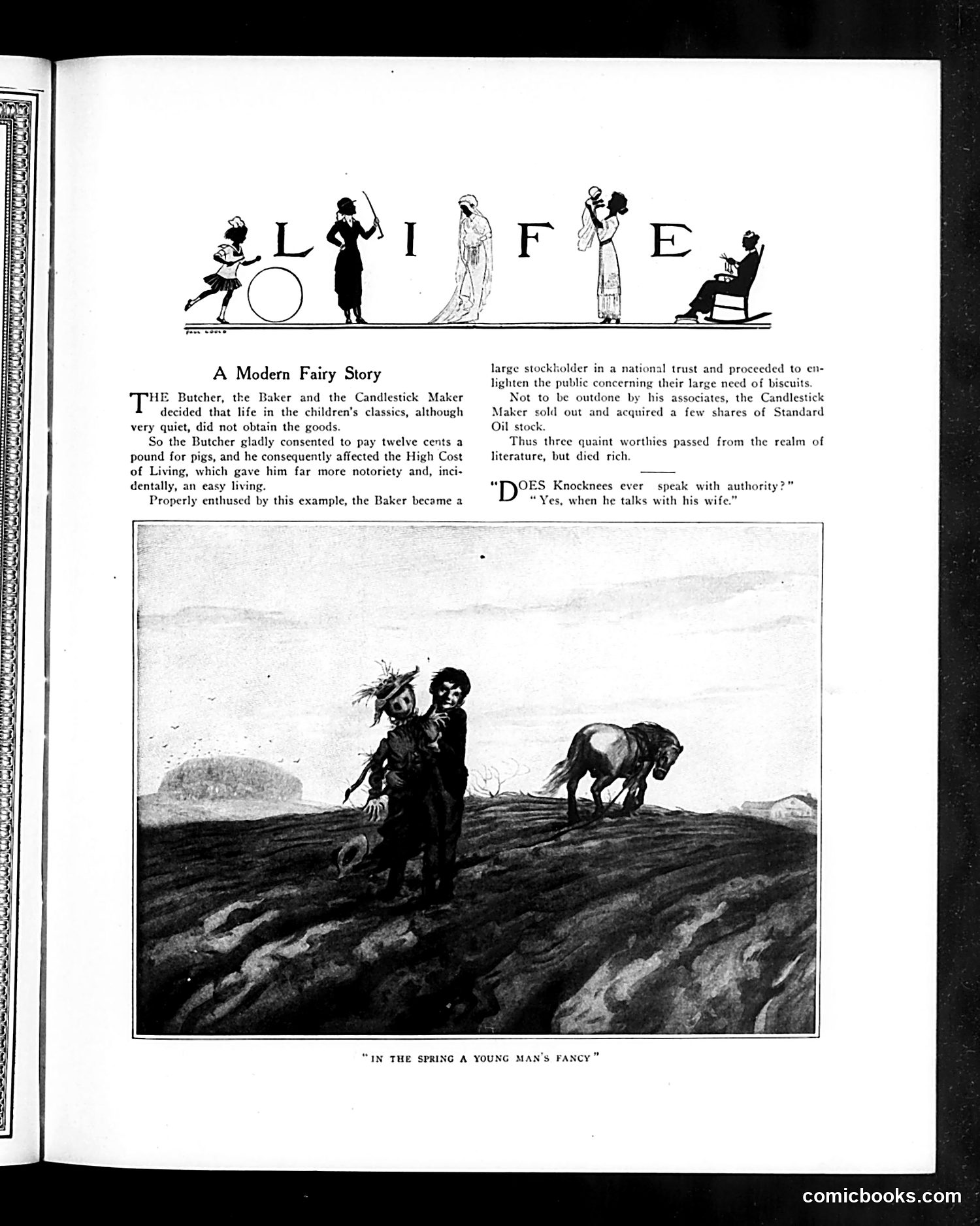
This satirical piece mocks the American financial elite's pursuit of wealth. "The Butcher, the Baker and the Candlestick Maker" (referencing the nursery rhyme) decided life in the country offered easy living. However, they discovered that obtaining goods required capital—the butcher needed twelve cents per pound for pigs, creating an unexpectedly high cost of living. Inspired by this lesson, the baker became a "large stockholder in a national trust" to acquire shares in Standard Oil. The candlestick maker similarly profited. The satire's moral: three "quaint worthies" from literature died poor, while modern businessmen grew wealthy through stock manipulation and financial schemes rather than honest labor. The accompanying illustration shows two figures in a rural landscape, captioned "In the Spring a Young Man's Fancy"—likely depicting romantic aspirations versus financial reality.
📄 Transcribed text from this page (OCR, searchable)
Machine-transcribed from the original scan — historical spelling and the odd misread are preserved.
A Modern Fairy Story HE Butcher, the Baker and the Candlestick Maker decided that life in the children’s classics, although very quiet, did not obtain the goods. So the Butcher gladly consented to pay twelve cents a pound for pigs, and he consequently affected the High Cost of Living, which gave him far more notoriety and, inci- dentally, an easy living. Properly enthused by this example, the Baker became a large stockholder in a national trust and proceeded to en- lighten the public concerning their large need of biscuits. Not to be outdone by his associates, the Candlestick Maker sold out and acquired a few shares of Standard Oil stock. Thus three quaint worthies passed from the realm of literature, but died rich. “Doss Knocknees ever speak with authority?” “Yes, when he talks with his wife.” THE SPRING A YOUNG MAN'S FANCY” comicbooks.com