
Life, 1913-01-23 · page 12 of 40
Life — January 23, 1913 — page 12: what you’re looking at
What you’re looking at
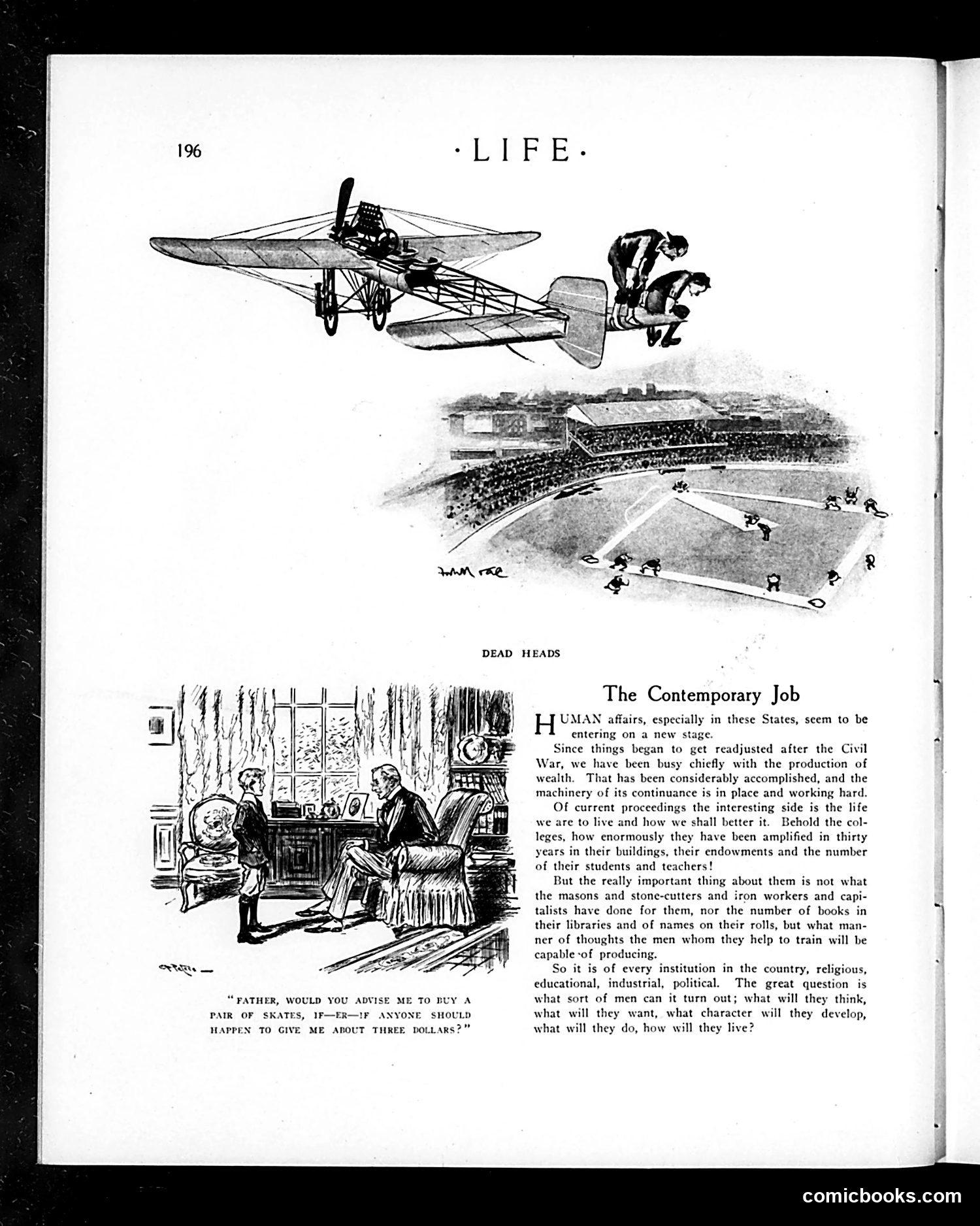
This page contains two satirical pieces about American institutions and social expectations. The top cartoon shows an airplane flying over a baseball stadium—likely satirizing the era's fascination with aviation as a novelty spectacle, contrasting modern technology with traditional entertainment. The lower cartoon and caption depict a father-son conversation about buying ice skates for three dollars. The accompanying article, "The Contemporary Job," discusses how American institutions (religious, educational, industrial, political) shape young men's character and ambitions. The satire appears to question what values these institutions instill—implying fathers worry about teaching sons practical skills and responsible spending rather than deeper character formation. The caption suggests gentle mockery of parental concerns about small expenses in a rapidly modernizing economy.
📄 Transcribed text from this page (OCR, searchable)
Machine-transcribed from the original scan — historical spelling and the odd misread are preserved.
“FATHER, WOULD YOU ADVISE ME TO BUY A PAIR OF SKATES, IF—ER—1F ANYONE SHOULD HAPPEN TO GIVE ME AROUT THREE DOLLARS?” DEAD HEADS The Contemporary Job UMAN affairs, espec entering on a new stage. Since things began to get readjusted after the Civil War, we have been busy chiefly with the production of wealth. That has been considerably accomplished, and the machinery of its continuance is in place and working hard. Of current proceedings the interesting side is the life we are to live and how we shall better it. Behold the col- leges, how enormously they have been amplified in thirty years in their buildings, their endowments and the number of their students and teachers! But the really important thing about them is not what the masons and stone-cutters and iron workers and capi- talists have done for them, nor the number of books in their libraries and of names on their rolls, but what man- ner of thoughts the men whom they help to train will be capable -of producing. So it is of every institution in the country, religious, educational, industrial, political. The great question is what sort of men can it turn out; what will they think, what will they want, what character will they develop, what will they do, how will they live? lly in these States, seem to be comicbooks.com