
Life, 1912-12-26 · page 10 of 41
Life — December 26, 1912 — page 10: what you’re looking at
What you’re looking at
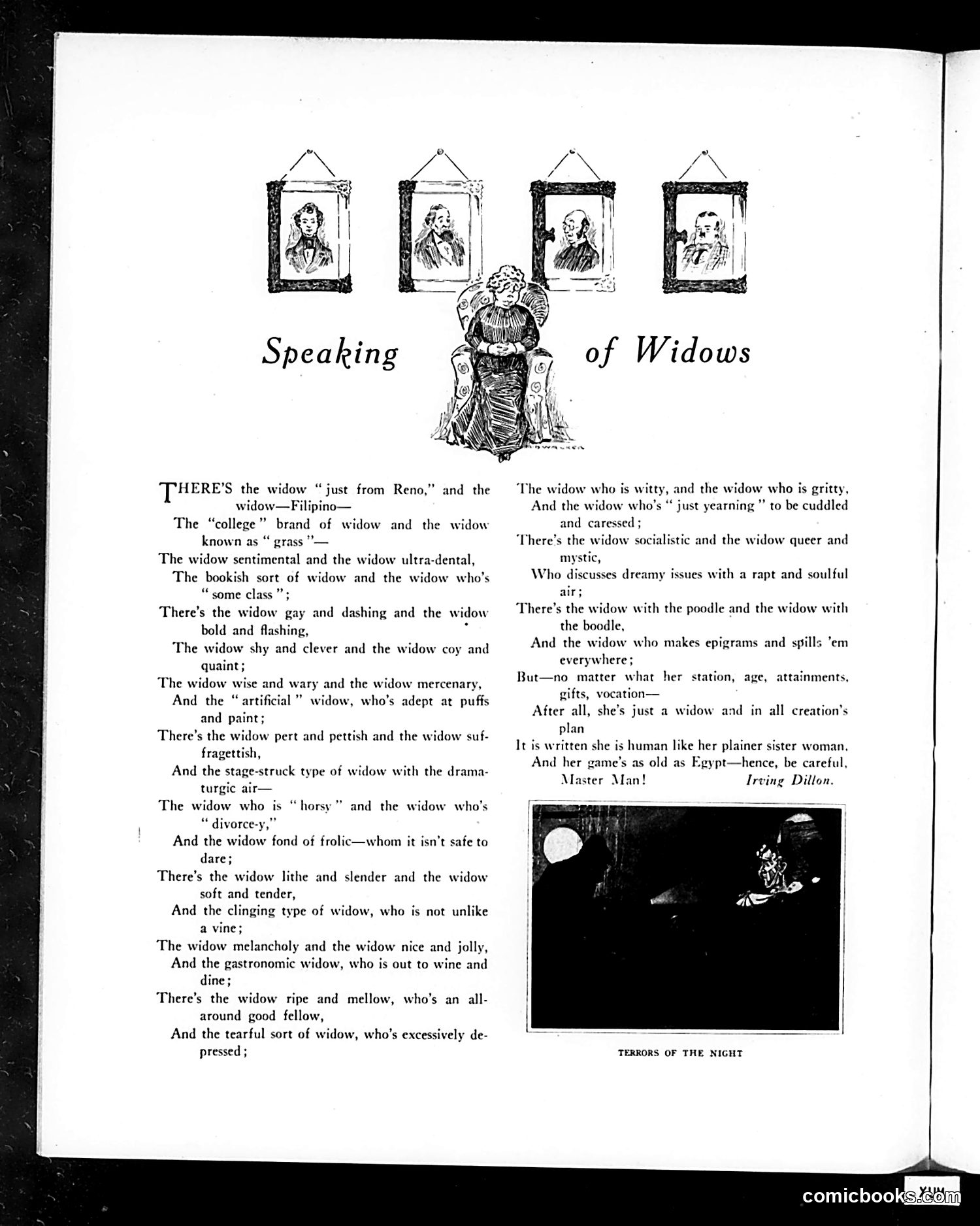
This page satirizes the social types and stereotypes of widows in early 20th-century America. The poem by Irving Dilton catalogs widow archetypes: the sentimental widow, the "grass" widow (separated/divorced woman), the gay widow, the mercenary widow, the dramatic widow, and others—each representing contemporary social anxieties about women's independence and behavior after losing husbands. The four portrait frames at top likely depict specific widow types being mocked. The illustration "Terrors of the Night" shows a frightened woman—possibly satirizing melodramatic widow behavior or gothic fiction tropes. The satire's underlying point: widows occupied an ambiguous social position, freed from marital control yet subject to judgment about how they exercised newfound independence. The poem's exhaustive catalog mocks society's obsession with categorizing and policing women's conduct.
📄 Transcribed text from this page (OCR, searchable)
Machine-transcribed from the original scan — historical spelling and the odd misread are preserved.
“THERE'S the widow “just from Reno,” and the widow—Filipino— The “college” brand of widow and the widow known as “ grass "— The widow sentimental and the widow ultra-dental, The bookish sort of widow and the widow who's “some class "; There’s the widow gay and dashing and the widow bold and flashing, . The widow shy and clever and the widow coy and quaint; The widow wise and wary and the widow mercenary, And the “ artificial” widow, who's adept at puffs and paint; There's the widow pert and pettish and the widow suf- fragettish, And the stage-struck type of widow with the drama- turgic air— The widow who is “ horsy ” “ divorce-y,”” And the widow fond of frolic—whom it isn’t safe to dare; There’s the widow lithe and slender and the widow soft and tender, And the clinging type of widow, who is not unlike and the widow who's a vine; The widow melancholy and the widow nice and jolly, And the gastronomic widow, who is out to wine and dine ; There’s the widow ripe and mellow, who's an all- around good fellow, And the tearful sort of widow, who's excessively de- pressed ; ‘The widow who is witty, and the widow who is gritty, And the widow who's “‘ just yearning " to be cuddled and caressed ; ‘There’s the widow socialistic and the widow queer and mystic, Who discusses dreamy issues with a rapt and soulful air; There's the widow with the poodle and the widow with the boodle, And the widow who makes epigrams and spills 'em everywhere ; But—no matter what her station, age, attainments, gifts, vocation— After all, she’s just a widow and in all creation’s plan It is written she is human like her plainer sister woman, And her game's as old as Egypt—hence, be careful, Master Man! Irving Dillon. TERRORS OF THE NIGHT comicbookMeon