
Life, 1912-12-12 · page 23 of 48
Life — December 12, 1912 — page 23: what you’re looking at
What you’re looking at
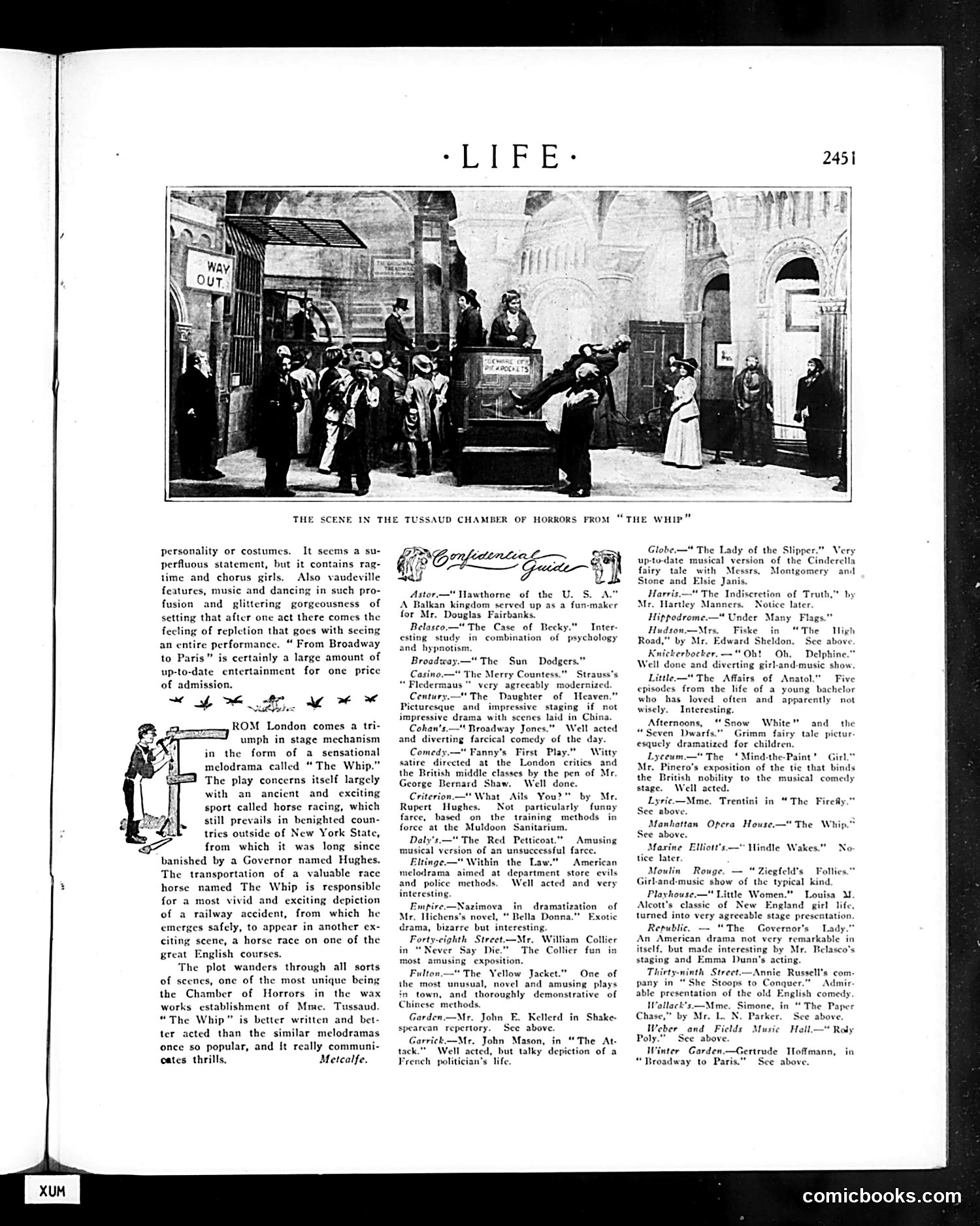
This page reviews current Broadway and London theatrical productions. The illustration shows a scene from the melodrama **"The Whip,"** a London import about a valuable racehorse, featuring a famous sequence in **Madame Tussaud's Chamber of Horrors** wax museum. The critic (Metcalfe) praises "The Whip" as superior melodrama—better written and acted than similar plays that were once popular. He notes it delivers genuine thrills through elaborate staging, including a vivid railway accident scene. The page also references Governor Hughes's ban on horse racing in New York State (presented humorously as evidence of backwardness), and lists dozens of current theatrical offerings ranging from Shakespeare to vaudeville. The reviews emphasize spectacle, staging, and entertainment value—typical concerns for early 20th-century theatre criticism targeting affluent audiences seeking escapist amusement.
📄 Transcribed text from this page (OCR, searchable)
Machine-transcribed from the original scan — historical spelling and the odd misread are preserved.
2451 i Nee EIN THE personality or costumes. It seems a su- perfluous statement, but it contains rag- time and chorus girls. Also vaudeville features, music and dancing in such pro- fusion and glittering gorgeousness of setting that after one act there comes the fecling of repletion that goes with seeing an entire performance. “ From Broadway to Paris" is certainly a large amount of up-to-date entertainment for one price of admission. ~ fm _ fe WE Y ne ROM London comes a tri- umph in stage mechanism in the form of a sensational melodrama called “ The Whip.” The play concerns itself largely with an ancient and exciting sport called horse racing, which still prevails in benighted coun- trics outside of New York State, from which it was long since banished by a Governor named Hughes. The transportation of a valuable race horse named The Whip is responsible for a most vivid and exciting depiction of a railway accident, from which he emerges safely, to appear in another ex- citing scene, a horse race on one of the great English courses. The plot wanders through all sorts of scenes, one of the most unique being the Chamber of Horrors in the wax works establishment of Mme. Tussaud. “The Whip” is better written and bet- ter acted than the similar melodramas ‘once so popular, and ft really communi- cates thrills, Metcalfe. \ 3) af 2 Astor.—" Hawthorne of the U. S. A. A Balkan kingdom served up as a fun-maker for Mr. Douglas Fairbanks. Belasco.—“ The Case of Becky.” Inter esting study in combination of psychology and hypnotism. Broadway.— The Sun Dodgers.” Casino.—" The Merry Countess.” Strauss’s “ Fledermaus" very agreeably modernized. Century.—"" The Daughter of Heaven.” Picturesque and impressive staging if not impressive drama with scenes laid in China. Cohan's.—"* Broadway Jones." Well acted and diverting farcical comedy of the day. Comedy.—" Fanny's First Play Witty satire directed at the London critics and the British middle classes by the pen of Mr George Bernard Shaw. Well doi Criterion What A You?" by Mr. Rupert Hughes. Not particularly funny farce, based on the training methods in force at the Muldoon Sanitarium, Daly’s.—“‘ The Red Petticoat.” Amusing usical version of an unsuccessful farce. Itinge—* Within the Law." American melodrama aimed at department store evils and police methods. Well acted and very interesting. Empi ‘azimova in dramatization of Mr. Hichens’s novel, “ Bella Donna.” Exotic drama, bizarre but interesting. ighth Street—Mr. William Coll Di The Collier fu “The Yellow Jacket.” One of the most unusual, novel and amusing plays in town, and thoroughly demonstrative of Chinese methods. Garden.—Mr. John E. Kellerd in Shake- spearean repertory. See above. Garrick.—Mr. John Mason, in “The At- tack.” Well acted, but talky depiction of a French politician's life. TUSSAUD CHAMBER OF HORRORS FROM “THE WHIP” Globe.— The Lady of the Slipper.” Very up-to-date musical version of the Cinderella fairy tale with Messrs. Montgomery and Stone and Elsie Janis, Harris.—" The Indiscretion of Truth,’ Mr. Hartley Manners. Notice later. Hippodrome.— Under Many Flags.” Hudton—Mrs. Fiske in “The Wigh Road,” by Mr. Edward Sheldon, See above Knickerbocker.“ Obt Oh, Delphine.” Well done and diverting girl-and-music show. Little —" The Affairs of Anatol.” Five episodes from the life of a young bachelor who has loved often and apparently not wisely, Interesting. Afternoons, “Snow White’ and the “Seven Dwarfs Grimm fairy tale pictur: esquely dramatized for children. Lyceum.—" The ‘ Mind-the-Paint’ Girl.” Mr. Pinero's exposition of the tie that binds the British nobility to the musical comedy stage. Well acted. Lyric—Mme. Trentini in“ The See abov Manhattan Opera House.—“ The Whip.” See above. Maxine Eltiott's—" Windle Wakes.” tice later, Moulin Rouge. Girland-music show of the Playhouse.—" Little Women.” Louisa M Alcott’s classic of New England girl life, turned into very agreeable stage presentation. Republic, — “The Governor's Lady.” An American drama not very remarkable itself, but made interesting by Mr. Telasc staging and Emma Dunn's acting Thirty-ninth Strect.—Annie Russell's com: pany in “She Stoops to Conquer.” Admir- able presentation of the old English comedy Wallack’s.—Mme. Simone, in “ The Paper Chase,” by Mr. L.N. Parker, Sce above. Weber and Fields Music Hall.—* Roly Poly.” See above. Winter Garden.—Gertrude Hoffmann, in “roadway to Paris.” Sce above. irefy.” Follies.” comicbooks.com