
Life, 1912-08-22 · page 16 of 44
Life — August 22, 1912 — page 16: what you’re looking at
What you’re looking at
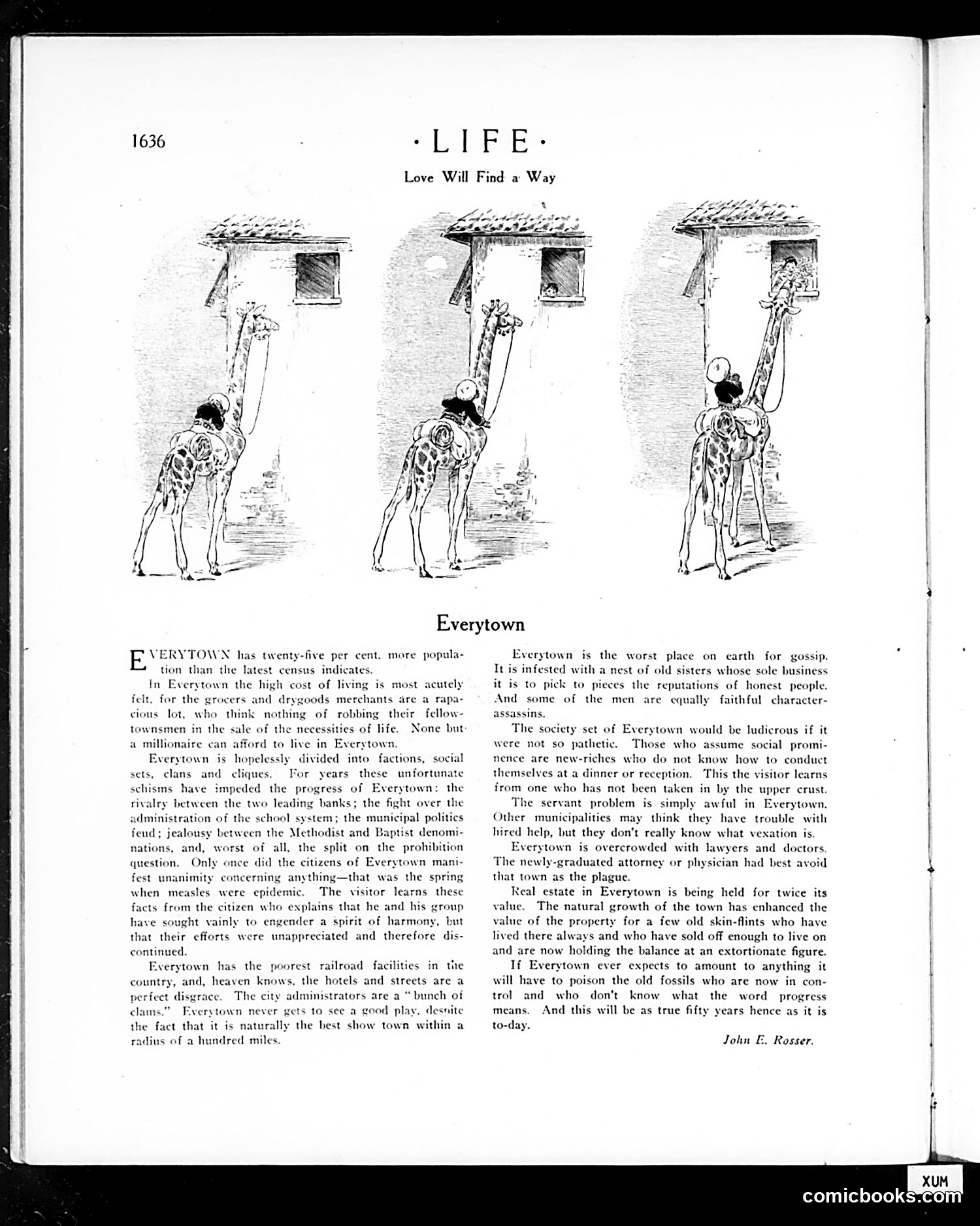
This three-panel cartoon shows a figure attempting increasingly desperate methods to reach a window—stretching, using a ladder, then a rope—illustrating the caption's theme that "love will find a way." The accompanying text by John E. Rosser is a scathing satirical essay about "Everytown," a generic American town representing widespread small-town dysfunction. Rosser catalogs Everytown's problems: inflated population figures, greedy merchants, bitter factional rivalries (banking feuds, religious denomination conflicts, prohibition debates), poor infrastructure, gossip-mongering women, pretentious nouveaux-riches, servant labor shortages, oversupply of lawyers and doctors, and exploitative real-estate speculators. The satire suggests Everytown's only hope requires eliminating entrenched "old fossils" blocking progress—a common Progressive Era critique of small-town conservatism and corruption. The cartoon's romantic persistence ironically contrasts with the essay's bleak portrait of community decay.
📄 Transcribed text from this page (OCR, searchable)
Machine-transcribed from the original scan — historical spelling and the odd misread are preserved.
Li PE= Love Will Find a Way es = s Ad Everytown VERYTOWN has twenty-five per cent. more popula tion than the latest census indicates. In Everytown the high cost of living is most acutely felt, for the grocers and drygoods merchants are a rapa- cious lot, who think nothing of robbing their fellow- s of life. None but a millionaire can afford to live in Everytown, Everytown is hopelessly divided into. factions, social rs these unfortunate townsmen in the sale of the necessiti sets, clans and cliques. For yea impeded the progress of Everytown: the rivalry between the two leading ban the fight over the administration of the school system; the municipal politics feud; jealousy between the Methodist and Baptist denomi- nations, and, worst of all, the split on the prohibition question. Only once did the citizens of Everytown mani- schisms have fest unanimity concerning anything—that was the spring when measles were epidemic. The visitor learns these facts from the citizen who explains that he and his group have sought vainly to engender a spirit of harmony, but that their efforts were unappreciated and therefore dis- continued. Everytown has the poorest railroad facilities in the country, and, heaven knows, the hotels and streets are a ect disgrace. The city administrators are a“ bunch of Everytown never gets to see a good play, desnite the fact that it is nat radius of a hundred miles. ly the best show town within a erytown is the worst place on earth for gossip. It is infested with a nest of old sisters whose sole business it is to pick to pieces the reputations of honest people. And some of the men are equally faithful ct assassins. racter- The society set of erytown would be ludicrous if it were not so pathetic. Those who assume social promi- nence are new-riches who do not know how to conduct themselves at a dinner or reception. This the visitor learns from one who has not been taken in by the upper crust The servant problem is simply awful in Everytown. Other municipalities may think they have trouble with hired help, but they don’t really know what vexation is Everytown is overcrowded with lawyers and doctors. The newly-graduated attorney or physician had best avoid that town as the plague. Real estate in Everytown is being held for twice its jue. The natural growth of the town has enhanced the alue of the property for a few old skin-flints who have lived there always and who have sold off enough to live on and are now holding the balance at an extortionate figure. If Everytown ever expects to amount to anything it will have to poison the old fossils who are now in con- trol and who don’t know what the word progress means. And this will be as true fifty years hence as it is to-da: John E, Rosser. comicbook $.CO