
Life, 1912-03-28 · page 14 of 50
Life — March 28, 1912 — page 14: what you’re looking at
What you’re looking at
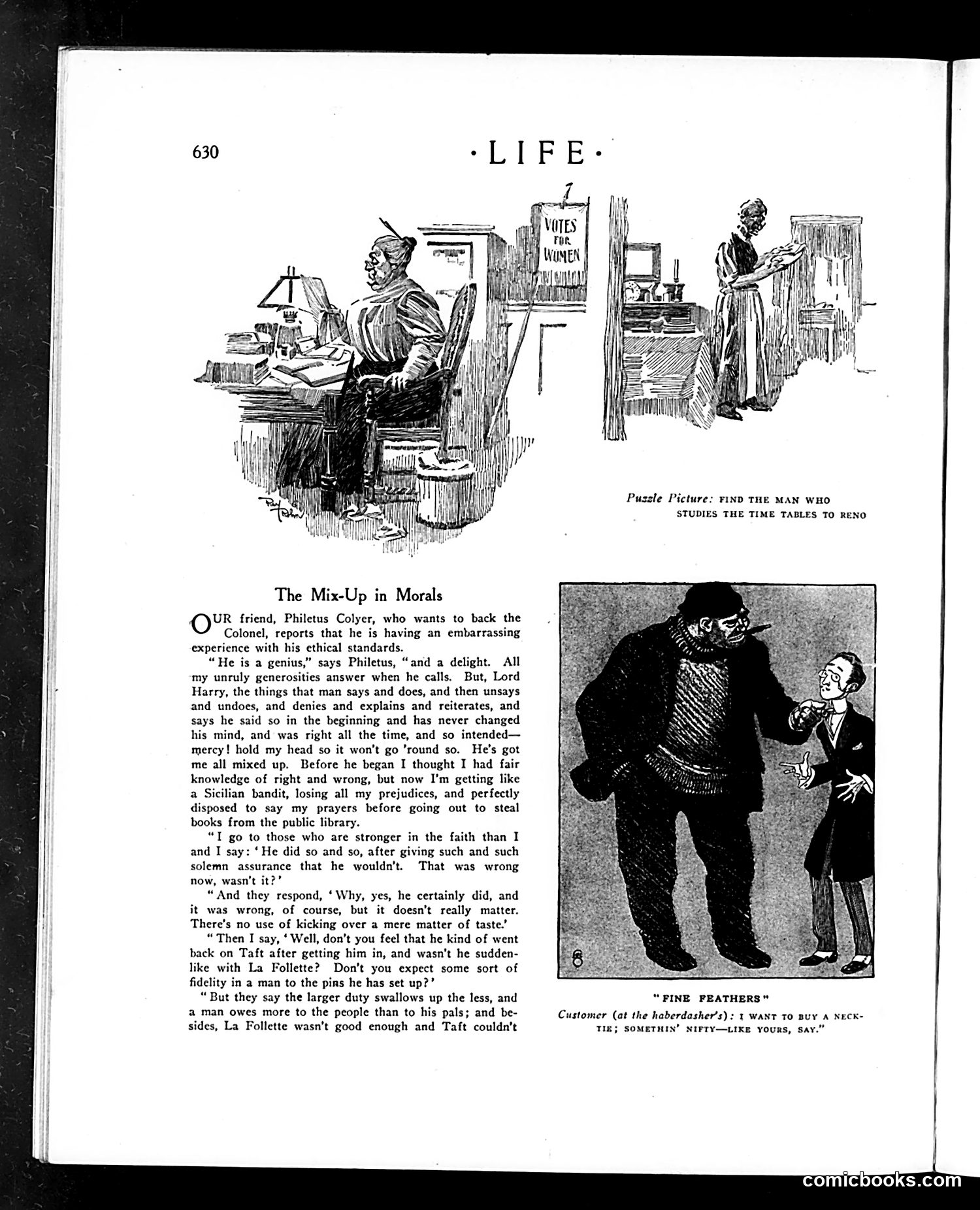
This satirical piece critiques **Philetus Colyer**, who wants to support a Colonel despite ethical concerns. The narrator describes Colyer as inconsistent: he claims high moral standards yet supports someone engaged in questionable conduct. The satire illustrates how Colyer rationalizes contradictions—he initially opposed the Colonel on principle, then flip-flopped after reassurance. The piece mocks moral relativism and hypocrisy, suggesting Colyer prioritizes loyalty to allies over consistent ethical principles. The comparison to "a Sicilian bandit" and references to "La Follette" indicate this addresses real political figures and factional disputes. The cartoon shows a man at a desk (left) and a domestic scene (right), illustrating the contrast between public moral claims and private compromises—the "mix-up" being the gap between stated and actual values.
📄 Transcribed text from this page (OCR, searchable)
Machine-transcribed from the original scan — historical spelling and the odd misread are preserved.
The Mix-Up in Morals UR friend, Philetus Colyer, who wants to back the Colonel, reports that he is having an embarrassing experience with his ethical standards. “He is a genius,” says Philetus, “and a delight. All my unruly generosities answer when he calls. But, Lord Harry, the things that man says and does, and then unsays and undoes, and denies and explains and reiterates, and says he said so in the beginning and has never changed his mind, and was right all the time, and so intended— mercy! hold my head so it won't go ’round so. He's got me all mixed up. Before he began I thought I had fair knowledge of right and wrong, but now I'm getting like a Sicilian bandit, losing all my prejudices, and perfectly disposed to say my prayers before going out to steal books from the public library. “T go to those who are stronger in the faith than I and I say: ‘He did so and so, after giving such and such solemn assurance that he wouldn't. That was wrong now, wasn’t it?’ “And they respond, ‘Why, yes, he certainly did, and it was wrong, of course, but it doesn’t really matter. There's no use of kicking over a mere matter of taste.’ “Then I say, ‘Well, don’t you feel that he kind of went back on Taft after getting him in, and wasn’t he sudden- like with La Follette? Don’t you expect some sort of fidelity in a man to the pins he has set up?’ “But they say the larger duty swallows up the less, and a man owes more to the people than to his pals; and be- sides, La Follette wasn’t good enough and Taft couldn't Puszle Picture: FIND THE MAN WHO STUDIES THE TIME TABLES TO RENO “FINE FEATHERS" Customer (at the haberdasher’s): 1 WANT TO BUY A NECK- TIE; SOMETHIN’ NIFTY—LIKE YouRS, SAY.”