
Life, 1912-02-08 · page 10 of 44
Life — February 8, 1912 — page 10: what you’re looking at
What you’re looking at
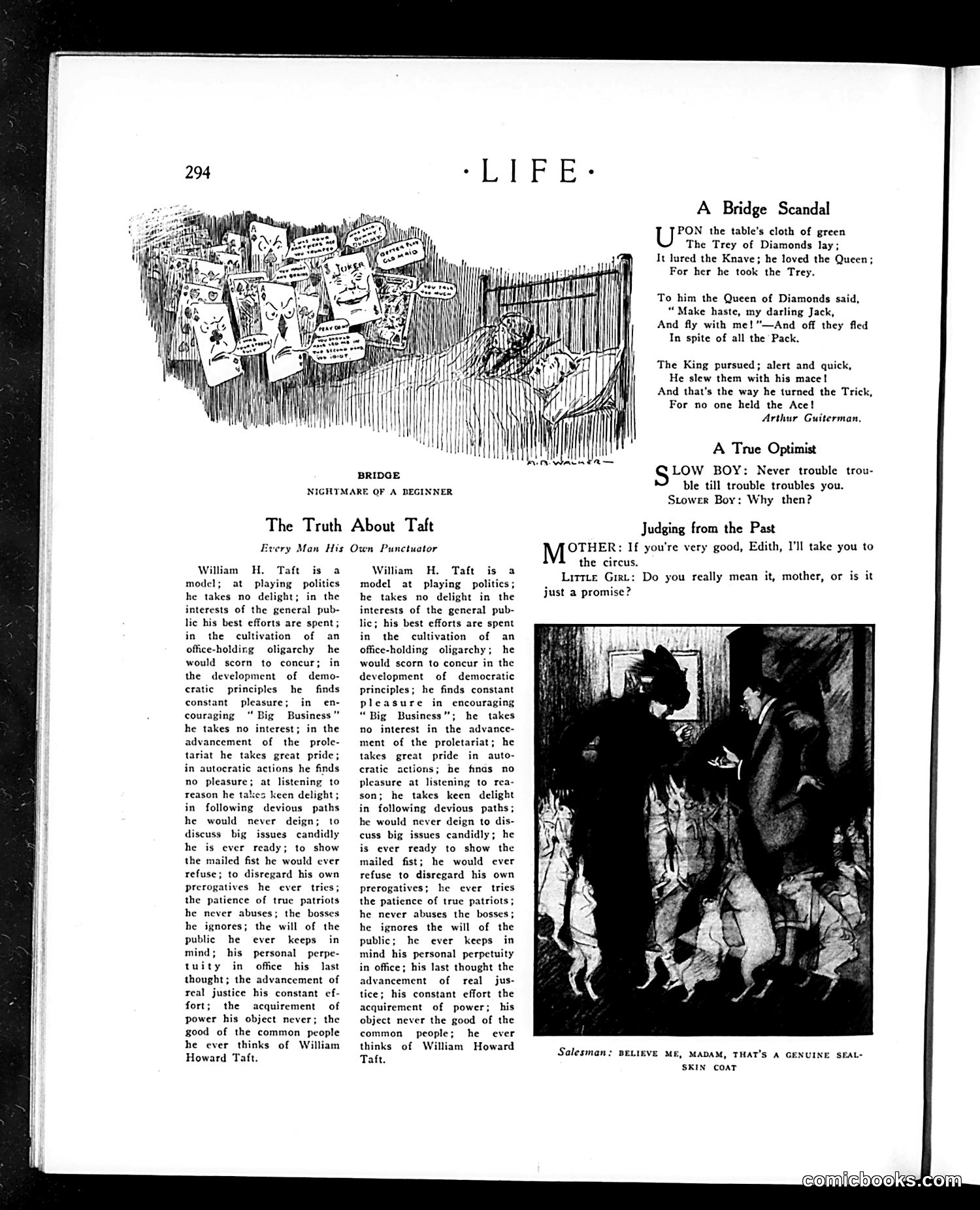
This page contains three separate satirical pieces: 1. **"A Bridge Scandal"** (top right): A poem by Arthur Guiterman about playing cards (the Jack, Knave, Queen, and Pack), using card game terminology as metaphor for some unspecified scandal. Without additional context, the specific scandal referenced is unclear. 2. **"The Truth About Taft"** (left column): A two-column text piece presenting contrasting descriptions of William H. Taft's character and political approach—essentially saying he's simultaneously devoted to and indifferent toward various principles depending on perspective. This appears to be satirical commentary on Taft's inconsistencies or perceived hypocrisy. 3. **"A True Optimist"** and **"Judging from the Past"** (right): Brief humorous dialogues about optimism and broken promises. 4. **Bottom illustration**: Shows a salesman pitching a "genuine seal-skin coat" to a woman, likely satirizing consumer fraud or deceptive sales tactics.
📄 Transcribed text from this page (OCR, searchable)
Machine-transcribed from the original scan — historical spelling and the odd misread are preserved.
fi wu ft pay BRIDGE NIGHTMARE OF A BEGINNER The Truth About Taft Every Man His Own Punctuator William H. Taft is a model; at playing politics he takes no delight; in the interests of the general pub- lic his best efforts are spent; in the cultivation of an office-holding oligarchy he would scorn to concur; in the development of demo- cratic principles he finds constant pleasure; in en- couraging “Big Business” he takes no interest; in the advancement of the prole- tariat he takes great pride; in autocratic actions he finds no pleasure; at listening to reason he t keen delight ; in following devious paths he would never deign; to discuss big issues candidly he is ever ready; to show the mailed fist he would ever refuse; to disregard his own prerogatives he ever trics; the patience of true patriots he never abuses; the bosses he ignores; the will of the public he ever keeps in mind ; Personal perpe- tuity in office his last thought; the advancement of real justice his constant cf- fort; the acquirement of power his object never; the good of the common people he ever thinks of William Howard Taft. William H. Taft is a model at playing politics; he takes no delight in the interests of the general pub- lic; his best efforts are spent in the cultivation of an office-holding oligarchy; he would scorn to concur in the development of democratic principles; he finds constant pleasure in encouraging “Big Business”; he takes no interest in the advance- ment of the proletariat; he takes great pride in auto- cratic actions; he finas no pleasure at listening to rea- son; he takes keen delight in following devious paths; he would never deign to dis- cuss big issues candidly; he is ever ready to show the mailed fist; he would ever refuse to disregard his own prerogatives; he ever tries the patience of true patriots; he never abuses the bosses; he ignores the will of the public; he ever keeps in mind his personal perpetuity in office; his last thought the advancement of real jus- tice; his constant effort the acquirement of power; his object never the good of the common people; he ever thinks of William Howard Taft. A Bridge Scandal PON the table’s cloth of green The Trey of Diamonds lay; It lured the Knave; he loved the Queen; For her he took the Trey. To him the Queen of Diamonds said, “Make haste, my darling Jack, And fly with me!"—And off they fled In spite of all the Pack. The King pursued; alert and quick, He slew them with his mace! And that’s the way he turned the Trick, For no one held the Ace! Arthur Guiterman, A True Optimist LOW BOY: Never trouble trou- ble till trouble troubles you. Stower Boy: Why then? Judging from the Past OTHER: If you're very good, Edith, I'll take you to the circus. Littte Girt: Do you really mean it, mother, or is it just a promise? Salesman: BELIEVE ME, MADAM, THAT'S A Gi SKIN COAT