
Life, 1911-07-13 · page 21 of 44
Life — July 13, 1911 — page 21: what you’re looking at
What you’re looking at
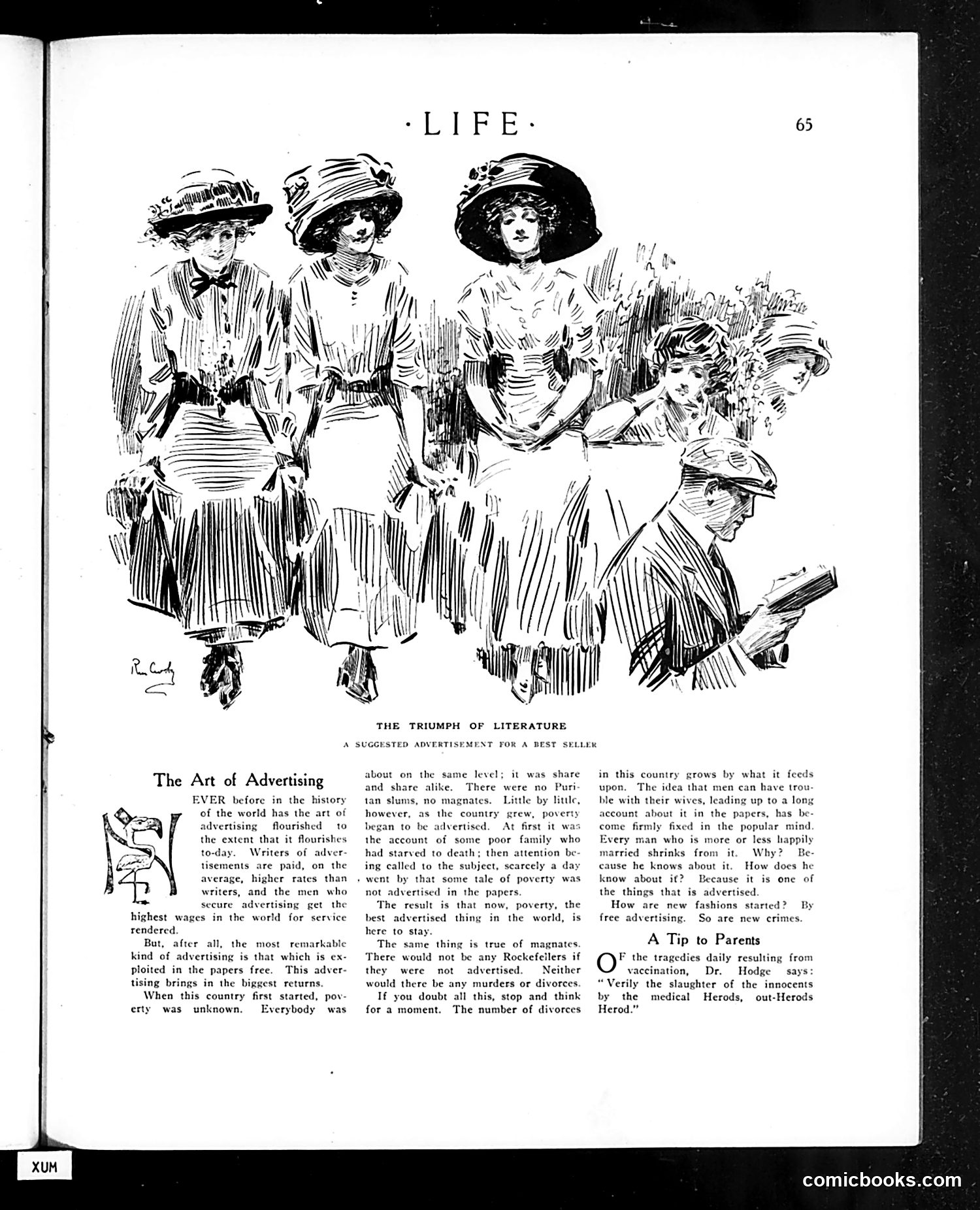
This Life magazine page satirizes the power of newspaper advertising and publicity to create social phenomena. The illustration shows fashionable women and a man reading, captioned as "A Suggested Advertisement for a Best Seller." The main article argues that modern advertising doesn't just promote existing things—it *creates* them. The author claims poverty, magnates (wealthy industrialists like Rockefellers), murders, divorces, and even fashion trends exist partly because newspapers advertise them heavily. By giving these subjects constant coverage, papers make them seem inevitable and widespread. The piece is social critique: newspapers' free publicity (sensational reporting) has become more powerful than paid advertising. The mechanism is psychological—people unconsciously imitate or expect what they read about constantly. A sidebar titled "A Tip to Parents" attacks vaccination, quoting Dr. Hodge's extreme comparison to biblical infanticide, reflecting anti-vaccination sentiment that existed in this era. The overall message: be cautious about what newspapers make seem real or important through sheer repetition.
📄 Transcribed text from this page (OCR, searchable)
Machine-transcribed from the original scan — historical spelling and the odd misread are preserved.
A SUGGESTED ADVERTISEMENT FOR A BEST SELLER The Art of Advertising EVER before in the history of the world has the art of advertising flourished 10 the extent that it flourishes Writers of adver- tisements are paid, on the average, higher rates than writers, and the men who secure advertising get the highest wages in the world for service rendered. But, after all, the most kind of advertising is that which is ex- ploited in the papers free. This adver- tising brings in the biggest returns. When this country first started, pov- erty was unknown. Everybody was to-day markable + went by that AX| Ne es ~ THE TRIUMPH OF LITERATURE about on the same level; and share alike. it was share There were no Puri tan slums, no magnates. Little by little, however, as the country grew, pove' began to be advertised. At first it was the account of some poor family who had starved to death; then attention be- ing called to the subject, scarcely a day me tale of poverty was not advertised in the papers. ‘The result is that now, poverty, the best advertised thing in the world, is here to stay. The same thing is true of magnates. There would not be any Rockefellers if they were not advertised. Neither would there be any murders or divorces. If you doubt all this, stop and think for a moment. The number of divorces in this country grows by what it feeds upon. The idea that men can have trou- ble with their wives, leading up to a long account about it in the papers, has be- come firmly fixed in the popular mind Every man who is more or less happily married shrinks from it. Why? Be- cause he knows about it. How does he know about if? Because it is one of the things that is advertised How are new fashions started? By free advertising. So are new crimes. A Tip to Parents F the tragedies daily resulting from vaccination, Dr. Hodge says: “Verily the slaughter of the innocents by the medical Herods, out-Herods Herod.” comicbooks.com