
Life, 1911-04-13 · page 13 of 44
Life — April 13, 1911 — page 13: what you’re looking at
What you’re looking at
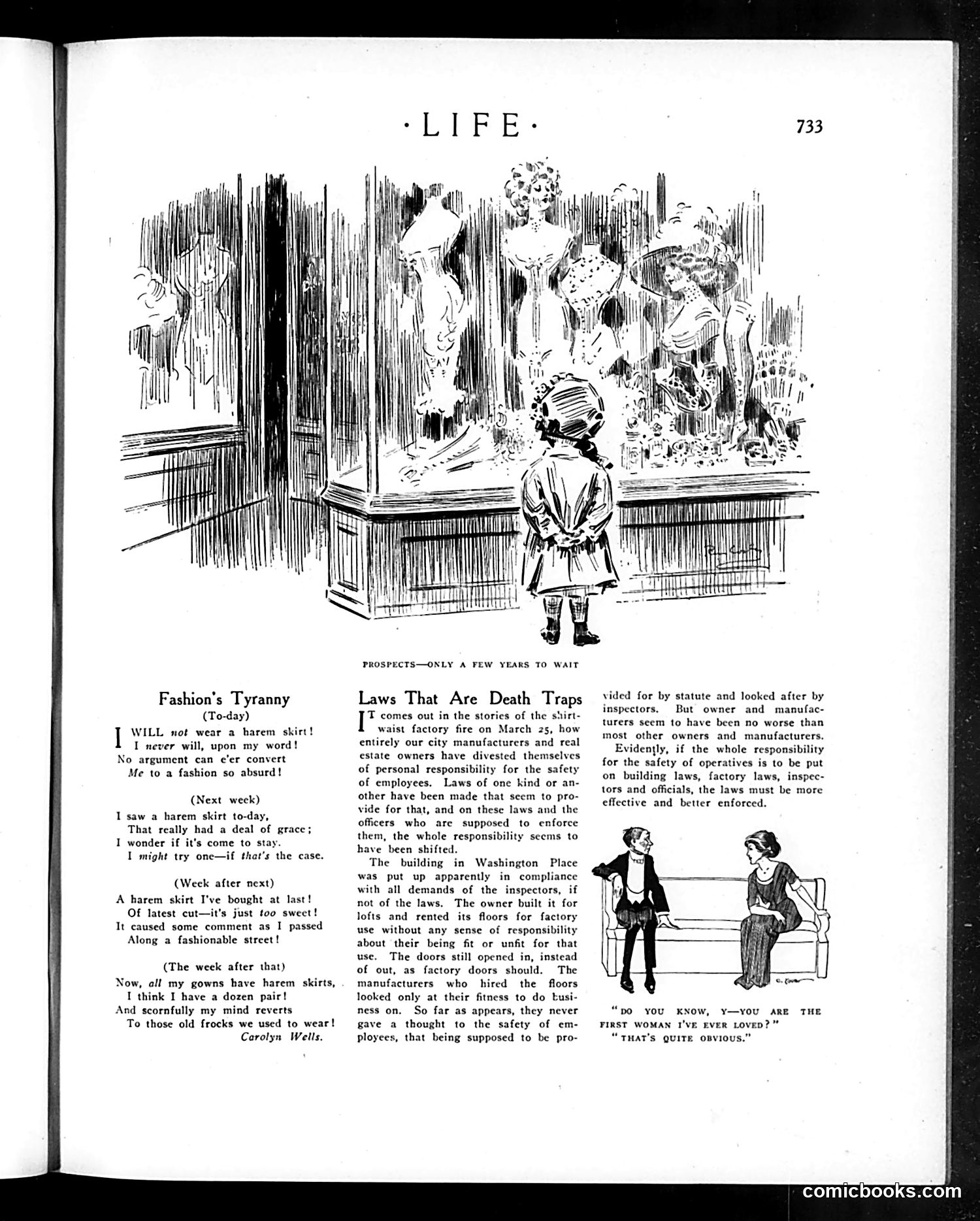
This page satirizes early 20th-century fashion trends and labor safety issues. **"Fashion's Tyranny"** (left column) mocks women's adoption of harem skirts—a controversial garment that restricted movement. The poem tracks a woman's reluctant acceptance of the style over successive weeks, suggesting fashion pressures override personal judgment. Carolyn Wells is credited as the author. **"Laws That Are Death Traps"** (right) discusses factory safety negligence, specifically referencing a March 25 shirtwaist factory fire. The article criticizes owners who ignore safety regulations while inspectors fail to enforce them, describing a building constructed in apparent compliance yet actually unsafe. The illustration shows two women in conversation, with dialogue questioning romantic priorities—likely commenting on distracted attention to serious social issues.
📄 Transcribed text from this page (OCR, searchable)
Machine-transcribed from the original scan — historical spelling and the odd misread are preserved.
Fashion’s Tyranny (To-day) WILL not wear a harem skirt! I never will, upon my word! No argument can e¢’er convert Me to a fashion so absurd! (Next week) 1 saw a harem skirt to-day, That really had a deal of grace; I wonder if it's come to stay. I might try onc—if that’s the case. (Week after next) A harem skirt I've bought at last! Of latest cut—it's just too sweet! It caused some comment as I passed Along a fashionable street! (The week after that) Now, all my gowns have harem skirts, I think I have a dozen pair! And scornfully my mind reverts To those old frocks we used to wear! Carolyn Wells. PROSPECTS—ONLY A FEW YEARS TO WAIT Laws That Are Death Traps T comes out in the stories of the shirt- waist factory fire on March 25, how entirely our city manufacturers and real estate owners have ested themselves of personal responsibility for the safety of employees. Laws of one kind or an- other have been made that seem to pro- vide for that, and on these laws and the officers who are supposed to enforce them, the whole responsibility seems to have been shifted. The building in Washington Place was put up apparently in compliance with all demands of the inspectors, if not of the laws. The owner built it for lofts and rented its floors for factory use without any sense of responsibility about their being fit or unfit for that use. The doors still opened in, instead of out, as factory doors should. The manufacturers who hired the floors looked only at their fitness to do busi- ness on. So far as appears, they never gave a thought to the safety of em- ployees, that being supposed to be pro- vided for by statute and looked after by inspectors, But owner and manufac- turers seem to have been no worse than most other owners and manufacturers. Evidently, if the whole responsibility for the safety of operatives is to be put on building laws, factory laws, inspec- tors and officials, the laws must be more effective and better enforced. “po you KNOW, Y—yYOU ARE FIRST WOMAN I'VE EVER LOVED?” “THAT's QUITE OBVIOUS.” comicbooks.com