
Life, 1910-12-29 · page 17 of 41
Life — December 29, 1910 — page 17: what you’re looking at
What you’re looking at
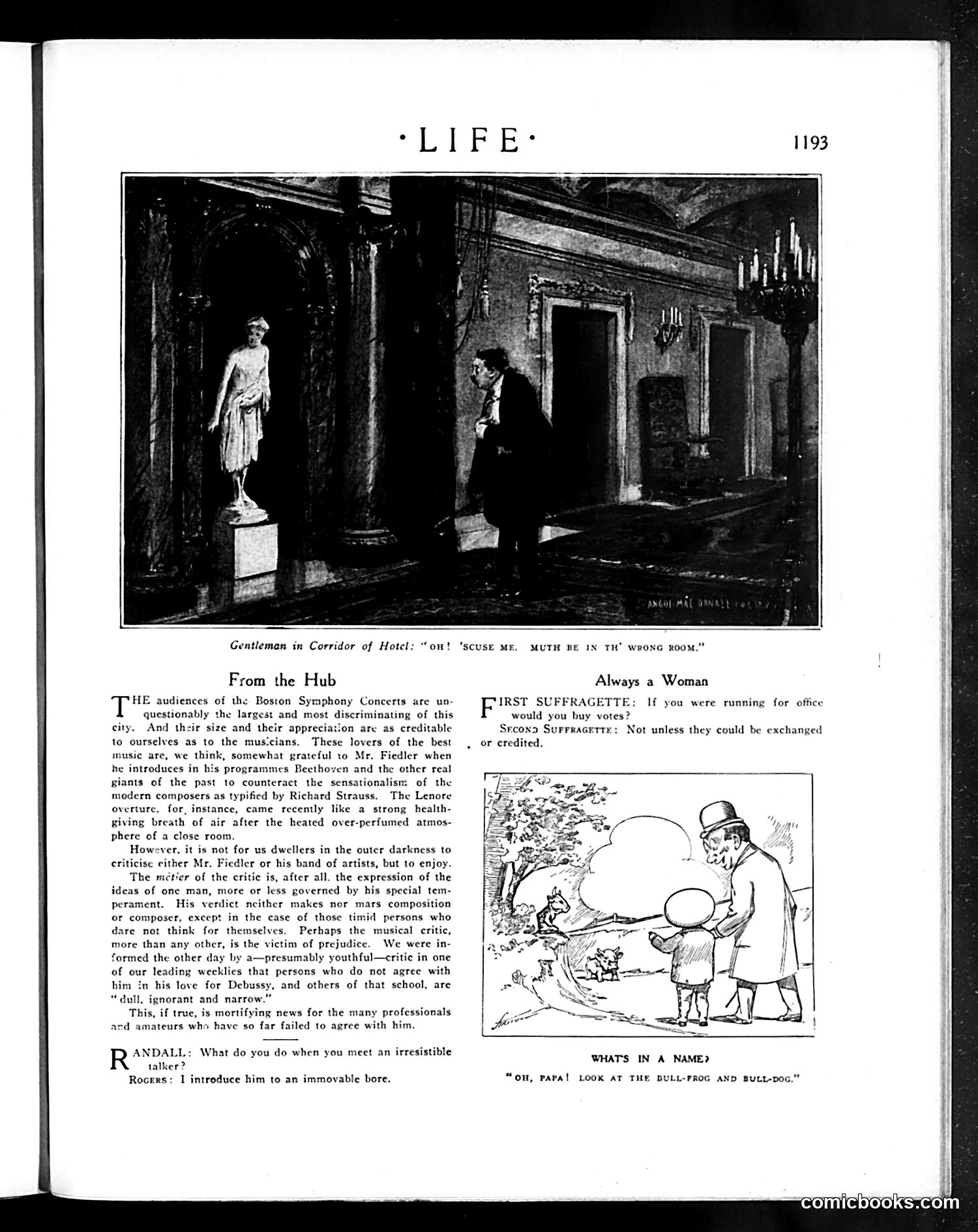
This page contains three distinct satirical pieces: **1. Hotel Corridor Scene (top):** A gentleman apologizes for interrupting, saying he must find the restroom. The humor relies on polite social awkwardness—the mundane bathroom need clashing with formal hotel etiquette. **2. "From the Hub" (left column):** A defense of Boston Symphony audiences and conductor Fiedler against musical critics. The piece mocks a young critic who dismisses those disliking Debussy as "dull, ignorant and narrow." The satire targets pretentious modernist music criticism of the era, suggesting critics' opinions shouldn't dictate public taste. **3. Two Short Jokes (right):** - *Randall and Rogers:* Meeting an unstoppable talker requires introducing him to an immovable bore—a classic paradox joke. - *Suffragette Exchange:* Two female suffragists discuss vote-buying in elections. The humor reflects early-20th-century women's suffrage activism and suggests women voters might apply commercial logic ("exchange or credit") to voting—satirizing both political corruption and emerging female political participation.
📄 Transcribed text from this page (OCR, searchable)
Machine-transcribed from the original scan — historical spelling and the odd misread are preserved.
Gentleman in Corridor of Hotel: “oun! From the Hub HE audiences of the Boston Symphony Concerts are un- questionably the largest and most discriminating of this city. And their size and their appreciation are as creditable to ourselves as to the musicians. These lovers of the best music are, we think, somewhat grateful to Mr. Fiedler when he introduces in his programmes Beethoven and the other real giants of the past to counteract the sensationalism of the modern composers as typified by Richard Strauss. The Lenore overture, for, instance, came recently like a strong health- giving breath of air after the heated over-perfumed atmos- phere of a close room. However, it is not for us dwellers in the outer darkness to criticise cither Mr. Fiedler or his band of artists, but to enjoy. The métier of the critic is, after all. the expression of the ideas of one man, more or less governed by his special tem- perament. His verdict ncither makes nor mars composition or composer, except in the case of those timid persons who dare not think for themselves. Perhaps the musical critic, more than any other, is the victim of prejudice. We were in- formed the other day by a—presumably youthful—critic in one of our leading weeklies that persons who do not agree with him in his love for Debussy, and others of that school, are “dull, ignorant and narrow. This, if true, is mortifying news for the many professionals ard amateurs who have so far failed to agree with him. ANDALL: What do you do when you meet an irresistible talker Rocers: I introduce him to an immovable bore. "SCUSE ME, MUTH BE IN TH’ wei RooM.” Always a Woman IRST SUFFRAGETTE: If you were running for office would you buy votes? Srcoxa Surrracerte: Not unless they could be exchanged or credited. WHATS IN A NAME? “ow, PAPA! LOOK AT THE DULL-FROG AND BULL-DOG.”