
Life, 1910-09-22 · page 19 of 40
Life — September 22, 1910 — page 19: what you’re looking at
What you’re looking at
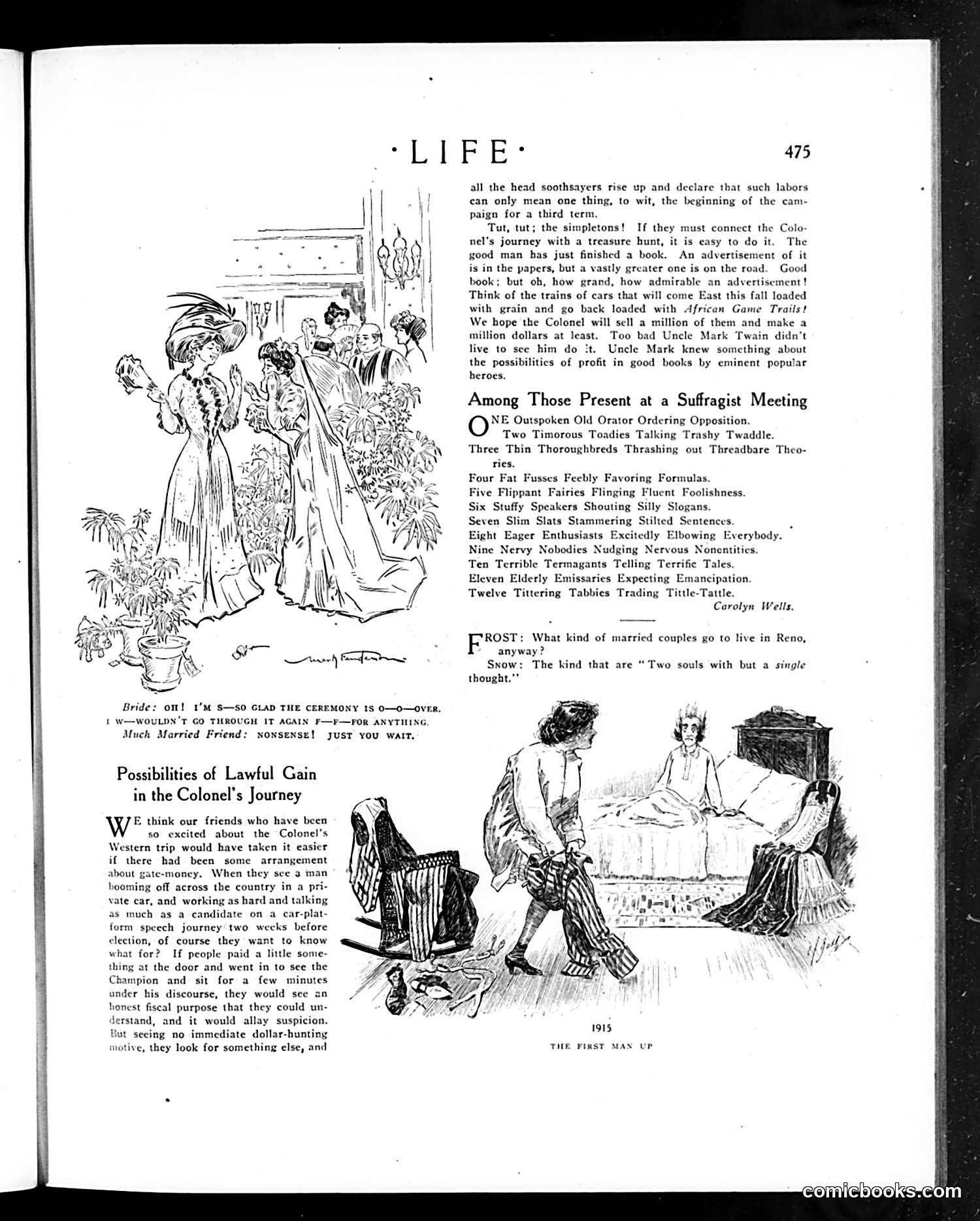
This 1915 *Life* page contains three distinct satirical pieces: **Top cartoon**: A bride expressing wedding regret to a "much married friend," who dismisses her concerns. The joke mocks the institution of marriage itself—suggesting serial remarriage is common enough that initial hesitation is foolish. **Middle section**: Sarcastically defends Theodore Roosevelt's Western tour as a book-promotion scheme for his recently published *African Game Trails*, rather than a campaign for a third presidential term. The satire suggests observers see sinister political motives where there's merely commercial self-interest. **Lower section**: Mocks a women's suffrage meeting through alliterative character types—"Outspoken Old Orator," "Timorous Toadies," "Fat Fusses," etc. The caricatures portray suffragists as ineffectual, silly, or overwrought, reflecting anti-suffrage attitudes common in 1915. The final joke about Reno couples references Nevada's then-lenient divorce laws, again mocking marriage instability.
📄 Transcribed text from this page (OCR, searchable)
Machine-transcribed from the original scan — historical spelling and the odd misread are preserved.
LIFE: 475 Bride: om! 1’M S—SO GLAD THE CEREMONY 1s O—O—OvER, | W—WOULDN'T GO THROUGH IT AGAIN F—P—POR ANYTHING. Much Married Friend: Nonsense! yust you watt, Possibilities of Lawful Gain in the Colonel’s Journey W* think our friends who have been so excited about the Colonel's Western trip would have taken it easier if there had been some arrangement about gate-money. When they sce a man booming off across the country in a pri- vate car, and working as hard and ing as much as a candidate on a car-plat- form speech journey two weeks before election, of course they want to know what for? If people paid a little some- thing at the door and went in to see the Champion and sit for a few minutes under his discourse, they would see an honest fiscal purpose that they could un- derstand, and it would allay suspicion. But secing no immediate dollar-hunting motive, they look for something else, and all the head soothsayers rise up and declare that such labors can only mean one thing, to wit, the beginning of the cam- paign for a third term. Tut, tut; the simpletons! If they must connect the Colo- nel's journey with a treasure hunt, it is easy to do it. The good man has just finished a book. An advertisement of it is in the papers, but a vastly greater one is on the road. Good book; but oh, how grand, how admirable an advertisement! Think of the trains of cars that will come East this fall loaded with grain and go back loaded with African Game Trails! We hope the Colonel will sell a million of them and make a million dollars at least. Too bad Uncle Mark Twain didn’t live to sce him do it. Uncle Mark knew something about the possibilities of profit in good books by eminent popular heroes, Among Those Present at a Suffragist Meeting NE Outspoken Old Orator Ordering Opposition. Two Timorous Toadies Talking Trashy Twaddle. Three Thin Thoroughbreds Thrashing out Threadbare Theo- ries. Four Fat Fusses Feebly Favoring Formulas, Five Flippant Fairies Flinging Fluent Foolishness, Six Stuffy Speakers Shouting Silly Slogans. Seven Slim Slats Stammering Stilted Sentences. . Eight Eager Enthusiasts Excitedly Elbowing Everybody. Nine Nervy Nobodies Nudging Nervous Nonentitics Ten Terrible Termagants Telling Terrific Tales, Eleven Elderly Emissaries Expecting Emancipation. Twelve Tittering Tabbies Trading Tittle-Tattle. Carolyn Wells. ROST: What kind of married couples go to live in Reno, anyway? Snow: The kind that are “Two souls with but a single thought. THE FIRST MAN UP