
Life, 1910-05-19 · page 13 of 40
Life — May 19, 1910 — page 13: what you’re looking at
What you’re looking at
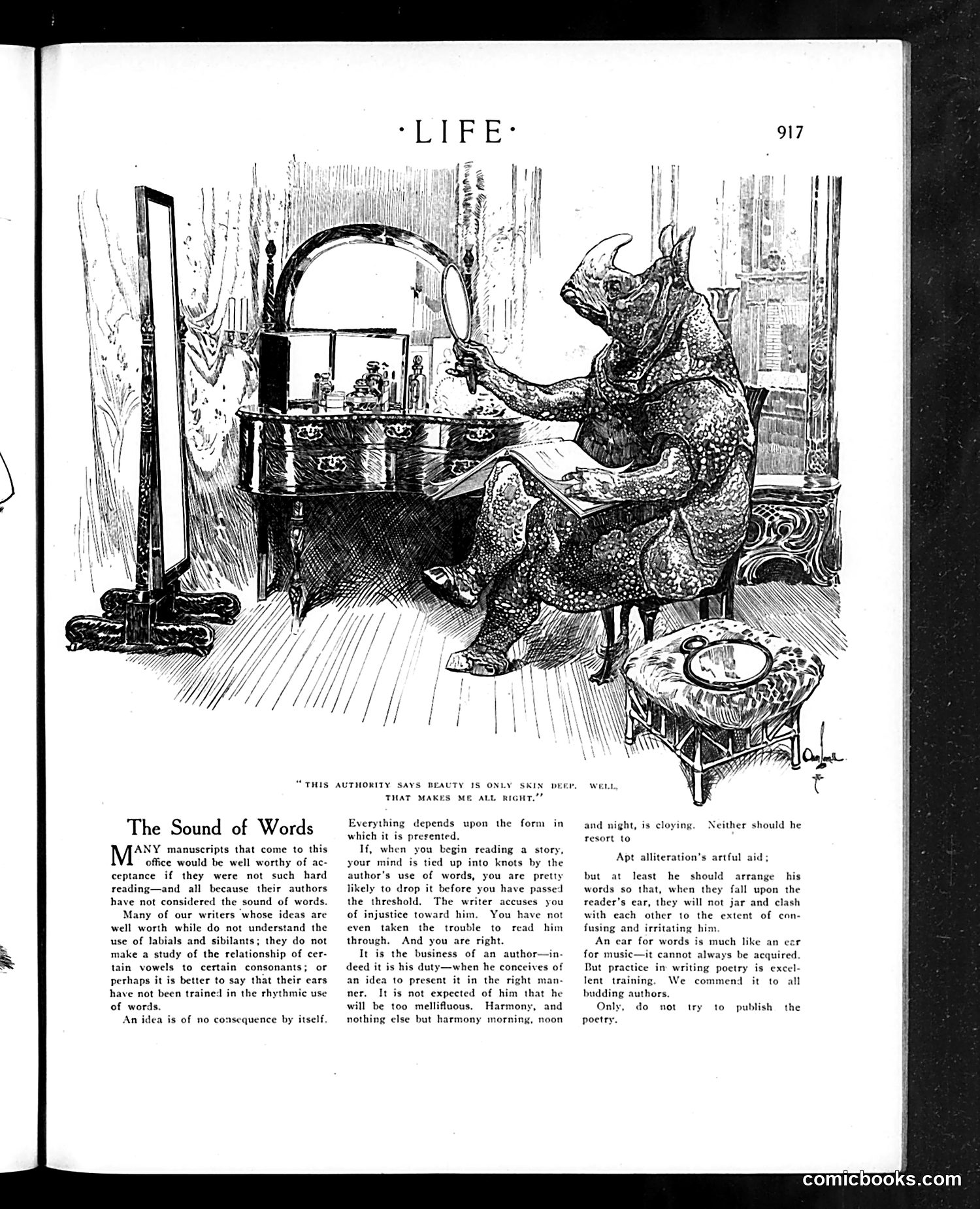
The cartoon depicts a grotesque, toad-like creature sitting at a vanity mirror in what appears to be a bedroom. The caption reads: "This authority says beauty is only skin deep. Well, that makes me all right." The accompanying article discusses how writers should carefully consider the *sound* of words—their rhythm, alliteration, and harmony—when composing prose and poetry. The author argues manuscripts often fail because authors neglect how words sound when read aloud. The visual joke pairs this literary advice with the creature's self-satisfied comment about being "all right" despite lacking conventional beauty. The satire suggests that poor writers, like the ugly creature, may have only "surface" appeal (or lack thereof) if they ignore the sonic qualities of language. The cartoon humorously illustrates the article's point about form mattering.
📄 Transcribed text from this page (OCR, searchable)
Machine-transcribed from the original scan — historical spelling and the odd misread are preserved.
“THIS AUTHORITY SAYS BEAUTY 18 ONLY SKIN DERE. The Sound of Words ANY manuscripts that come to this office would be well worthy of ac- ceptance if they were not such hard reading—and all because their authors have not considered the sound of words. Many of our writers ‘whose ideas are well worth while do not understand the use of labials and sibilants; they do not make a study of the relationship of cer- tain vowels to certain consonants; or perhaps it is better to say that their cars have not been trained in the rhythmic use of words. An idea is of no consequence by itself. PSNR) fom % surfed, THAT MAKES ME ALL RiGHT.’” erything depends upon the form in which it is presented. If, when you begin reading a story, your mind is tied up into knots by the author's use of words, you are pretty likely to drop it before you have passed the threshold. The writer accuses you of injustice toward him. You have not even taken the trouble to read him through. And you are right. It is the business of an author—in- deed it is his duty—when he conceives of an idea to present it in the right man- ner, It is not expected of him that he will be too mellifluous. Harmony, and nothing else but harmony morning, noon and night, is cloying. Neither should he resort to Apt alliteration’s artful aid; but at least he should arrange his words so that, when they fall upon the reader’s ear, they will not jar and clash with each other to the extent of con- fusing and irritating hi An ear for words is much like an ect for music—it cannot always be acquired. But practice in writing poetry is excel- lent training. We commend it to all budding authors. Only, do poetry. not try to publish the comicbooks.com