
Life, 1910-03-03 · page 22 of 80
Life — March 3, 1910 — page 22: what you’re looking at
What you’re looking at
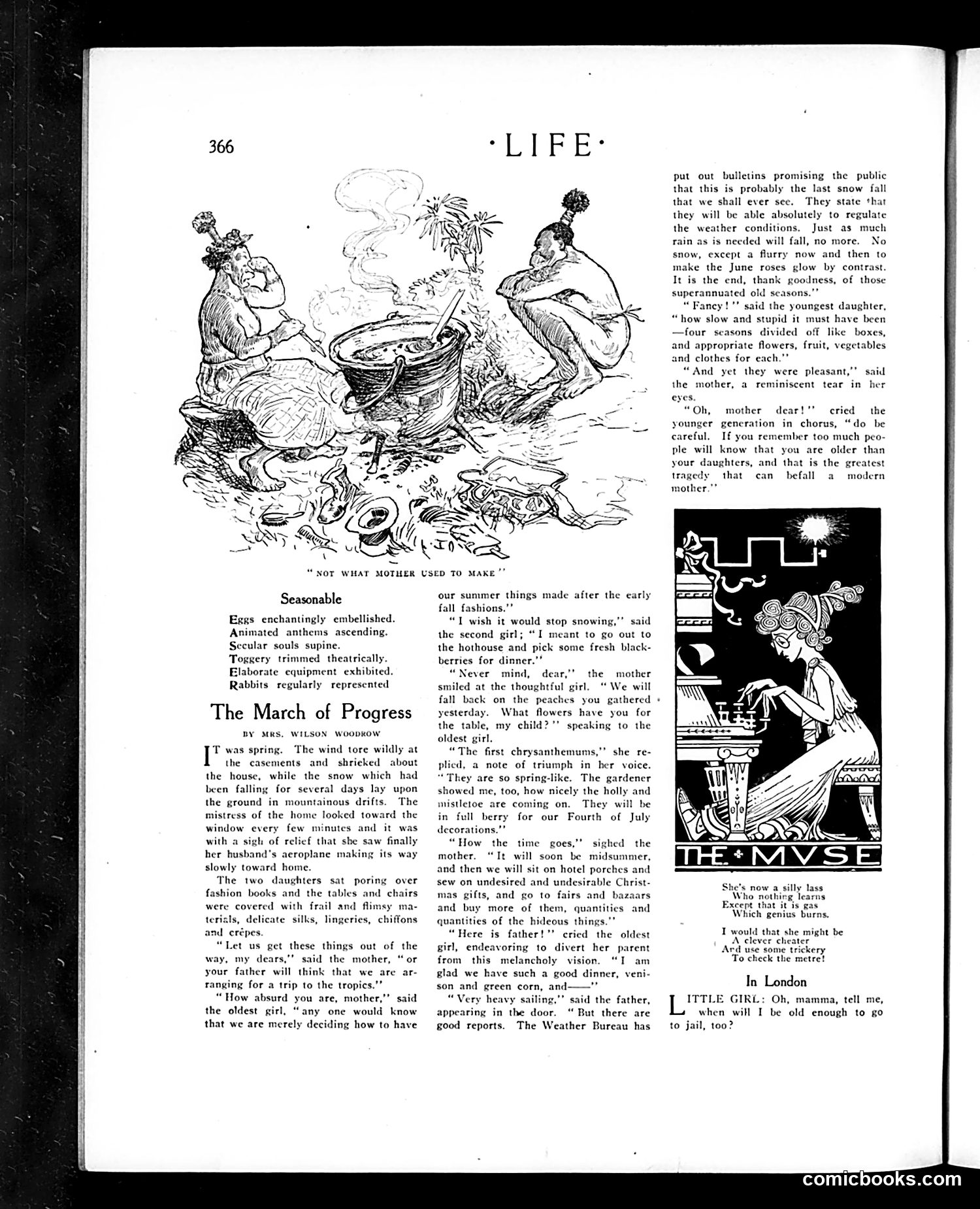
This story by Mrs. Wilson Woodrow satirizes early 20th-century "progress" and its absurd consequences. The setup is deliberately overwrought: a husband arrives home by aeroplane in spring snow; the family discusses summer fashions in winter, picks fresh blackberries from a hothouse in snowing weather, and displays chrysanthemums and holly meant for July Fourth—all simultaneously. The joke peaks when the father announces the Weather Bureau can now regulate weather perfectly, eliminating seasons entirely. The mother's nostalgic tear about the old four-season system horrifies her daughters, who warn that remembering pleasant past experiences risks making her seem *old*—"the greatest tragedy that can befall a modern mother." The satire targets: technological hubris (weather control), seasonal disconnection through modern comforts, and the era's youth culture's dismissal of anything historical. It mocks how "progress" creates absurdity while destroying natural rhythms and honest sentiment.
📄 Transcribed text from this page (OCR, searchable)
Machine-transcribed from the original scan — historical spelling and the odd misread are preserved.
“NOT WHAT MOTHER USED TO MAKE ’” Seasonable Eggs enchantingly embellished. Animated anthems ascending. Sccular souls supine. Toggery trimmed theatrically. Elaborate equipment exhibited. Rabbits regularly represented The March of Progress BY MRS. WILSON WoopKOW T was spring. The wind tore wildly at the casements and shricked about the house, while the snow which had been falling for several days lay upon the ground in mountainous drifts. The mistress of the home looked toward the window every few minutes and it was with a sigh of relief that she saw finally her husband's aeroplane making its way slowly toward home. The two daughters sat poring over fashion books and the tables and chairs were covered with frail and flimsy ma- terials, delicate silks, lingeries, chiffons and crépes. “Let us get these things out of the way, my dears,” said the mother, “or your father will think that we are ar- ranging for a trip to the tropics."” “How absurd you are, mother,"’ said the oldest girl, “any one would know that we are merely deciding how to have our summer things made after the early fall fashions. “IL wish it would stop snowing,”” said the second girl; “I meant to go out to the hothouse and pick some fresh black- berries for dinner.” ‘ever mind, smiled at the thoughtful girl. dear,"’ the mother “We will fall back on the peaches you gathered + yesterday. What flowers have you for the table, my child?’ speaking to the oldest girl. “The first chrysanthemums, plicd, a note of triumph in her voice. “They are so spring-like. The gardener showed me, too, how nicely the holly and istletoe are coming on. They will be in full berry for our Fourth of July decorations.”” “How the time goes," sighed the mother. “It will soon be midsummer, and then we will sit on hotel porches and sew on undesired and undesirable Christ- mas gifts, and go to fairs and bazs and buy more of them, quantiti quantities of the hideous things."” “Here is father!” cried the oldest girl, endeavoring to divert her parent from this melancholy vision. “I am glad we have such a good dinner, veni- son and green corn, and——" “Very heavy sailing,’” said the father, appearing in the door. “ But there are good reports. The Weather Bureau has put out bulletins promising the public that this is probably the last snow {all that we shall ever see. They state that they will be able absolutely to regulate the weather conditions. Just as_much rain as is needed will fall, no more. No snow, except a y now and then to make the June roses glow by contrast. It is the end, thank goodness, of those superannuated old scasons.”” “Faney!'! said the youngest daughter, “how slow and stupid it must have been —four seasons divided off like and appropriate flowers, fruit, vegetables and clothes for each,"" “And yet they were pleasant, the mother, a reminiscent tear in her eyes. “Oh, mother cried the younger gencration in chorus, “do be careful. If you remember too much peo- ple will know that you are older than your daughters, and that is the greatest tragedy that can befall a modern mother."” boxes, dear! "" She's now a silly lass Who nothing learns Except that it is gas Which genius burns. I would that she might be A clever cheater Ard use some trickery To check the metre! In London ITTLE GIRL: Oh, mamma, tell me, when will I be old enough to go to jail, too? comicbooks.com