
Life, 1910-01-13 · page 20 of 36
Life — January 13, 1910 — page 20: what you’re looking at
What you’re looking at
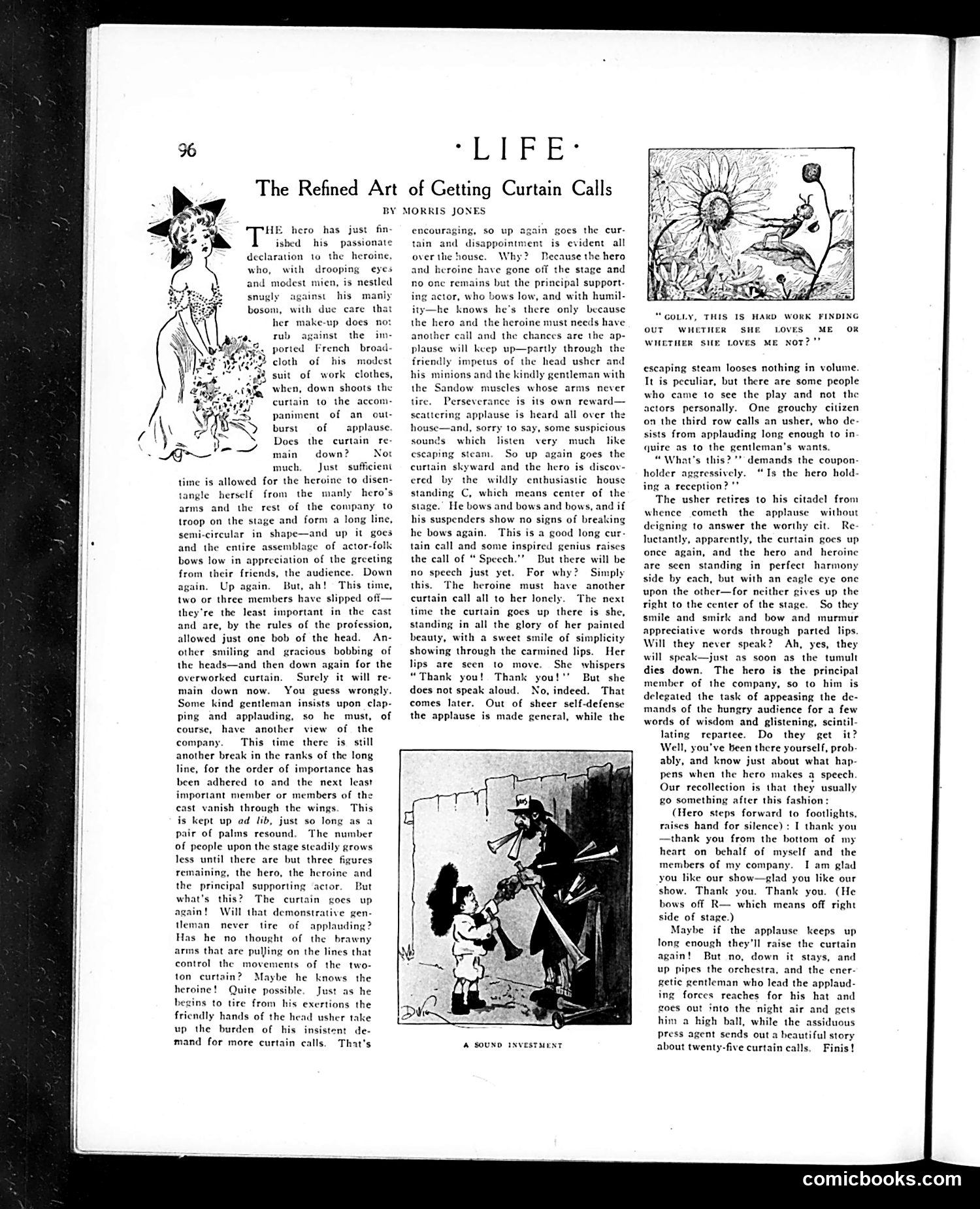
This article satirizes the theatrical tradition of repeated curtain calls following a stage performance. The text humorously describes how audiences' applause keeps drawing actors back onstage in diminishing groups—first the hero and heroine together, then supporting players dropping out by rank of importance, until only the lead remains. The satire targets both audience behavior (the persistent gentleman clapping) and theatrical vanity. It mocks the physical toll on stagehands operating the heavy curtain and the actors' desperate hunger for validation. The accompanying cartoon (captioned "A SOUND INVESTMENT") appears to show an actor performing an exaggerated curtain-call bow. The piece gently ridicules how theatrical hierarchies determine who gets solo bows, and suggests that endless curtains calls reflect actors' insecurity rather than genuine audience appreciation.
📄 Transcribed text from this page (OCR, searchable)
Machine-transcribed from the original scan — historical spelling and the odd misread are preserved.
HE hero has ished his declaration 10 the heroine, who, with drooping eyes and modest mien, is nestled snugly against. his mani bosom, with due care th her make-up does no: rub against the im- ported broad- cloth of his modest suit of work clothes, when, down shoots the curtain to the accom- paniment of an out- burst of applause Does the curtain re main down? a much, Just sufficient time is allowed for the heroine to disen- tangle herself from the manly hero's arms and the rest of the company to troop on the stage and form a long line, semi-circular in shape—and up it goes ‘ and the entire assemblage of actor-folk bows low in appreciation of the greeting from their friends, the audience. Down again. Up again. But, ah! This time, two or three members have slipped off— they're the least important in the cast and are, by the rules of the profession, allowed just one bob of the head. An- other smiling and gracious bobbing of the heads—and then down again for the overworked curtain. Surely it will r main down now. You guess wrongly. Some kind gentleman insists upon clap- just fin passionate French ping and applauding, so he must, of course, have another view of the company. This time there is. still another break in the ranks of the long line, for the order of importance has been adhered to and the next least important member or members of the cast vanish through the wings. This is kept up ad lib, just so long as a pair of palms resound. The number of people upon the stage steadily grows less until there are but three figures remaining, the hero, the heroine and the principal supporting actor. But what's this? The curtain goes up again! Will that demonstrative gen- tleman never tire of applauding? Has he no thought of the brawny arms that are pulling on the lines that control the movements of the two- ton curtain? Maybe he knows the Quite possible. Just as he gins to tire from his exertions the friendly hands of the head usher take | up the burden of his mand for more curtain calls. heroine! insistent de- That's “LIFE: The Refined Art of Getting Curtain Calls Y MORRIS JONES encouraging, so up again goes the cur- tain and disappointment is evident all over the house. Why? Because the hero and heroine have gone off the stage and no one remains but the principal support- ing actor, who bows low, and with humil- ity—he knows he’s there only because the hero and the heroine must needs have another call and the chances are the ap- plause will keep up—partly through the friendly impetus of the head usher and his minions and the kindly gentleman with the Sandow muscles whose arms never tire. Perseverance is its own reward— attering applause is heard all over the house—and, sorry 10 say, some suspicious which very much like escaping steam. So up again goes the curtain skyward and the hero is discov- ered by the wildly enthusiastic house standing C, which means center of the stage.’ He bows and bows and bows, and if his suspenders show no signs of breaking he bows again. This is a good long cur- tain call and some inspired genius raises the call of “ Speech."” But there will be no speech just yet. For why? Simply this. The heroine must have another curtain call all to her lonely. The next time the curtain goes up there is she, standing in all the glory of her painted beauty, with a sweet smile of simplicity sounds listen showing through the carmined lips. Her ips are scen to move. She whispers “Thank you! Thank you!'’ But she does not speak aloud. No, indeed. That comes later. Out of sheer self-defense the applause is made general, while the A SOUND INVESTMENT “GOLLY, THIS 18 HAKD WORK FINDING OUT WHETHER SHE LOVES ME OR WHETHER SIE LOVES ME NO’ escaping steam looses nothing in volume It is peculiar, but there are some people who came to see the play and not the actors personally. One grouchy citizen on the third row calls an usher, who de- sists from applauding long enough to in quire as to the gentleman's wants. “What's this?’ demands the coupon- holder aggressively. “Is the hero hold- ing a reception? The usher retires to his citadel from whence cometh the applause without deigning to answer the worthy cit. Re luctantly, apparently, the curtain gocs up once again, and the hero and heroine are scen standing in perfect harmony side by each, but with an eagle eye one upon the other—for neither gives up the right to the center of the stage. So they smile and smirk and bow and murmur appreciative words through parted lips Will they never speak? Ah, yes, they will speak—just as soon as the tumult dies down. The hero is the principal member of the company, so to him is delegated the task of appeasing the de- mands of the hungry audience for a few words of wisdom and glistening, scintil lating repartee. Do they get it? Well, you've been there yourself, prob ably, and know just about what hap- pens when the hero makes a speech Our recollection is that they usually go something after this fashion: (Hero steps forward to footlights, raises hand for silence) : I thank you —thank you from the bottom of my heart on behalf of myself and the members of my company. I am glad you like our show—glad you like our show. Thank you. Thank you. (He bows off R— which means off right side of stage.) Maybe if the applause keeps up long enough they'll raise the curtain again! But no, down it stays, and up pipes the orchestra, and the ener- getic gentleman who lead the applaud- ing forces reaches for his hat and goes out into the night air and gets him a high ball, while the assiduous press agent sends out a beautiful story about twenty-five curtain calls, Finis! comicbooks.com