
Life, 1909-09-23 · page 11 of 28
Life — September 23, 1909 — page 11: what you’re looking at
What you’re looking at
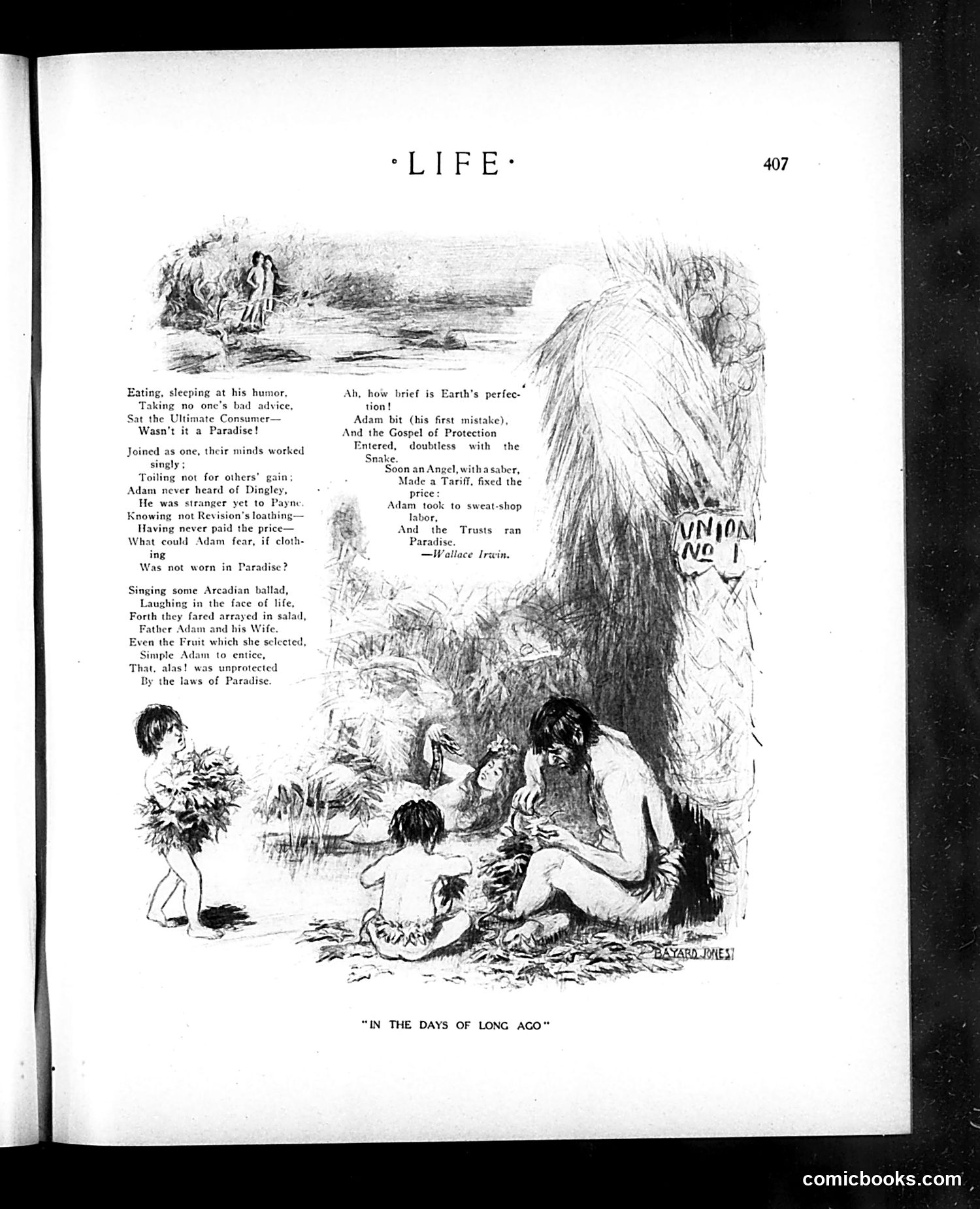
This satirical cartoon critiques economic inequality and labor conditions through a biblical allegory. The illustration depicts Adam and Eve with their children in paradise, contrasted with text mocking how "brief is Earth's perfection." The poem's central joke targets laissez-faire capitalism: Adam's "first mistake" wasn't the forbidden fruit, but rather accepting "the Gospel of Protection" and establishing tariffs and trusts. The satire suggests that economic systems—not original sin—created human suffering. By invoking paradise, the cartoonist argues that protective tariffs and monopolistic trusts corrupted what should have been an innocent world. This reflects early 20th-century American debate over protectionism, tariffs, and corporate monopolies versus free-market ideology.
📄 Transcribed text from this page (OCR, searchable)
Machine-transcribed from the original scan — historical spelling and the odd misread are preserved.
Eating, sleeping at his humor, Taking no one’s bad advice, Sat the Ultimate Consumer— Wasn't it a Paradise! Joined as one, their minds worked ingly ; Toiling not for others’ gain; Adam never heard of Dingley He was stranger yet to Payne Knowing not Revision’s loathing. Having never paid the price— What could Adam fear, if cloth- ing Was not worn in Paradise? Singing some Arcadian ballad, Laughing in the face of life, Forth they fared arrayed in salad, Father Adam and his Wife. Even the Fruit which she selected, imple Adam to entice, That, alas! was unprotected By the laws of Paradise. Ah, how brief is Earth's perfec-” tion! Adam bit (his first mistake), And the Gospel of Protection Entered, doubtless with the Snake. Soon an Angel, with asaber, Made a Tariff, fixed the pric Adam took to sweat-shop labor, And the Trusts) ran Paradise. —Wallace Irwin. “IN THE DAYS OF comicbooks.com _