
Life, 1909-01-21 · page 10 of 28
Life — January 21, 1909 — page 10: what you’re looking at
What you’re looking at
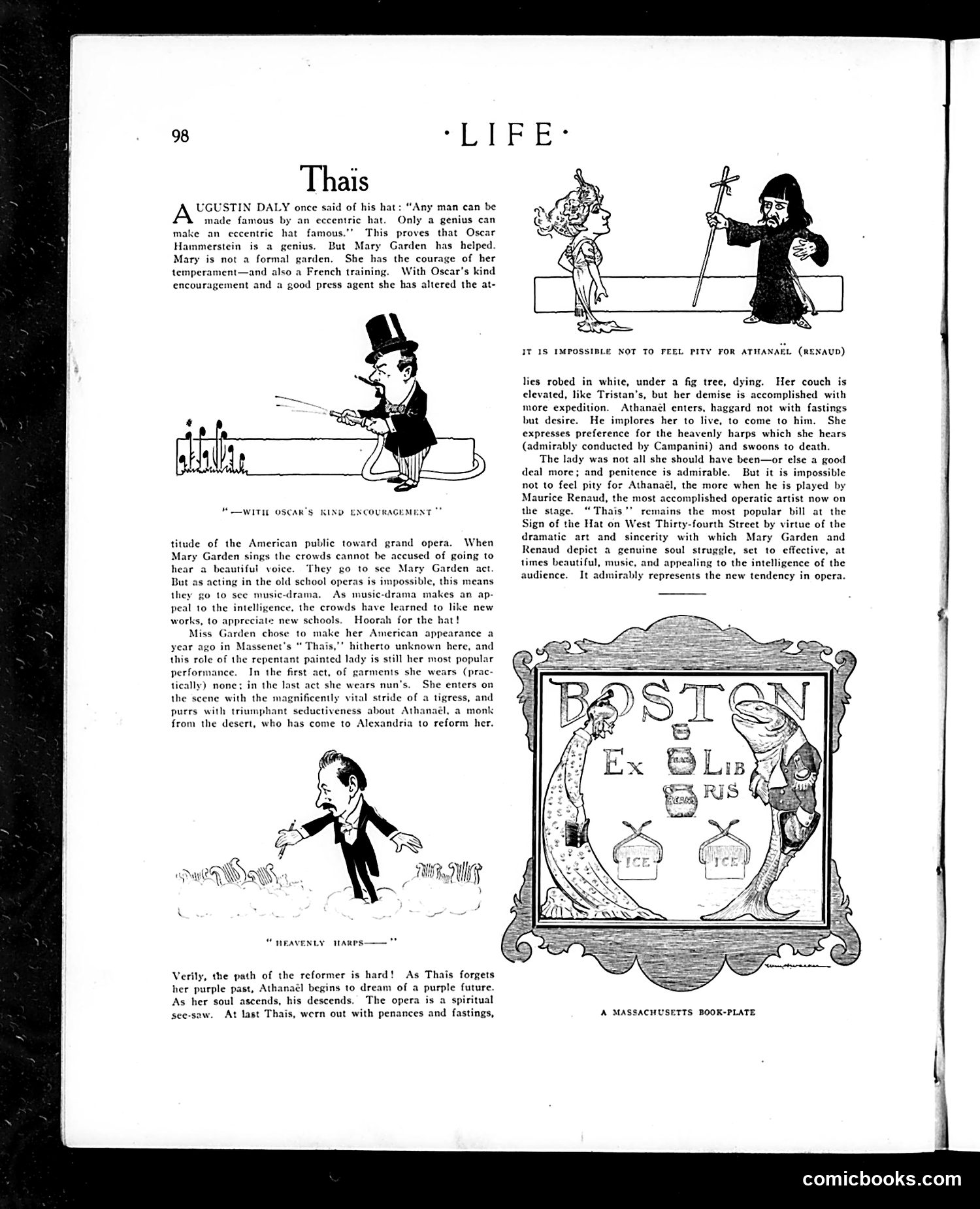
This page discusses the opera "Thais," praising Mary Garden's American performance. The cartoons satirize grand opera's pretensions and appeal. The top cartoon shows a figure in a top hat conducting an orchestra with exaggerated gestures, labeled "WITH OSCAR'S KIND ENCOURAGEMENT"—likely referencing Oscar Hammerstein's support of Mary Garden. The middle cartoon, "HEAVENLY HARPS," depicts a man conducting with dramatic flair amid floating harps, mocking the grandiose, ethereal staging conventions of opera. The text notes that opera attracts mass audiences despite being "impossible" as serious art, celebrating that "Thais" succeeds through genuine artistry rather than pretension. The satire gently mocks opera's theatrical excess while ultimately endorsing this particular production's artistic merit.
📄 Transcribed text from this page (OCR, searchable)
Machine-transcribed from the original scan — historical spelling and the odd misread are preserved.
“LIP B® Thais UGUSTIN DALY once said of his hat: “Any man can be made famous by an eccentric hat. Only a genius can make an eccentric hat famous.’ This proves that Oscar Hammerstein is a genius. But Mary Garden has helped. Mary is not a formal garden. She has the courage of her temperament—and also a French training. With Oscar's kind encouragement and a good press agent she has altered the at- "WITH OSCAR'S KIND ENCOURAGEMENT" le of the American public toward grand opera. When Mary Garden sings the crowds cannot be accused of going to hear a beautiful voice. They go to sce Mary Garden act. But as acting in the old school operas is impossible, this means they go to see music-drama, As musie-drama makes an ap- peal to the intelligence, the crowds have learned to like new works, to appreciate new schools. Hoorah for the hat! Miss Garden chose to make her American appearance a year ago in Massenet's “ Thais,"" hitherto unknown here, and this role of the repentant painted lady is still her most popular performance. In the first act, of garments she wears (prac- tically) none; in the last act she wears nun’s. She enters on the scene with the magnificently vital stride of a tigress, and purrs with triumphant seductiveness about Athanaél, a monk from the desert, who has come to Alexandria to reform her. WIENS: “MRAVENLY ARPS—— Verily, the path of the reformer is hard! As Thais forgets her purple past, Athanaél begins to dream of a purple future. As her soul ascends, his descends. The opera is a spiritual see-saw. At last Thais, wern out with penances and fastings, 37 18 IMPOSSINLE NOT TO FEEL PITY FOR ATHANAEL (RENAUD) lies robed in white, under a fig tree, dying. Her couch is elevated, like Tristan’s, but her demise is accomplished with more expedition. Athanaél enters, haggard not fastings but desire. He implores her to live, to come to him. She expresses preference for the heavenly harps which she hears (admirably conducted by Campanini) and swoons to death The lady was not all she should have been—or else a good deal more; and penitence is admirable. But it is impossible not to feel pity for Athanaél, the more when he is played by Maurice Renaud, the most accomplished operatic artist now on the stage. “ Thais’? remains the most popular bill at the Sign of the Hat on West Thirty-fourth Street by virtue of the dramatic art and sincerity with which Mary Garden and Renaud depict a genuine soul struggle, set to effective, at times beautiful, music, and appealing to the intelligence of the audience. It admirably represents the new tendency in opera. A MASSACHUSETTS BOOK-PLATE comicbooks.com