
Life, 1908-12-03 · page 24 of 68
Life — December 3, 1908 — page 24: what you’re looking at
What you’re looking at
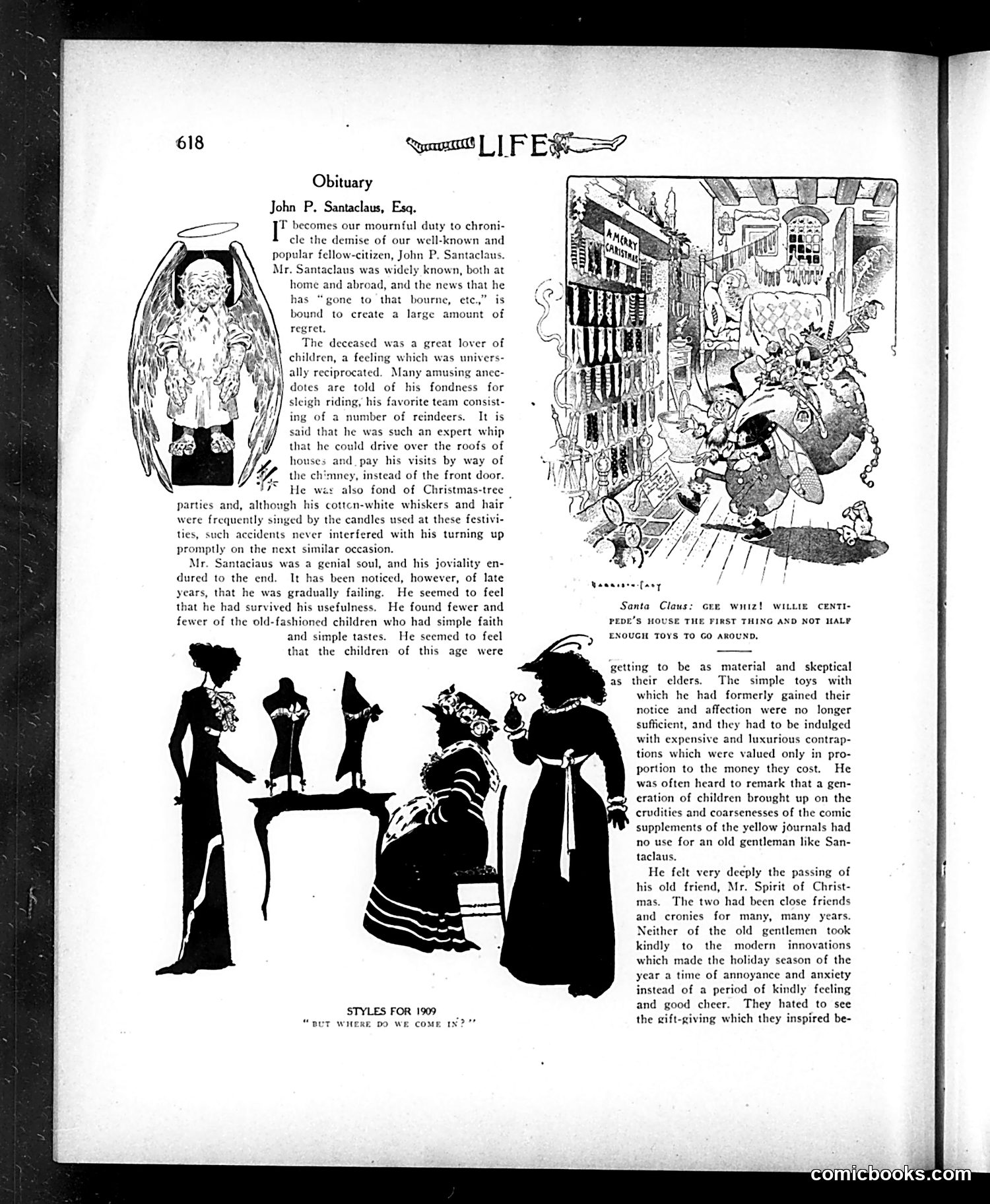
This page presents a mock obituary lamenting the decline of traditional Christmas values. "John P. Santaclaus" (Santa Claus) represents the old-fashioned Christmas spirit, depicted as a genial figure who embodied simple joy and child-like wonder. The satire targets early 1900s materialism: modern children have become "material and skeptical," rejecting simple toys for expensive "luxurious contraptions" valued only by cost. The deceased is portrayed as obsolete, unable to compete with "comic supplements of the yellow journals" (sensationalist newspapers) that corrupted childhood innocence. The lower cartoon captioned "Styles for 1909: But Where Do We Come In?" shows fashionable adults at a Christmas party, suggesting that holiday focus has shifted from children to adult social display and consumption. The overall message critiques commercialization and the loss of Christmas's spiritual meaning—a concern that ironically remains relevant today.
📄 Transcribed text from this page (OCR, searchable)
Machine-transcribed from the original scan — historical spelling and the odd misread are preserved.
yo || PF EG OS7 Obituary John P. Santaclaus, Esq. T becomes our mournful duty to chroni- cle the demise of our well-known and popular fellow-citizen, John P. Santaclaus Mr. Santaclaus was widely known, both at home and abroad, and the news that he has “gone to that bourne, ete,” is bound to create a large amount of regret. The deceased was a great lover of children, a feeling which was univers- ‘| ally reciprocated. Many amusing anec- dotes are told of his fondness for gh riding, his favorite team consist- of a number of reindeers. It is said that he was such an expert whip that he could drive over the roofs of houses and. pay his visits by way of the chimney, instead of the front door. . He wes also fond of Christmas-tree _ parties and, although his cottcn-white whiskers and hair were frequently singed by the candles used at these festivi- ties, such accidents never interfered with his turning up promptly on the next similar occasion. Mr. Santaciaus was a genial soul, and his joviality en- dured to the end. It has been noticed, however, of late years, that he was gradually failing. He seemed to feel that he had survived his usefulness. He found fewer and Santa Claus: cee wiz! Witte CENTI- fewer of the old-fashioned children who had simple faith PEDE’S HOUSE THE FIRST THING AND NOT HALF and simple tastes. He seemed to feel ENOUGIE TOYS TO GO AROUND. that the children of this age were Vaeasere fay getting to be as material and skeptical as their elders. The simple toys with which he had formerly gained their notice and affection were no longer sufficient, and they had to be indulged with expensive and luxurious contrap- tions which were valued only in pro- portion to the money they cost. He was often heard to remark that a gen- eration of children brought up on the crudities and coarsenesses of the comic supplements of the yellow journals had no use for an old gentleman like San- taclaus. He felt very deeply the passing of his old friend, Mr. Spirit of Christ- mas. The two had been close friends and cronies for many, many years. Neither of the old gentlemen took kindly to the modern innovations which made the holiday season of the year a time of annoyance and anxiety instead of a period of kindly feeling and good cheer. They hated to see STYLES FOR 1909 the gift-giving which they inspired be- “BUT WHERE DO WE COME IN?’?