
Life, 1908-09-17 · page 11 of 24
Life — September 17, 1908 — page 11: what you’re looking at
What you’re looking at
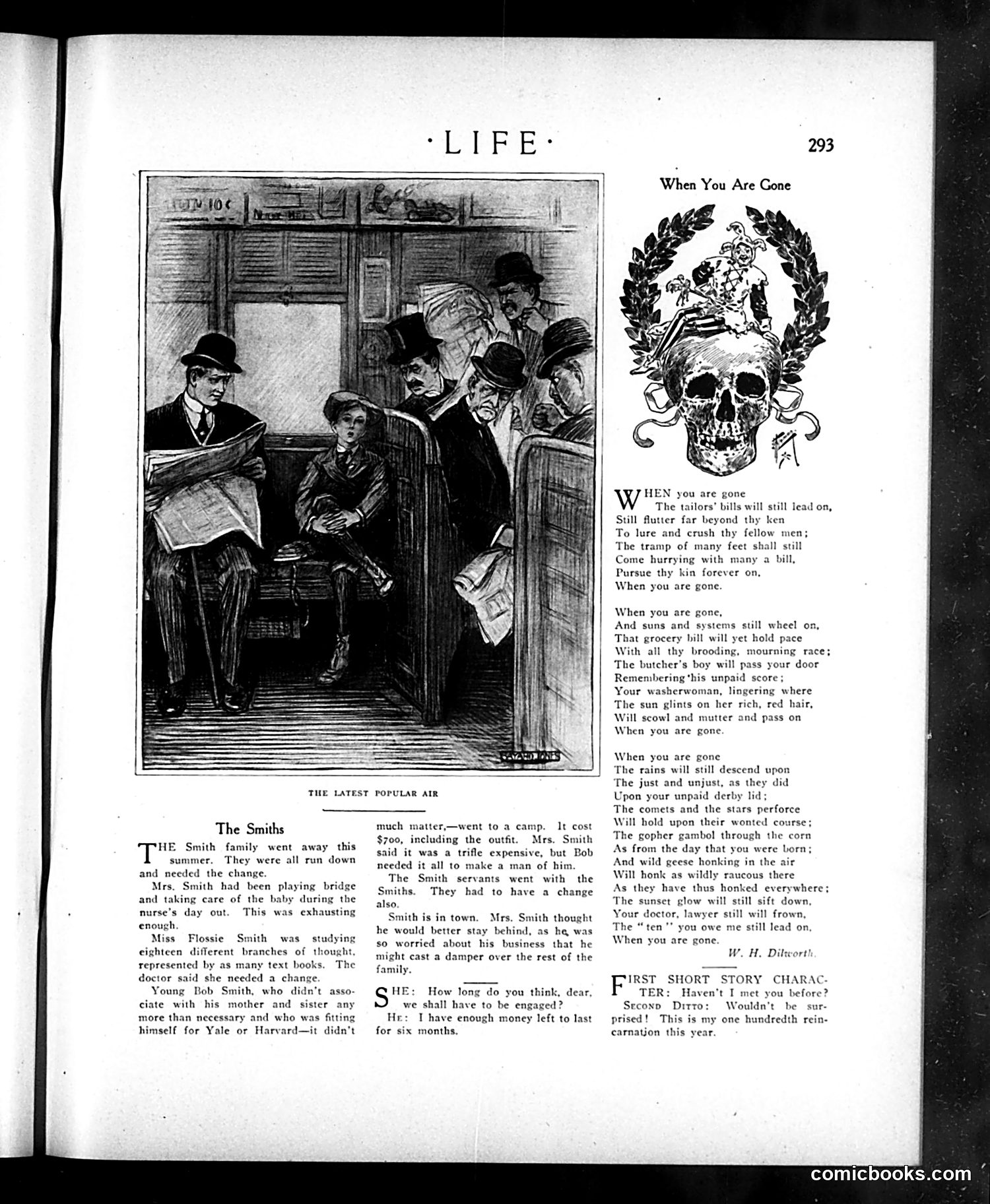
This page contains two distinct pieces: **Left side:** An illustration titled "The Latest Popular Air" depicting men reading newspapers on public transit (likely a subway or train car). The accompanying text "The Smiths" describes a family's summer vacation to camp—a satirical commentary on middle-class leisure aspirations and the financial strain of maintaining appearances. **Right side:** A poem titled "When You Are Gone" by W. H. Dinsworh, featuring a memento mori (skull with laurel wreath) illustration. The melancholic verse reflects on mortality and life's indifference to individual death—a traditional Romantic theme about human insignificance. The page juxtaposes mundane domestic comedy with existential meditation, typical of Life's satirical approach to American society and culture.
📄 Transcribed text from this page (OCR, searchable)
Machine-transcribed from the original scan — historical spelling and the odd misread are preserved.
THE LATEST POPULAR AIR The Smiths HE Smith family went away this summer. They were all run down and needed the change. Mrs, mith had been pl. ng bridge and taking care of the baby during the nurse’s day out. This was exhausting enough Miss Flossie cightcen different represented by as many text books. The doctor said she needed a change Young Bob Smith, who didn’t ciate with his mother and sister any more than necessary and who was fitting himself for Yale or Harvard—it didn’t Smith was studying branches of thought, asso- much matter,—went to a camp. It cost $700, including the outfit. Mrs. Smith said it was a trifle expensive, but Bob needed it all to make a man of him. The Smith servants went with the Smiths. They had to have a change also. Smith is in town. Mrs. Smith thought he would better stay behind, as he was so worried about his business that he might cast a damper over the rest of the family. GE: How tong do you think, dear we shall have to be engaged? Hr: T have enough money left to last for six months. 293 HEN you are gone The tailors’ bills will still lead on, Still flutter far beyond thy ken To lure and crush thy fellow men; The tramp of many feet shall still Come hurrying with many a bill, Pursue thy kin forever on, When you are gone. When you are gone, And suns and systems still wheel on, That grocery bill will yet hold pace With all thy brooding, mourning race; The butcher’s boy will pass your door Remembering ‘his unpaid score ; Your washerwoman, lingering where The sun glints on her rich, red hair, Will scowl and mutter and pass on When you are gone. When you are gone The rains will still descend upon The just and unjust, as they did Upon your unpaid derby lid; The comets and the stars perforce Will hold upon their wonted course; The gopher gambol through the corn As from the day that you were born; And wild geese honking in the air Will honk as wildly raucous there As they have thus honked everywhere; The sunset glow will still sift down, Your doctor, lawyer still will frown, The “ten "' you owe me still lead on, When you are gone Fist, SHORT STORY CHARAC- TER: Haven't I met you before? Srcoxn Dirro: Wouldn't be sur- prised! This is my one hundredth rein- carnation this year. comicbooks.com