
Life, 1906-09-06 · page 17 of 40
Life — September 6, 1906 — page 17: what you’re looking at
What you’re looking at
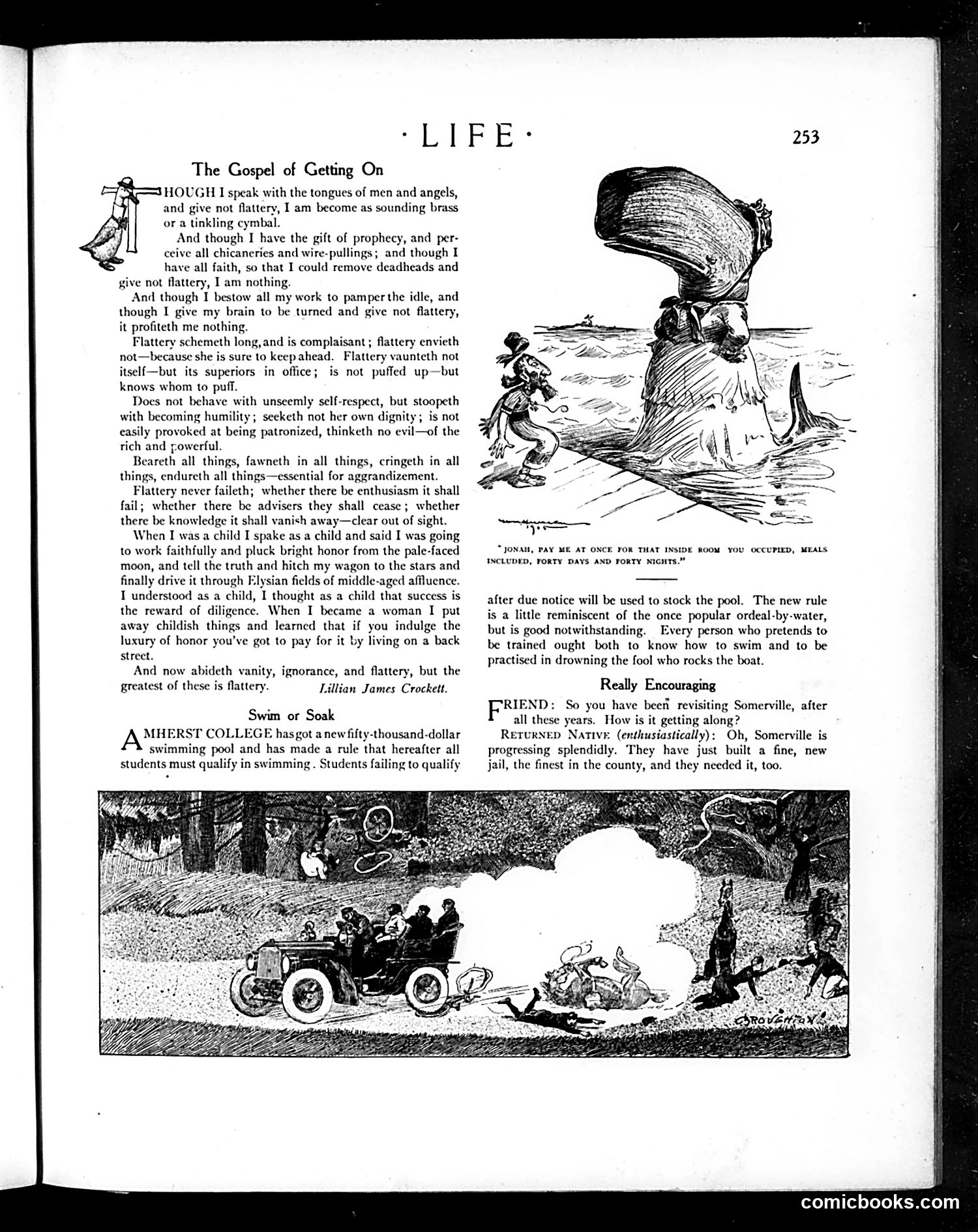
**"The Gospel of Getting On"** is a satirical essay by Lillian James Crockett that parodies Biblical language (echoing 1 Corinthians 13) to critique career advancement through flattery rather than merit. Written in mock-reverent tone, it argues that flattery—not honest work or integrity—is the true path to success in American business. The author describes how childhood ideals of honor and diligence must be abandoned; one must instead flatter superiors, suppress dignity, and compromise principles to prosper. The satire's point: American success culture rewards sycophancy over virtue. **"Swim or Soak"** jokes darkly about Amherst College's new swimming requirement, sarcastically suggesting students who can't swim will be "used to stock the pool"—a grim reference to water ordeals in medieval justice systems. **"Really Encouraging"** is a brief joke about small-town progress: a returned native boasts that Somerville's main achievement is building "a fine, new jail," implying the town's only growth is criminal.
📄 Transcribed text from this page (OCR, searchable)
Machine-transcribed from the original scan — historical spelling and the odd misread are preserved.
* LIFE * The Gospel of Getting On (3 HOUGH I speak with the tongues of men and angels, and give not flattery, I am become as sounding brass 4 or a tinkling cymbal. 3 And though I have the gift of prophecy, and per- < ceive all chicaneries and wire-pullings; and though I r have all faith, so that I could remove deadheads and give not flattery, Iam nothing. And though I bestow all my work to pamper the idle, and though I give my brain to be turned and give not flattery, it profiteth me nothing. Flattery schemeth long, and is complaisant; flattery envieth not—because she is sure to keep ahead. Flattery vaunteth not itself—but its superiors in office; is not puffed up—but knows whom to puff. Does not behave with unseemly self-respect, but stoopeth with becoming humility; seeketh not her own dignity; is not easily provoked at being patronized, thinketh no evil—of the rich and powerful. Beareth all things, fawneth in all things, cringeth in all things, endureth all things—essential for aggrandizement. Flattery never faileth; whether there be enthusiasm it shall fail; whether there be advisers they shall cease ; whether there be knowledge it shall vanish away—clear out of sight. When I was a child I sp: a child and said I was going to work faithfully and pluck bright honor from the pale-faced moon, and tell the truth and hitch my wagon to the stars and finally drive it through Elysian fields of middle-aged affluence. I understood as a child, I thought as a child that success is the reward of diligence. When I became a woman I put away childish things and learned that if you indulge the luxury of honor you've got to pay for it by living on a back street. ‘And now abideth vanity, ignorance, and flattery, but the Greatest of these is flattery. Lillian James Crockett. —| Q i A Swim or Soak MHERST COLLEGE hasgot a new fifty-thousand-dollar swimming pool and has made a rule that hereafter all students must qualify in swimming . Students failing to qualify “JONAH, PAY ME AT ONCE FOR THAT INSIDE ROOM YOU OCCUPIED, MEALS INCLUDED, FORTY DAYS AND FORTY NiGHTS.” after due notice will be used to stock the pool. The new rule is a little reminiscent of the once popular ordeal-by-water, but is good notwithstanding. Every person who pretends to be trained ought both to know how to swim and to be practised in drowning the fool who rocks the boat. Really Encouraging RIEND: So you have beett revisiting Somerville, after all these years. How is it getting along? ReturNED Native (enthusiastically): Oh, Somerville is progressing splendidly. They have just built a fine, new jail, the finest in the county, and they needed it, too. comicbooks.com