
Life, 1905-11-30 · page 10 of 24
Life — November 30, 1905 — page 10: what you’re looking at
What you’re looking at
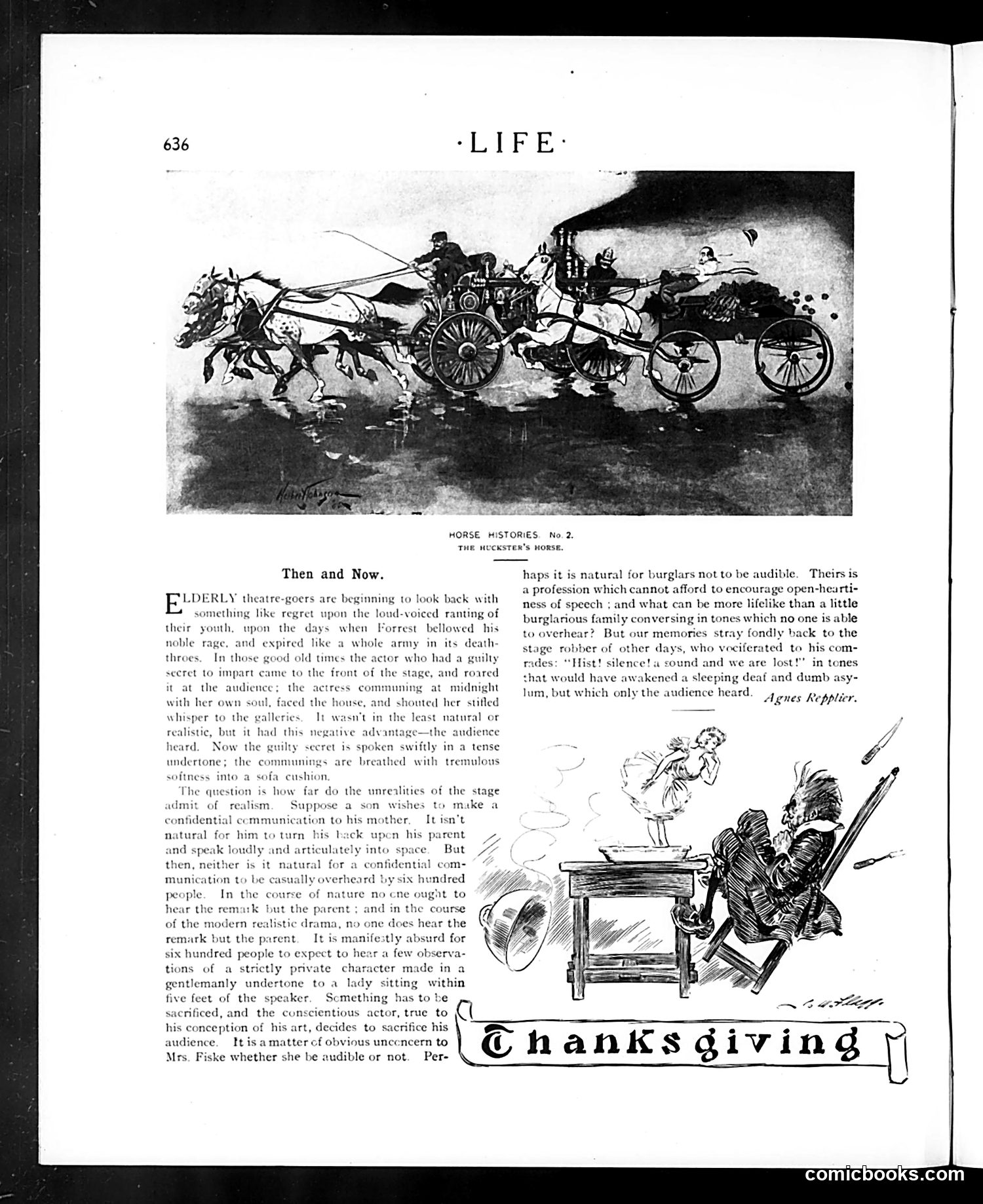
This page contains an essay titled "Then and Now" discussing theatrical performance styles, followed by a humorous illustration labeled "Thanksgiving." **The top illustration** ("Horse Histories No. 2: The Heckler's Horse") depicts a runaway horse-drawn carriage careening past an automobile, satirizing the collision of old and new transportation methods. **The main joke** (bottom illustration) shows a pilgrim-era figure being launched from a cannon at a table laden with Thanksgiving food. The satire appears to target the contrast between idealized historical narratives of Thanksgiving and harsh reality—the figure is literally being "shot" toward the feast, suggesting violence or desperation underlying the holiday's romanticized image. The essay's discussion of theatrical authenticity and audience perception provides context for the magazine's broader critique of how Americans consume and misunderstand their own history and traditions.
📄 Transcribed text from this page (OCR, searchable)
Machine-transcribed from the original scan — historical spelling and the odd misread are preserved.
HORSE HISTORIES. No. 2. THE HUCKSTER'S MORSE. Then LDERLY theatre-goers are beginning to look back with something like regret upon the loud-voiced ranting of their youth, upon the days when Forrest bellowed his noble rage. and expired like a whole army in its death- throes. In those good old times the actor who had a guilty seeret to impart came to the front of the stage, and roared midnight d the house, and shouted her stifled whisper to the galleries, It wasn’t in the least natural or idience y in a tense igs are breathed with tremulous it at the audience; the actress con with her own soul muni realistic, but it had this y tive advantage—the heard. Now the gt secret is spoken sw undertone ; softness into a sofa cushion. testion is how far do the unrealities of the stage Suppose a son wishes to muke a confidential communication to his mother, It isn’t natural for him to turn his hack upen his parent and speak loudly and articulately into space. But then, neither is it natural for a confidential com- six hundred ealism munication to be casually overheard t In the e of nature no cne TAY and in the course ic drama, no does hear the remark but th It is manifestly absurd for six hundred people to expect to hear a few observa- tions of a strictly private character made in a gentlemanly undertone to a lady sitting within five feet of the speaker. Scmething has to be sacrificed, and the conscientious actor, true to his conception of his art, decides to sacrifice his audience. It matter c vious uncencern to Mrs. Fiske whether she be audible or not. Per- at the parent ; haps it is natural for burglars not to be audible. Theirs is a profession which cannot afford to encourage open-hearti- ness of speech ; and what can be more lifelike than a little burglarious family conversing in tones which no one is able to overhear? But our memories stray fondly back to the stage robber of other days, who vociferated to his com- ades: “Hist! silence! a sound and we are lost!" in tones that would have awakened a sleeping deaf and dumb asy- Jum, but which only the audience heard. Agnes Repplicr.