
Life, 1905-09-07 · page 27 of 42
Life — September 7, 1905 — page 27: what you’re looking at
What you’re looking at
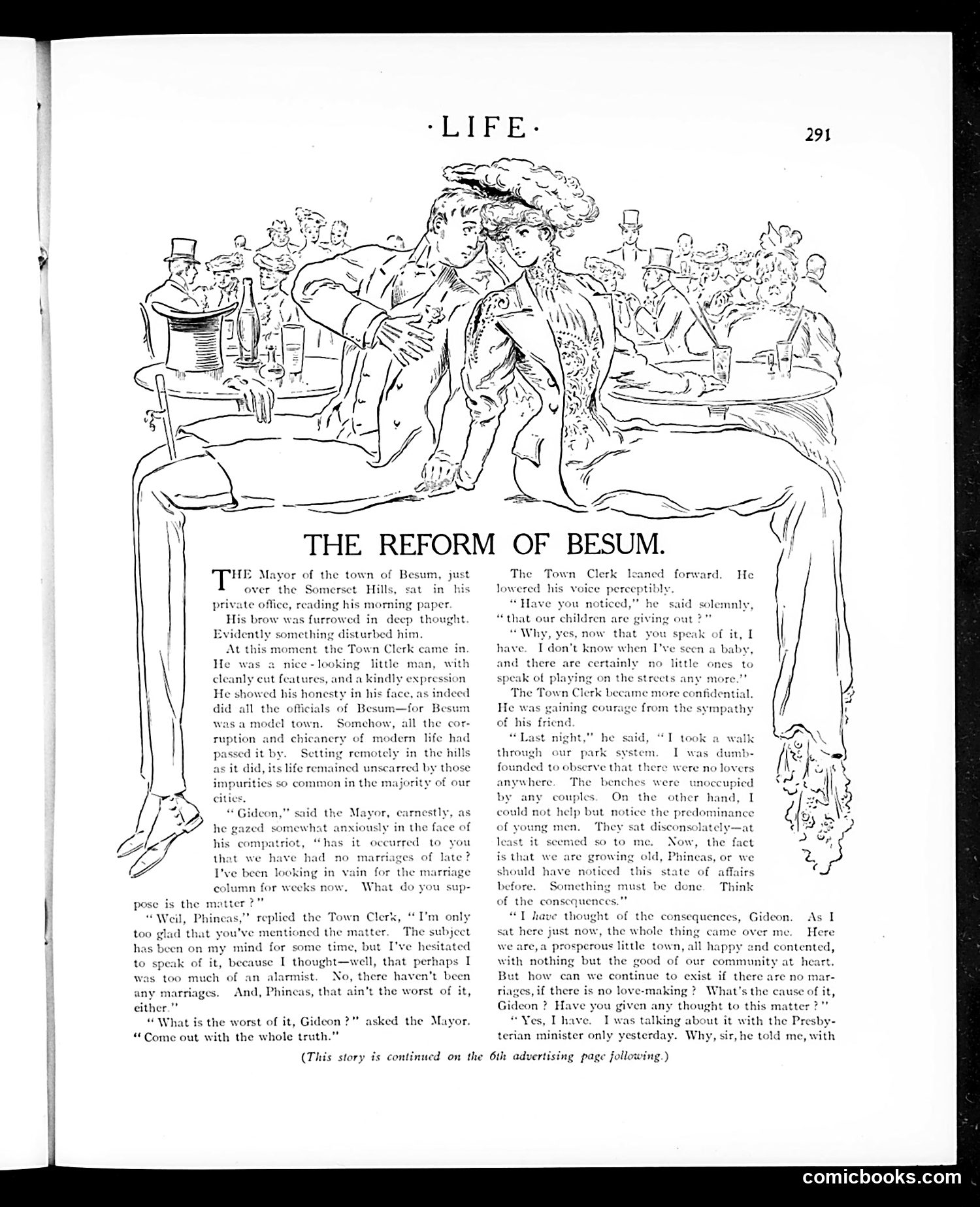
This is a satirical story about a small, model town troubled by a curious social problem: there are no marriages occurring because young people aren't courting or making love in public spaces like parks. The Mayor and Town Clerk—depicted as honest, well-meaning civic officials—discuss this crisis. The Town Clerk has observed that park benches sit empty of courting couples, and young men no longer loiter on streets. He consulted a Presbyterian minister about the cause. The satire targets Victorian-era anxieties about courtship, morality, and social order. The "problem" of declining romance reflects contemporary concerns about changing youth behavior and the loss of traditional matchmaking customs. By treating romance's disappearance as a civic crisis requiring reform, Life mocks both small-town moralism and the period's obsession with regulating public behavior and propriety. The gentle humor lies in presenting romantic decline as a municipal problem demanding official intervention.
📄 Transcribed text from this page (OCR, searchable)
Machine-transcribed from the original scan — historical spelling and the odd misread are preserved.
mM r of the town of Besum, just Hills, sat in his His brow was furrowed in deep thought Evidently something disturbed him. At this moment the Town Clerk came in. He was a nice-looking little man, with canly “2 ind a kindly expression i He showed his honesty in his face, as indeed did all the officials of Besum—for Besum model town, Somchow, all the cor- | ruption and chicane ern life had passed it by. in the hills as it did, its life remained unscarred by those ! irities so common in the it n looking in vain for the marriage r weeks now, What do you sup- atter ? Weil, Phineas,” replied the Town Clerk, ‘I'm only too glad that y oned The subject on my mind for some time, but I've hesitated ak of it, because 1 thought—well, that perhaps I too much of an alarmist. Ne e haven't been And, Phineas, that ne worst of it, y marriages. either.”” “What is the worst of it, Gideon?" asked the Mayor. “Come out with the whole truth.” (This story is continued on the 6th advertising pay The lowered hi “Ha “that o “Why have. you speak of it, I I don't know when I've se and there are certainly no litt t speak of pl: The Town € on the streets ar lerk became more confiden He was gaining cour, of his friend ge from the sympathy "he said, “I took a walk gh our park sy: b= ded to observe that there were no lovers anywhere. The benches were unoccupied by any On the other hand, I could not help but notice the predominance I was ney sat disconsol: —at fact wing old, Phineas, or we iced this state of affai hing must be done Think yuences.”* to me. wy is that we Id have no TS Gideon ? Have you given any thought “Yes, Lhave. Iwas talking about it wit terian minister only yesterday. Why i ollowing.) > thought of the consequences, Gideon are no mar- if there is no love-making ? What's the cause of it, ter 2”? 0 this ma the Presby- sir, he told me, with comicbooks.com