
Life, 1905-02-23 · page 6 of 22
Life — February 23, 1905 — page 6: what you’re looking at
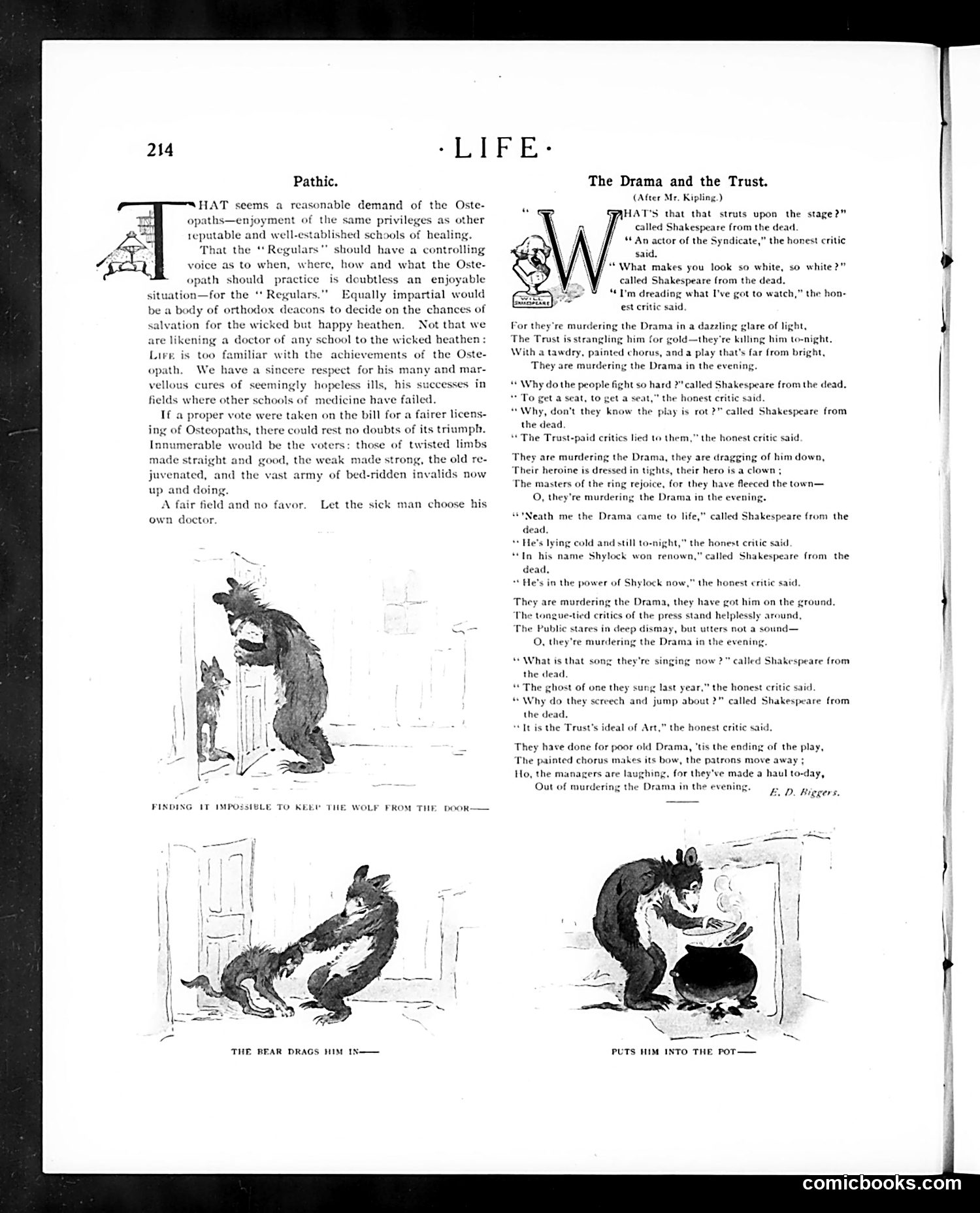
What you’re looking at
This page satirizes theatrical industry consolidation through a dialogue between Shakespeare (called from the dead) and an "honest critic." The text mocks a "Trust" that controls theater, monopolizing dramatic productions and profits. The three cartoons below illustrate the Trust's predatory practices using animal metaphors: a wolf threatening a book, a bear dragging in a victim, and a creature putting someone in a pot. These depict the Trust as literally consuming theatrical competitors and artists. The satire argues the Trust murders creative drama through monopolistic control, reducing theater to shallow commercial spectacle. The piece critiques how consolidated corporate power corrupts an art form, prioritizing profit over quality—a common Progressive Era complaint about industrial trusts.
📄 Transcribed text from this page (OCR, searchable)
Machine-transcribed from the original scan — historical spelling and the odd misread are preserved.
Pathic. HAT seems a reasonable demand of the Oste- opaths—enjoyment of the same privileges as other reputable and well-established schools of healing. ‘That the “ Regulars" should have a controlling voice as to when, where, how and what the Oste- opath should practice is doubtless an enjoyable situation—for the ‘* Regulars." Equally impartial would be a body of orthodox deacons to decide on the chances of ion for the wicked but happy heathen. Not that we are likening salv doctor of any school to the wicked heathe: Lire is too familiar with the achievements of the Oste- opath, We t for his many and mar- esses in ave a sincere respe vellous cures of seemingly hopeless ills, his st fields where other schools of medicine have failed. If a proper vote were taken on the bill for a fairer licens- ing of Osteopaths, there could rest no doubts of its triumph. Innumerable would be the voters: those of twisted limbs made straight and good, the weak made strong, the old re- juvenated, and the vs of bed-ridden invalids now up and doing. A fair field and no favor. Let the sick man choose his own doctor. st army FINDING IT IMPOSSIBLE TO KEEU THE WOLF FROM THE pooR—— THE REAR DRAGS HIM IN—— -LIFE: Drama and the Trust. (After Mr. Kipling.) “ AT'S that that struts upon the stage?” called Shakespeare from the dead. “An actor of the Syndicate,” the honest critic f} said. “What makes you look so white, so white?” called Shakespeare from the dead. “I'm dreading what I've got to watch,” the hon- est critic said. For they're murdering the Drama in a dazzling glare of light, The Trust is strangling him for gold—they're killing him to-night. With a tawdry, painted chorus, anda play that’s far from bright, ‘They are murdering the Drama in the evening. “ Why do the people fight so hard * To get a seat, to “Why, don't th the dead “The Trust-paid critics lied to them,” the ho} alled Shakespeare from the dead. honest critic said. know the play is rot?” called Shakespeare from t critic said. They are murdering the Drama, they are dragging of him down, Their heroine is dressed in tights, their hero is a clown ; The masters of the ring rejoice, for they have fleeced the town— O, they're murdering the Drama ip the evening. “'Neath me the Drama came to life,” called Shakespeare from the dead, oy “In his name Shy s lying cold and still te night,” the honest critic sai k won renown," called Shakespeare from the dead, + He's in the power of Shylock now,” the honest critic said. They are murdering the Drama, they have got him on the ground, The tong The Public stares in deep dismay, but utters not a sound— O, they're murderi ne-tied critics of the press stand helplessly around, yg the Drama in the evening. ‘+ What is that song they're singing now ?” called Shakespeare from the dead. “The Why do they screech and jump abo the dead. “It is the Trust's ideal of Art,” the honest critic said, host of one they sung last year,” the honest critic said t? called Shakespeare from They have done for poor old Drama, ‘tis the ending of the play, The painted chorus makes its bow, the patrons move away ; ‘ve made a haul to-day, the evening. Ho, the managers are laughing, for the; Out of murdering the Drama E. D. Biggers. on = PUTS HIM INTO THE POoT— comicbooks.com