
Life, 1904-05-12 · page 3 of 20
Life — May 12, 1904 — page 3: what you’re looking at
What you’re looking at
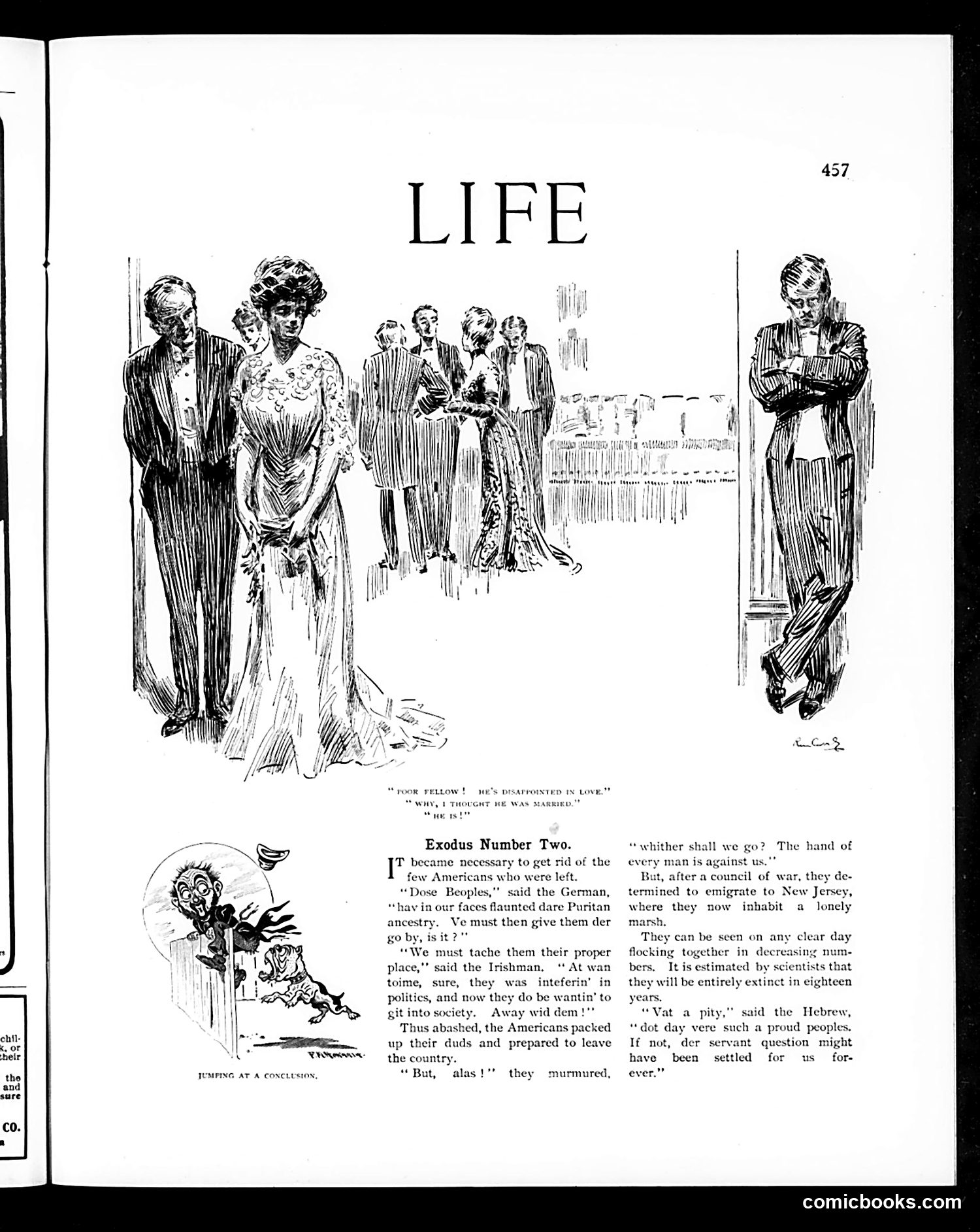
This page satirizes American xenophobia following World War I. The headline "Exodus Number Two" references Biblical expulsion, comparing forced deportation of immigrants to the Exodus narrative. The dialogue mocks anti-immigrant sentiment: German and Irish characters speak broken English while discussing how to "get rid of" remaining Americans, suggesting they're "interferin' in politics." The bitter irony—foreigners planning to expel native Americans—inverts nativist fears about immigrant takeover. The small cartoon "Jumping at a Conclusion" reinforces the theme through caricature and physical comedy. The satirical point: American nativists' deportation schemes are absurd and morally equivalent to authoritarian expulsion. The piece criticizes post-WWI anti-immigrant hysteria by exposing its logical contradictions and cruelty.
📄 Transcribed text from this page (OCR, searchable)
Machine-transcribed from the original scan — historical spelling and the odd misread are preserved.
qi wa “poor FELLOW! 14n's DISAPPOINTED IN Love.’ ven TOME WAS MARRIED.” Exodus Number Two. ‘T became necessary to get rid of the Americans who were left. " said the German, our faces flaunted dare Puritan Ve must then give them der ee” jose Beople: st tache them eal proper the Irishman, “and now they do be wantin’ to git into society, Away wid dem !"" Thus abashed, the Americans packed up their duds and prepared to leave the country. “But, alas!" RNS: TEMFING AT A CONCLUSION, they murmured, “whither shall we go? The hand of every man is agai But, after a council of war, they de- termined to emigrate to New Jersey, where they now inhabit a lonely marsh, They can be seen on any clear day flocking to It is estimated by ill be entirely extinct in eighteen Vat a pity,"” said the Hebrew, “dot day vere such a proud peoples. If not, der it question might have been settled for for- ever.” us comicbooks.com