
Life, 1904-02-25 · page 19 of 26
Life — February 25, 1904 — page 19: what you’re looking at
What you’re looking at
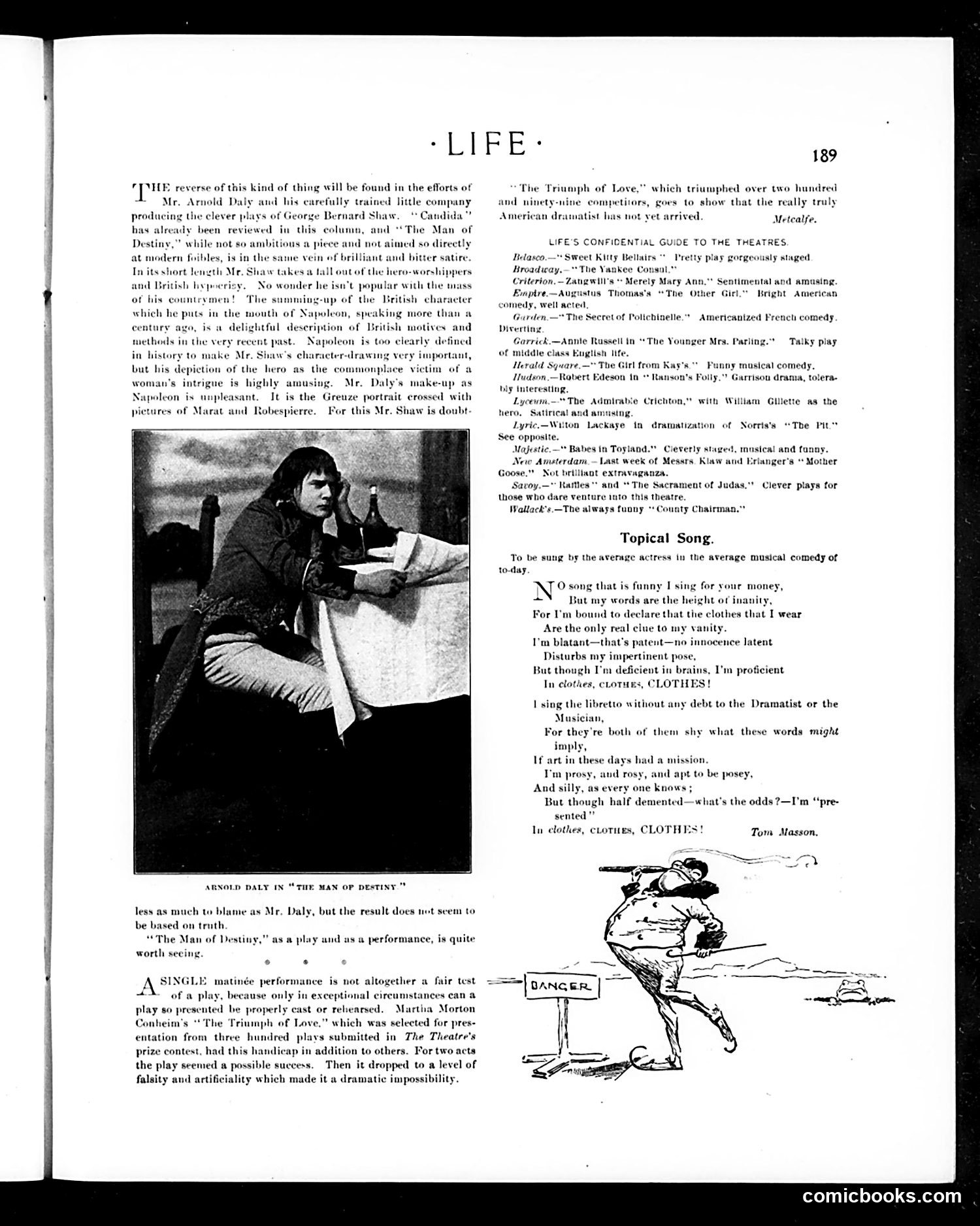
This page from *Life* magazine contains theater reviews and satirical commentary on early 1900s American drama. The photograph shows **Arnold Daly** in "The Man of Destiny," a play by George Bernard Shaw about Napoleon. The accompanying text critiques both the play and Daly's performance, suggesting his portrayal of Napoleon lacks historical authenticity and relies too heavily on makeup effects rather than genuine character work. Below, a cartoon labeled "DANGER" depicts a rotund figure in classical dress, likely satirizing overwrought theatrical pretension or melodramatic acting styles of the era. The "Topical Song" section parodies shallow musical comedy conventions, mocking actresses who sing vapid lyrics focused entirely on fashion and vanity while ignoring dramatic substance. This satirizes the low artistic standards of contemporary musical theater, where costume and appearance supposedly matter more than actual talent or meaningful content. The theater guide listings review contemporary Broadway productions, indicating this reflects the active theatrical scene of the period.
📄 Transcribed text from this page (OCR, searchable)
Machine-transcribed from the original scan — historical spelling and the odd misread are preserved.
| | | j | | and in the efforts of refully trained lithe company Bernard Shaw. ‘ Candida”’ “The Man of 1 not aimed so directly 1 [THEE reverse of this kind of thing sill be f Mr. Arnold D: produci and hi g the clever plays « fe this has already been reviewed plume, ani Destiny,” while not so ambitious a piece a at modern foibles, is in the same vein of brilliant and bitter satire. In its short length Me, and British hypocrisy haw takes a tall outof the hero-wor hippers wonder he isn’t popular with the t up of the British character poleon, speaking more than a of his ymen! summin uth of atury ago, is a delightful deseri the very recent past. Napoleon is too clearly defined in history to make Mr. Shaw's character-drawing very important, but his depiction of the h tim of woman's intrigue is highly amusing. Mr. Daly's make-up as which he puts in the wm e tion of British motives and methods ‘0 as the commonp) asant. It is the Greuze portrait crossed with wd Robespierre. For this Mr. Shaw is doubt- leon ix unp) ures of Marat ARNOLD DALY IN “THE MAN OP DESTINY” less as much to blame as Mr. Daly, but the result does net seem to be based on truth “The Man of Destiny,” as a pl worth secing. and us a performance, is quite SINGL of a play, because only in exceptional circumstances can a play so presented be properly cast or rehearsed. Martha Morton Conheim’s “The Triumph of Love.” which was selected for pres- entation from three hundred plays submitted in The Theatre's prize contest, had this handicap in addition to others. For two acts the play seemed a possible success. Then it dropped to a level of falsity and artificiality which made it a dramatic impossibility. S matinée performance is not altogether a fair test -LIFE: ies The Tri ph of Love,” which triumphed over two hundred nine competitors, goes to show that the really traly American dramatist has not yet arrived Metcalfe. LIFE'S CONFIDENTIAL GUIDE TO THE THEATRES, Belasco.—" Sweet Kitty Bellairs "Pre Broadway." The Yankee Consul,” Criterion. —Zangwill’s * Merely Mary Ann." Sentimental and amusing. Eptre.—Augustus Thomas's “The Other Girl. Bright American comedy, well acted, Garden. —" The See Diverting. Garrick.—Anme Russell in “The Younger Mrs. Paring.” Talky play of middie class Euglisn life. Herald Square.—* The Girl from Kay Hudson,—Rabert Edeson tn Rinse big interesting, Lycevm.—"The Admirable Crichton,” with William Gllette as the hero, Satirical and amusing, Lyric.—Wiiton Lackaye in dramatiza ¢ opposite. Majestic." Babes in Toyiand."” Cleverly stax New Ansterdam.— Last week of Messrs, Klaw a Goos Not brillant extravaganza. Savoy.—" Rattles * and “The Sacrament of Judas." Clever plays for those who dare venture into this theatre Wallack’s.—The always funny * County Chairman.” y play gorgeously sta Lof Polichinelle.” Americanized French comedy Funny musical comedy. 's Folly." Garrisou drama, tolera- 1 of Norris's “Tbe Pit musical and fa; 1 Erlanger’s “ Mother Topical Song. To be sung by the average actress in the average musical comedy of to-day No°#s that is fanny I sing for your money, + But my words are the height of inanit For I'm bound to declare that the clothes that I wear re the only real clue to my vanity. I'm blatant—that’s patent—no innocence latent Disturbs my impertinent pose, But though I'm deficient in brains, I'm proficient otues, CLOTHES! In clothes, ¢ I sing the libretto without any debt to the Dramatist or the Musician, For they're both of them shy what these words might impl, rt in these ¢ T'm prosy, au And s If ys had a mission. rosy, and apt to be posey, one knows ; illy, as eve But though half demented—wh t's the odds ?—I'm “‘pre- sented" In clothes, cLotues, CLOTHE Tom Masson, comicbooks.com