
Life, 1903-06-25 · page 12 of 23
Life — June 25, 1903 — page 12: what you’re looking at
What you’re looking at
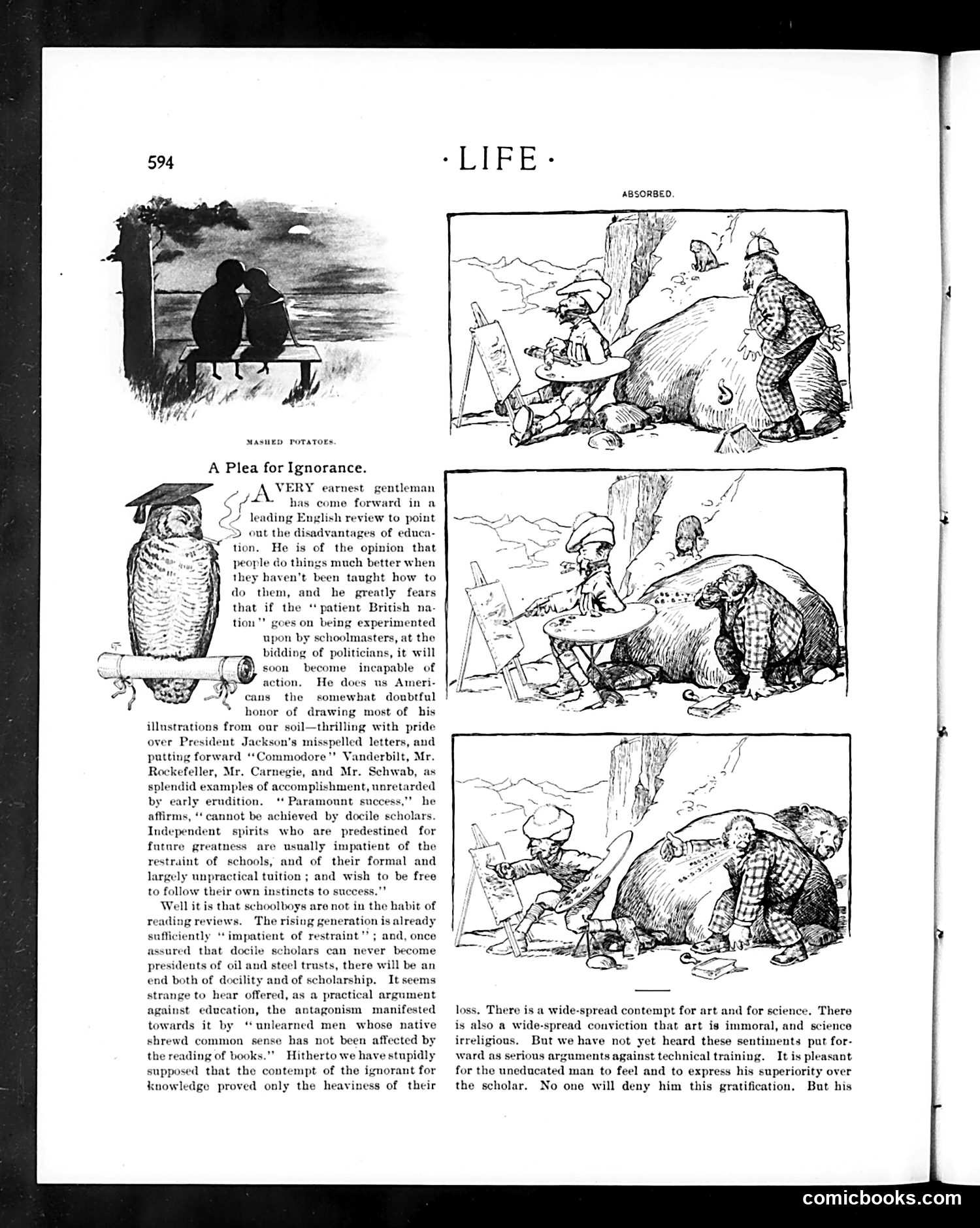
This satirical article argues that *uneducated* people accomplish more than educated ones. The author—identified as an "English reviewer"—claims education hinders practical success and that "docile scholars" cannot achieve greatness. The three comic panels labeled "ABSORBED" mock this argument by showing small figures frantically working on or around large potatoes/root vegetables, treating mundane agricultural tasks with exaggerated seriousness. The humor lies in the contrast: the text celebrates ignorance and dismissive "common sense," while the images show absorbed, earnest labor—suggesting that without proper education, people waste effort on trivial pursuits. The owl illustration (wearing mortarboard) likely represents educated wisdom being rejected. The satire targets anti-intellectual attitudes of the era.
📄 Transcribed text from this page (OCR, searchable)
Machine-transcribed from the original scan — historical spelling and the odd misread are preserved.
MASUED POTATOES A Plea for Ignorance. L VERY earnest gentleman has come forward in a > out the disadvantages of educa- tion. He is of the opinion that people do things much better when they haven't been taught how to do them, and he greatly fears that if the ‘patient British na- tion” goes on being experimented upon by schoolmasters, at the bidding of politicians, it will \ soon become incapable of action. He does us Ameri- cans the somewhat doubtful honor of drawing most of bis illustrations from our soil—thrilling with pride over President Jackson's misspelled letters, and putting forward ‘*Commodore’’ Vanderbilt, Mr. Rockefeller, Mr. Carnegie, and Mr. Schwab, as splendid examples of accomplishment, unretarded by early erudition. ‘* Paramount success,’ h affirms, ‘cannot be achieved by docile scholars. Independent spirits who are predestined for future greatness are usually impatient of the restraint of schools, and of their formal and largely unpractical tuition ; and wish to be free to follow their own instincts to succe: Well it is that schoolboys are not in the habit of reading reviews. The rising generation is already sufficiently “impatient of restraint ’’ ; and, once assured that docile scholars can never become presidents of oil and steel trusts, there will be an end both of docility and of scholarship. It seems strange to hear offered, a practical argument against education, the antagonism manifested towards it by “unlearned men whose native shrewd common sense has not been affected by the reading of books.’’ Hitherto we have stupidly supposed that the contempt of the ignorant for knowledge proved only the heaviness of their he [4 ABSORBED. There is a wide-spread contempt for art and for science, There also a wide-spread conviction that art is immoral, and science irreligious. But we have not yet heard these sentiments put for- ward as serious arguments against technical training. It is pleasant for the uneducated man to feel and to express his superiority over the scholar. No one will deny him this gratification, But his comicbooks.com