
Life, 1903-06-04 · page 13 of 36
Life — June 4, 1903 — page 13: what you’re looking at
What you’re looking at
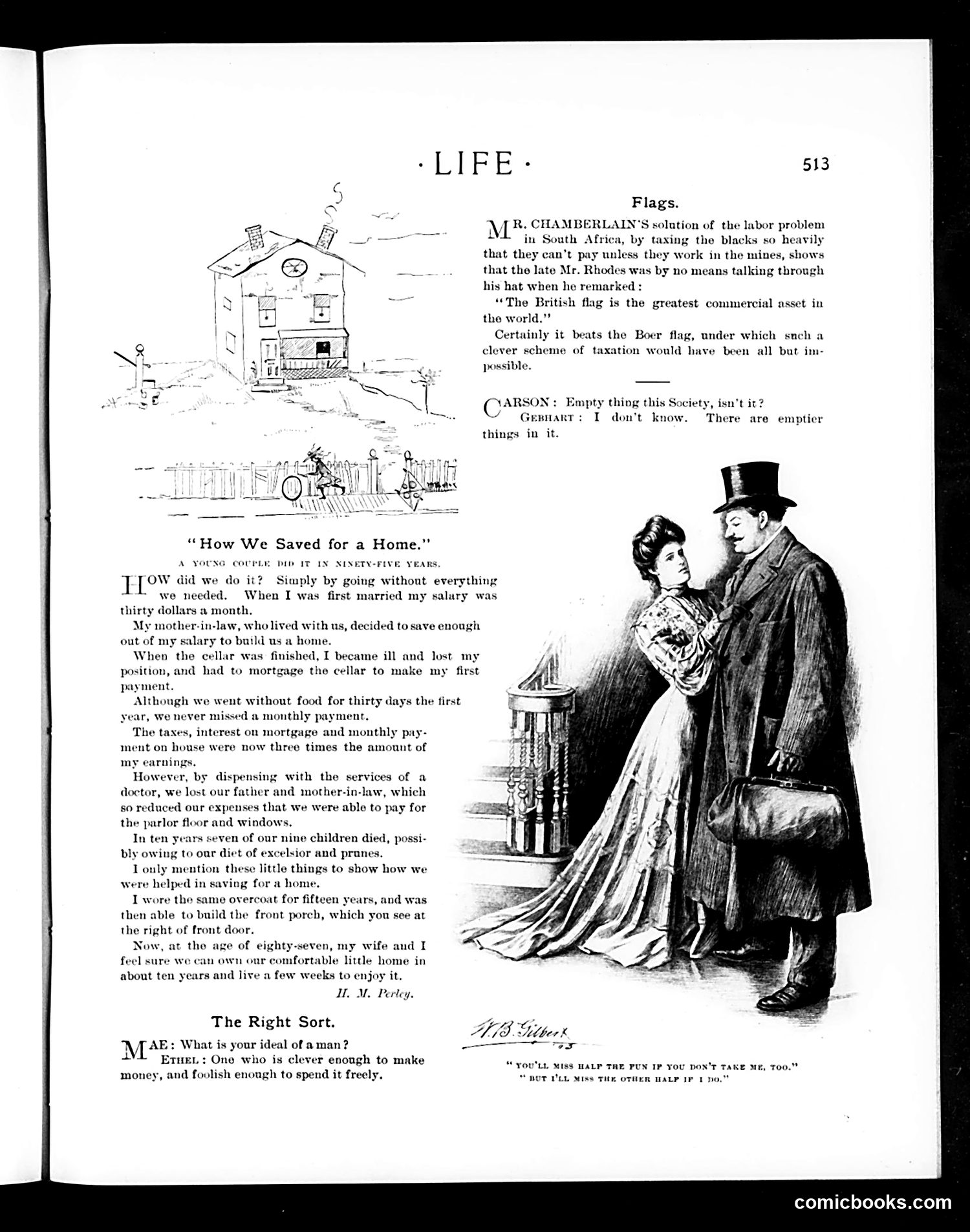
This page contains three satirical pieces: **"Flags"** mocks British imperial exploitation in South Africa. It references Joseph Chamberlain's scheme to tax Black South African miners so heavily they're forced into mine labor. The satire praises this as proof the British flag is superior to the Boer flag—sarcastically celebrating colonial economic coercion as a "commercial asset." **"How We Saved for a Home"** is deadpan social satire about American economic hardship. A family spends 95 years barely affording a house through extreme deprivation: starvation, skipping medical care (killing family members), and wearing the same coat for 15 years. They'll finally own it at age 87, with only weeks left to enjoy it. The joke exposes how capitalism demands impossible sacrifices. **"The Right Sort"** is a brief dialogue joke: Mae asks Ethel's ideal man. Ethel answers: someone clever enough to earn money but foolish enough to spend it freely—meaning he'll support her lavishly. The illustration shows a well-dressed couple, with dialogue implying financial dependency in marriage.
📄 Transcribed text from this page (OCR, searchable)
Machine-transcribed from the original scan — historical spelling and the odd misread are preserved.
-LIFE- 513 Flags. AV R. CHAMBERLALN'S solution of the labor problem u in South Africa, by taxing the blacks so heavily that they can’t pay unless they work in the mines, shows that the late Mr. Rhodes was by no means talking through his hat when he remarked : “The British flag is the greatest commercial asset in the world.” Certainly it beats the Boer flag, under which snch a clever scheme of taxation would have been all but im- possible. CARSON : Empty thing this Society, isn’t it? ~ Gennant: I don't know. There are emptier things in it. “How We Saved for a Home.” A youxe p DUD IT IN NINETY-PIVE: YEARS, a po’ did we do it?) Simply by going without everything = we needed. When I was first married my salary was thirty dollars a month. My mother-in-law, who lived with us, decided to save enough out of my salary to build us a home. When the cellar was finished, I became ill and lost my position, and had to mortgage the cellar to make my first payment. Although we went without food for thirty days the first year, we never missed a monthly payment. The taxes, interest on mortgage and monthly pay- ment on house were now three times the amount of my earnings. However, by dispensing with the services of a doctor, we lost our father and mother-in-law, which so reduced our expenses that we were able to pay for the parlor floor and windows. In ten years seven of our nine children died, possi- bly owing to our diet of excelsior and pranes. lonly mention these litle things to show how we were helped in saving for a home, I wore the same overcoat for fifteen years, and was then able to build the front porch, which you see at the right of front door. Now, at the age of eighty-seven, my wife aud I feel sure we can own our comfortable little home in about ten years and live a few weeks to enjoy it. I. M. Perley. The Right Sort. ATS Dlberk MAE: What is your ideal of a man? (alles as + Etue.: One who is clever enough to make money, and foolish enough to spend it freely. AUT VEL MISS THE OTHER HALF IP 1 no." “You'LL MISS ALP TAE PUN IP YoU DON'T TAKE ME, TOO.” comicbooks.com