
Life, 1903-04-02 · page 14 of 36
Life — April 2, 1903 — page 14: what you’re looking at
What you’re looking at
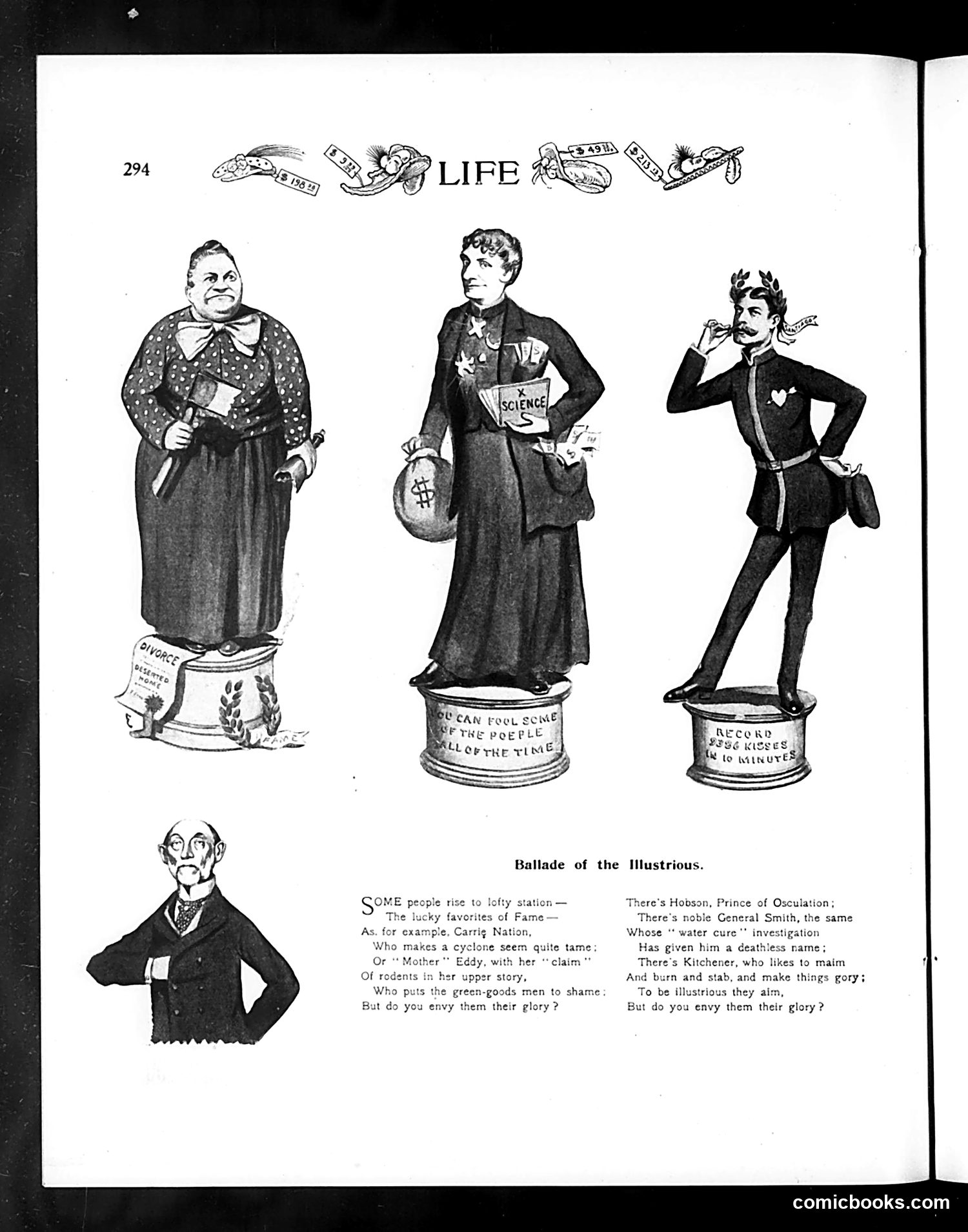
This page mocks famous figures of the early 1900s who gained notoriety through sensational or questionable acts. The three caricatured figures standing on pedestals represent: 1. **Carrie Nation** (left) — the temperance activist known for violent saloon-smashing campaigns 2. **"Mother" Eddy** (center, holding "Science" book) — likely Mary Baker Eddy, founder of Christian Science, mocked for her claims 3. An unidentified figure (right, labeled "Record Egg Rides") The accompanying poem sarcastically lists "illustrious" people: Hobson (known for public kissing), General Smith (associated with the "water cure" torture in the Philippines), and Kitchener (the brutal military commander). The satire's point: these figures became famous through sensationalism, violence, or dubious claims rather than genuine achievement. The repeated refrain "But do you envy them their glory?" suggests their fame is hollow and undesirable—a critique of celebrity built on notoriety rather than merit.
📄 Transcribed text from this page (OCR, searchable)
Machine-transcribed from the original scan — historical spelling and the odd misread are preserved.
PE CAN Foot SCME BF ric poeeLe lorries rim Ballade of the Illustrious. ites of Fame As. for example, Carrig Nation, Who makes a cyclone seem quite tame; other" Eddy, with her ‘claim " upper story, green-goods men to shame y them their glory ? There's Hobson, Prince of Osculation; There's noble General Smith, the same Whose “ water cure" investigation Has given him a deathless name; There's Kitchener, who likes to maim And burn and stab, and make things gory; To be illustrious they aim, But do you envy them their glory? comicbooks.com