
Life, 1902-08-28 · page 15 of 20
Life — August 28, 1902 — page 15: what you’re looking at
What you’re looking at
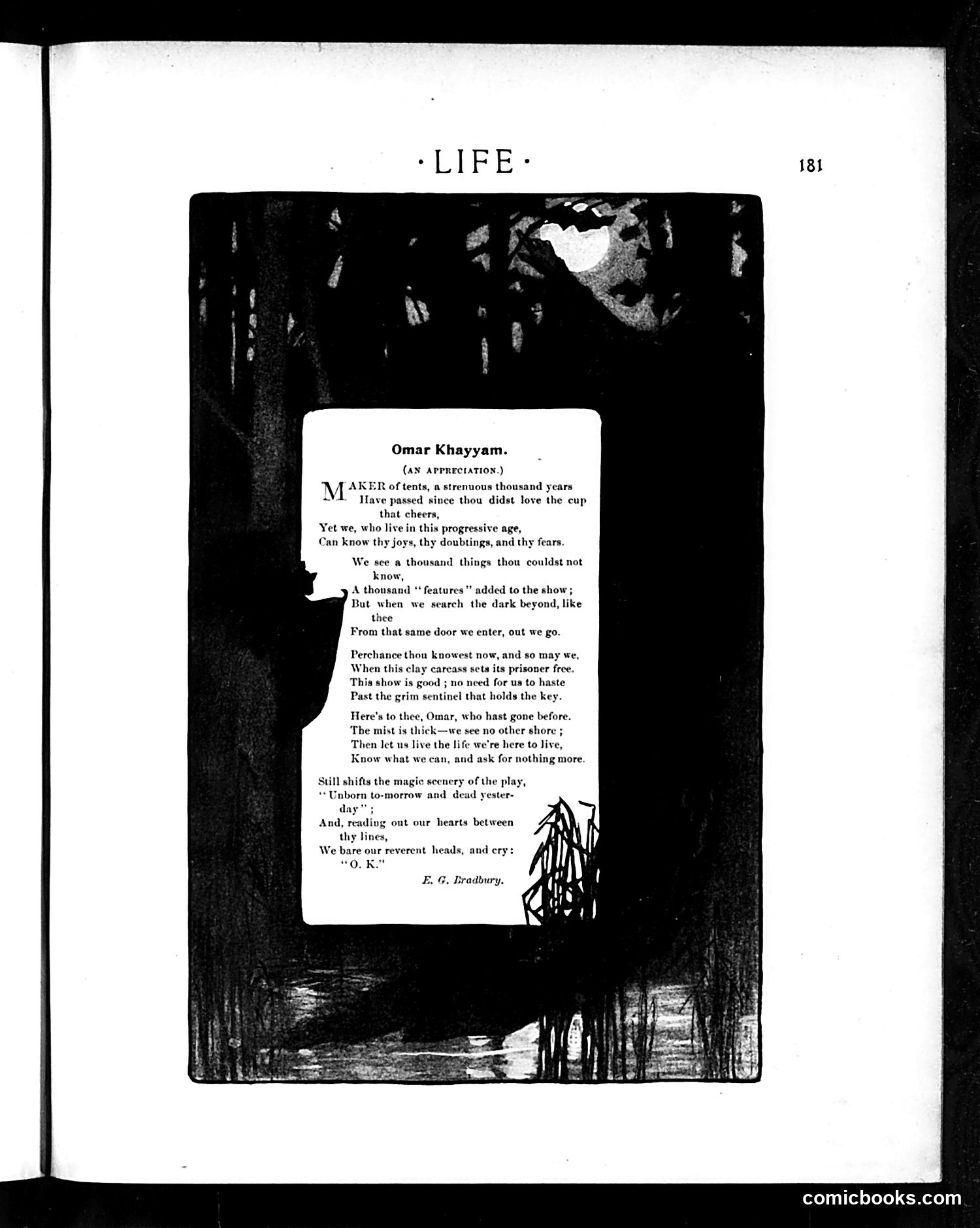
This page features a poem by E.G. Bradbury appreciating the 11th-century Persian poet Omar Khayyam, not a political cartoon. The piece reflects late 19th/early 20th-century American intellectual culture's romanticization of Khayyam, whose *Rubáiyát* had become fashionable among educated readers. Bradbury's poem draws parallels between modern "progressive age" knowledge and Khayyam's ancient wisdom, arguing both ultimately confront the same existential mysteries: mortality and the unknowable afterlife ("From that same door we enter, out we go"). The satire is gentle—mocking contemporary pride in technological advancement while suggesting humans haven't progressed spiritually beyond questions Khayyam pondered centuries ago. The ornamental border and illustration suggest this is a serious literary appreciation rather than satire proper, though the underlying message critiques modern complacency about human progress.
📄 Transcribed text from this page (OCR, searchable)
Machine-transcribed from the original scan — historical spelling and the odd misread are preserved.
Omar Khayyam. (AN APPRECIATION.) M AKER of tents, a strenuous thousand years a Have passed since thou didst love the cup that cheers, Yet we, who live in this progressive age, Can know thy joys, thy doubtings, and thy fears. We see a thousand things thou couldst not know, A thousand “features” added to the show ; But when we search the dark beyond, like thee From that same door we enter, out we go. Perchance thou knowest now, and so may we, When this clay careass sets its prisoner free. This show is good ; no nced for us to haste Past the grim sentinel that holds the key. Here's to thee, Omar, who hast gone before. ‘The mist is thick—we see no other shore ; Then let us live the life we're here to live, Know what we can, and ask for nothing more. Still shifts the magic scenery of the play, ‘Unborn to-morrow and dead yester- day"; And, reading out our hearts between thy lines, We bare our reverent heads, and cry: E.G. Bradbury, comicbooks.com