
Life, 1902-05-08 · page 8 of 32
Life — May 8, 1902 — page 8: what you’re looking at
What you’re looking at
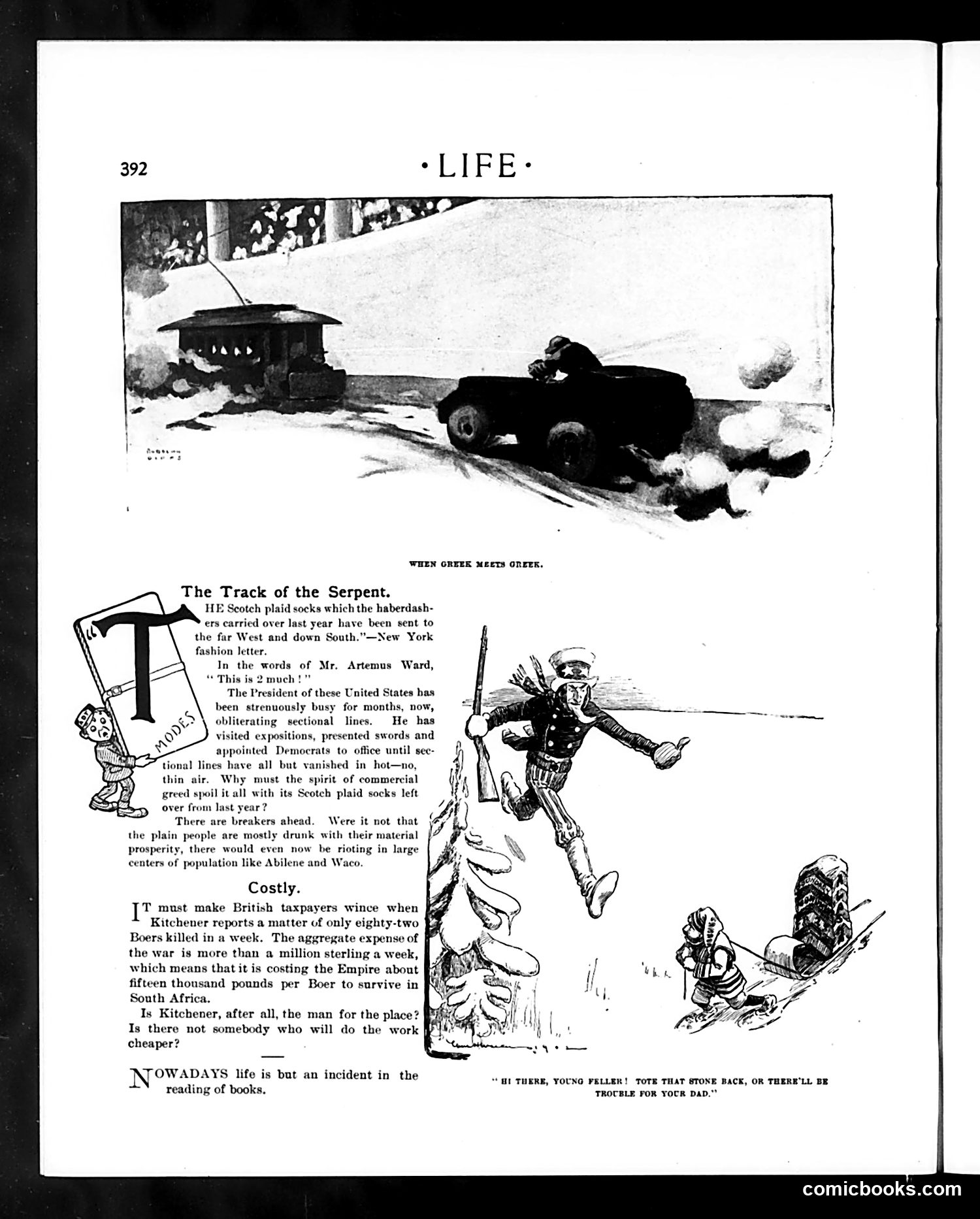
This page contains two satirical pieces from *Life* magazine: **"The Track of the Serpent"** mocks President Theodore Roosevelt's recent diplomatic activities. The text references his "strenuous" touring of expositions and visiting military installations. The satire suggests Roosevelt's energy and activity—symbolized by his characteristic vigor—leave behind only depleted resources, particularly the "Scotch plaid socks" from last year's trade, implying his policies provide little lasting benefit. The illustration shows a racing car, likely representing Roosevelt's notorious recklessness. **"Costly"** critiques British military spending during wartime, specifically attacking Secretary Kitchener's report of only 82 beer deaths in a week. The satire questions whether massive wartime expenditures (over one million sterling weekly) justify such minimal casualties among troops, sarcastically asking if Kitchener truly is the right man to reduce costs. Both pieces use sharp wit to challenge contemporary political decisions.
📄 Transcribed text from this page (OCR, searchable)
Machine-transcribed from the original scan — historical spelling and the odd misread are preserved.
WHEN OREEK MEETS OREER. The Track of the Serpent. HE Scotch plaid socks which the haberdash- ers carried over last year have been sent to the far West and down South."—New York fashion letter. In the words of Mr. Artemus Ward, * This The President of these United States bas been strenuously busy for months, now, obliterating sectional lines. He has visited expositions, presented swords and appointed Democrats to office until sec- tional lines have all but vanished in hot—no, thin air. Why must the spirit of commercial greed spoil it all with its Scotch plaid socks left over from last year? There are breakers ahead. Were it not that the plain people are mostly drunk with their material prosperity, there would even now be rioting in large centers of population like Abilene and V Costly. T° must make British taxpayers wince when Kitchener reports a matter of only eighty-two Boers killed in a week. The aggregate expense of the war is more than a million sterling a week, which means that it is costing the Empire about fifteen thousand pounds per Boer to survive in South Africa. Is Kitchener, after all, the man for the place? Is there not somebody who will do the work cheaper? IN oOWaADaxs life is but an incident in the reading of books, “WE THERE, YOUNG FELLER! TOTE THAT STONE BACK, OR THERE'LL BE TROUBLE FOR YOCR DAD.” comicbooks.com