
Life, 1901-12-12 · page 6 of 20
Life — December 12, 1901 — page 6: what you’re looking at
What you’re looking at
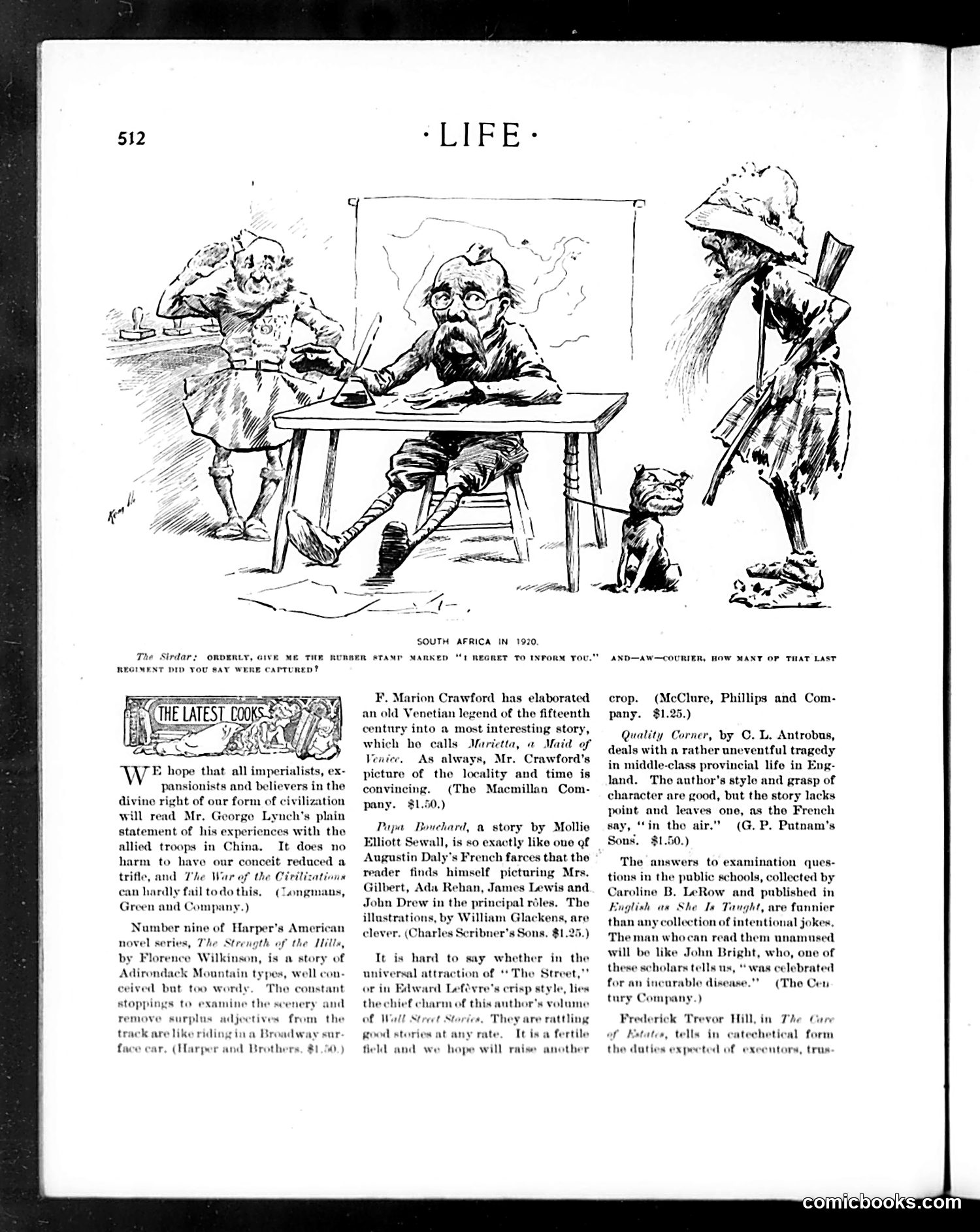
The cartoon depicts a confrontation during the post-WWI period in South Africa. A seated man with a distinctive beard (likely a Boer or colonial figure) is being interrogated by a British soldier, while another armed figure stands to the right. The caption references a "rubber stamp" and captured insurgents, suggesting this relates to the aftermath of the Boer War or subsequent colonial conflicts. The satire critiques British imperial authority and interrogation methods in South Africa. The composition emphasizes the power imbalance—the seated figure appears vulnerable before armed military representatives—likely commenting on heavy-handed British colonial administration or the suppression of local resistance movements. The date "1920" places this within post-war colonial tensions.
📄 Transcribed text from this page (OCR, searchable)
Machine-transcribed from the original scan — historical spelling and the odd misread are preserved.
The Sirdar: REGIMENT DID You SAY Wrne CartunED? hope that all imperialists, ex- pansionists and believers in the div right of our form of civilization will read Mr. Georgo Lynch's plain statement of his experiences with the allied troops in China, It does no harm to have our conceit reduced a trifle, and The War of the Civilizations can hardly fail todo this, Green and Company.) (Longmans, Number nine of Harper's American novel series, The Strength of the Mills, by Florence Wilkinson, is a story of Adirondack Mountain types, well con- ved but too wordy. Th astant stoppings to examine the scenery and remove surplus adjectives from the track are like riding ina Broadway sur face car. (Harper and Brothers, 1.50.) ORDERLY, GIVE ME THR RUNBER STAMP MARKED SOUTH AFRICA IN 1920. “1 REGRET To INFORM You." F. Marion Crawford has elaborated an old Venetian legend of the fifteenth century into a most interesting story, which ho calls Marietta Maid of As always, Mr. Crawford's picture of the locality and time is convincing. (The Macmillan Com- pany. $1.50.) Venice. pa Bouchard, a story by Mollie Elliott Sewall, is so exactly like oue of Augustin Daly's French farces that the reader finds himself picturing Mrs, Gilbert, Ada Rehan, James Lewis and. John Drew in the principal riles.. The illustrations, by William Glackens, are clover. (Charles Scribner's Sons. $1.25.) It is hard to say whether in the universal attraction of ** The Street,” or in Edward Lefovre’s crisp styl the chief charm of this author's ve of Wall Street Stories, They are rattling Tt is a fertile hope will raise another good stories at any rate field and we Ss 4 j Ss ax aS a AND—AW—COURIER, HOW MANY OP THAT Last. crop. (McClure, Phillips and Com- pany. $1.25.) Quality Corner, by OC. L. Antrobus, deals with a rather uneventful tragedy in middle-class provincial life in Eng- land. The author's style and grasp of character are good, but the story lacks point and leaves one, as the French say, ‘‘in tho air.” (G. P. Putnam's Sons, $1.50.) The answers to examination ques- tions in the public schools, collected by Caroline B, LeRow and published in English as She Is Taught, ave fannier than any collection of intentional jokes, The man whocan read them unamused will be like John Bright, who, one of these scholars tells ns, “was celebrated for an incurable disease.” (The Cen tury Company.) Frederick ‘Trevor Hill, in of Eatates, tells in’ catec The Care al form the daties expected of exeentors, tras