
Life, 1901-11-28 · page 6 of 22
Life — November 28, 1901 — page 6: what you’re looking at
What you’re looking at
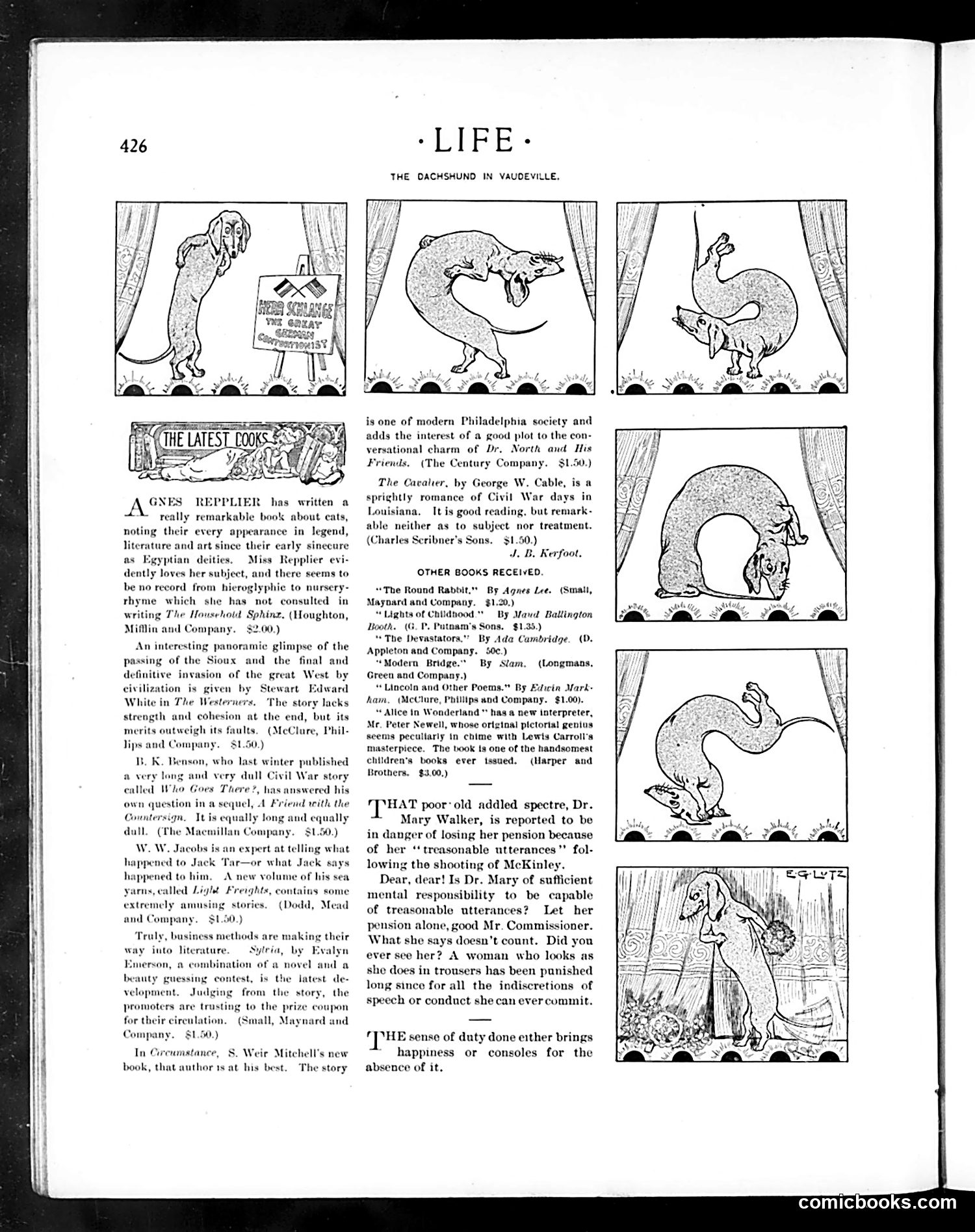
This comic strip sequence satirizes the dachshund dog breed's distinctive long, low body shape by depicting it performing in a vaudeville theater act. The strip shows the dog in various contorted poses—stretching, curling, and positioning itself in exaggerated ways—as if performing acrobatic tricks for an audience (indicated by the footlights shown as semi-circles). The joke plays on the dachshund's naturally elongated form, treating it as if the dog were a deliberately trained performer exploiting its unusual physiology for entertainment. This reflects early 20th-century vaudeville culture, when animals performing tricks were popular stage acts. The cartoonist humorously suggests the breed's shape makes it naturally suited to theatrical performance.
📄 Transcribed text from this page (OCR, searchable)
Machine-transcribed from the original scan — historical spelling and the odd misread are preserved.
\\\ | Ad ‘YRS oor SES REPPLIER has written a really remarkable book about cats, noting their every appearance in legend, literature and art since their early sinecure as Egyptian deities. Miss Repplier evi- dently loves her subject, and there seems to be no record fr yglyphic to nursery: rhy she not consulted in writing The Household Sphinz, (Houghton, n and Comp ”.) An interesting panoramic glimpse of the passing of the Sioux and the final and definitive invasion of the great West by Stewart Edward WwW The story lacks strength and cohesion at the end, but its merits outweigh its faults. (McClure, Phil- $1.50.) nson, who last winter published a very long and very dull Civil V called Who 8 There?, has answered his own question in a sequel, A Friend with the ountersign. It is equally long and equally dull, (fhe Macmillan Co expert at telling what r—or what Jack happened to him, A new volume of his sea d Light Freights, contains some y amusing stories. (Dodd, Mead and Company. $1.50.) Truly, business methods are making their ure. Sylria, by lyn nation of a novel and a ity guessing contest, is the latest de- pment. Judging from the story, the promoters are trusting to the prize coupon for their circulation. (Small, Mayn, Company. $1.50.) In Circumstance, S. Weir Mitchell's new book, that author 1s at his best “IPE @ OACHSHUND IN VAUDEVILLE. is one of modern Philadelphia society and adds the interest of a good plot to the con- yersational charm of Dr. North and His Friends, (The Century Company. $1.50.) The Cacaler, by George W. Cable, a sprightly romance of Civil War d Louisiana. It is good reading, but remark- able neither as to subject nor treatment. (Charles Scribner's Sons. $1.50.) J. B. Kerfoot, OTHER BOOKS RECEIVED. “The Round Rabbit. By Agnes Lee. (Stati, Maynard and Company. $1.20.) “Lights of Childhood." By Mand Ballington Booth. (G.P. Putnam's Sons, $1.35.) “The Devastatora.” By Ada Cambridge. (D. Appleton and Company. 50¢.) Modern Bridge.” By Slam. (Longmans, en and Company.) “Lincoin and Other Poems." By E”icin Mark- ham, (McClure, Phillips and Company. $1.00). “Alice in Wonderland * has a new interpreter, Mr. Peter Newell, whose original pictortal genius seems pecullarly in chime with Lewts Carroll's masterpiece. The book ts one of the handsomest children’s books ever issued. (Harper and Brothers. $3.00.) "Hat poor‘old addled spectre, Dr. - Mary Walker, is reported to be in danger of losing her pension because of her ‘treasonable utterances” fol- lowing the shooting of McKinle. Dear, dear! Is Dr. Mary of sufficient mental responsibility to be capable of treasonable utterance: Let her pension alone, good Mr. Commissioner. What she says doesn’t count. Did you ever see her? A woman who looks as she does in trousers has been punished long since for all the indiscretions of speech or conduct she can ever commit. ‘THE senso of duty done either brings happiness or consoles for the absence of it. comicbooks.com