
Life, 1900-02-01 · page 6 of 20
Life — February 1, 1900 — page 6: what you’re looking at
What you’re looking at
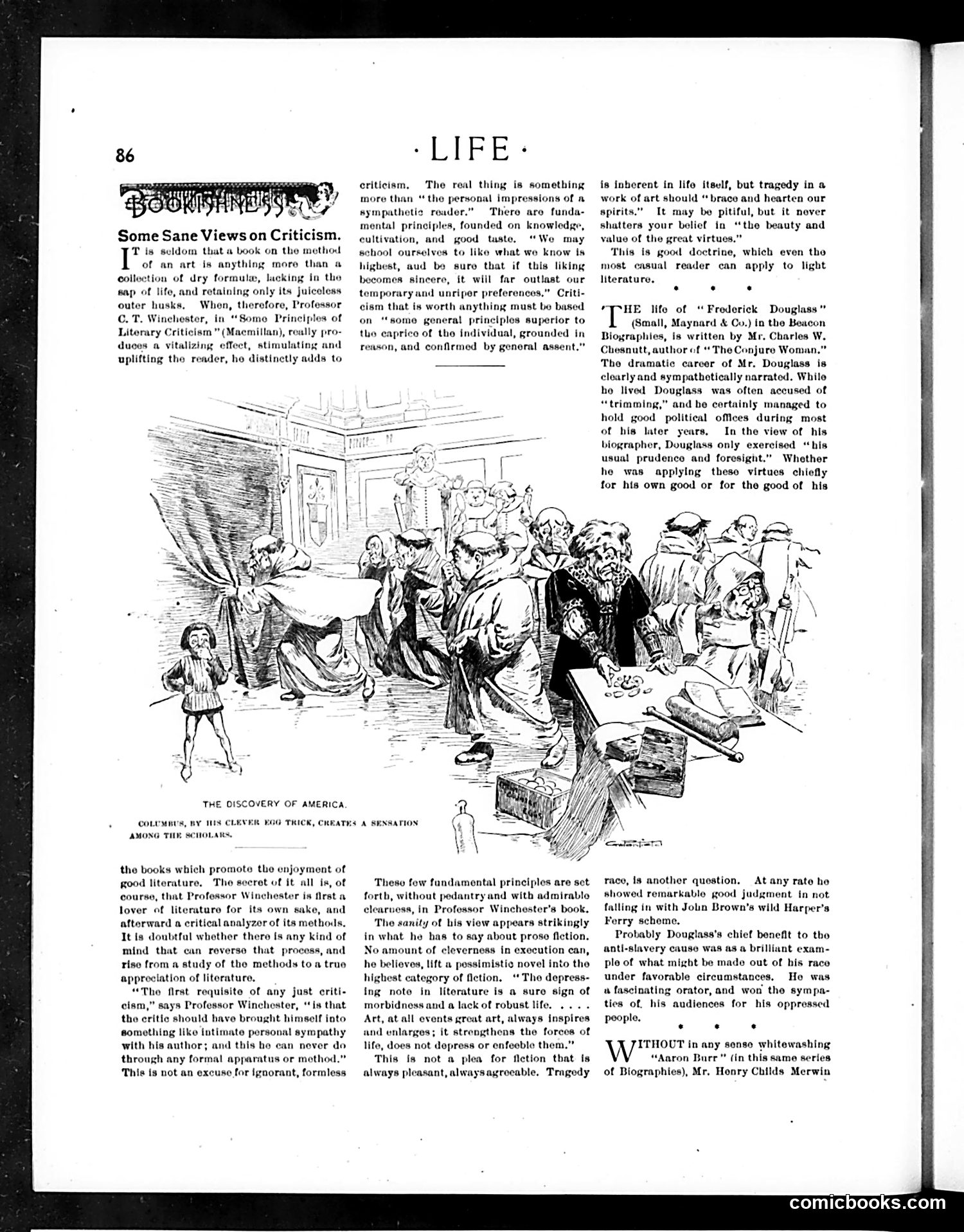
This satirical illustration mocks academic pretension and scholarly one-upmanship. The caption reads: "Columbus, by his clever egg trick, creates a sensation among the scholars." The cartoon references the famous legend of Columbus making an egg stand on end by tapping it flat—a trick supposedly demonstrating practical ingenuity over theoretical knowledge. Here, Life uses it to satirize scholars and academics who are easily impressed by simple tricks or clever rhetoric disguised as genuine discovery or insight. The gathering of well-dressed figures represents the intellectual establishment, depicted as gullible and susceptible to showmanship. The satire targets how academia can be swayed by presentation and cleverness rather than substantive merit—a criticism of both scholarly pomposity and the ease with which intellectuals accept superficial novelty as genuine achievement.
📄 Transcribed text from this page (OCR, searchable)
Machine-transcribed from the original scan — historical spelling and the odd misread are preserved.
Some Sane Views on Criticism. T is seldom that a book on the method of an art is anything more than a collection of dry formula ing in the sap of life, and retaining only its juicoless outer husks, When, therefore, Professor C.T. Winchester, in “Somo Principles of Literary Criticism" (Macmillan), really pro- duces a vitalizing effect, stimulating and uplifting the reader, ho distinctly adds to THE DISCOVERY OF AMERICA. = LIFE « criticism, The real thing is something more than “the personal impressions of a. sympathetic roader.” There aro funda- mental principles, founded on knowledge, cultivation, and good taste, “We may school ourselves to like what we know is highest, aud be suro that if this liking becomes sincero, it will far outlast our temporary and unripor preferences.” Criti- cism that is worth anything must be based on “some general principles superior to tho eaprico of tho individual, grounded in reason, and confirmed by genoral assent.” COLUMNS, BY IHS CLEVER £OO THICK, CREATES A SENSATION AMONG THY, SCHOLARS. tho books which promote the enjoyment of good literature, Tho secret of it all is, of course, that Professor Winchester is frst a lover of literature for its own sake, and afterward a critical analyzor of its methods, It is doubtful whether thero is any kind of mind that can reverse that process, and riso from a study of tho methods toa true appreciation of literature, “Tho frat requisite of any just criti- cism,” says Professor Winchoster, ‘is that tho critic should havo brought himself into something like intimate personal sympathy with his author; and this ho can never do through any formal apparatus or method.” ‘This is not an excuse for ignorant, formless Theso fow fundamental principles are set forth, without pedantry and with admirablo clearvess, in Professor Winchester’s book. Tho sanity of his view appears strikingly in what he bas to say about prose fiction. No amount of cleverness in execution can, he believes, lift a pessimistic novel into the highest category of fiction, “Tho depress- ing note in literature is a sure sign of morbidnoss and a lack of robust life... . . Art, at all ovents great art, always inspires and enlarges; it strengthens the forces of life, does not depress or enfeoble them.” This is not a plea for fletion that ts always pleasant, alwaysagreeable. Tragedy is inborent in lifo iteelf, but tragedy in a work of art should “brace and hearten our spirits.” It may be pitiful, but it never shatters your belief in “the beauty and value of the great virtues.” is Is good doctrine, which even tho most casual reader can apply to light literature, . . HE life of “Frederick Douglass" (Small, Maynard & Co.) in the Beacon Biographies, is written by Mr. Charles W. Chesnutt, author of “The Conjure Woman.” Tho dramatic career of Mr. Douglass is cloarly and sympathotically narrated. Whilo ho lived Douglass was often accused of “trimming,” and he cortainly managed to hold good political oMces during most of his later years, In the view of his biographor, Douglass only exercised “his usual prudence and foresight.” Whether he was applying theso virtues chiefly for his own good or for the good of his raco, {8 another question, At any rate ho showed remarkable good judgment in not falling in with Joun Brown's wild Harper's Ferry scheme. Probably Douglass's chief benefit to tho anti-slavery cause was 4s a brilliant exam- plo of what might be mado out of his race under favorable circumstances. He was ua fascinating orator, and won the sympa- ties of. his audiences for his oppressed people. V ITHOUT in any sonso whitewashing “Aaron Burr" (in this same series of Biographies), Mr, Honry Childs Merwin . . comicbooks.com